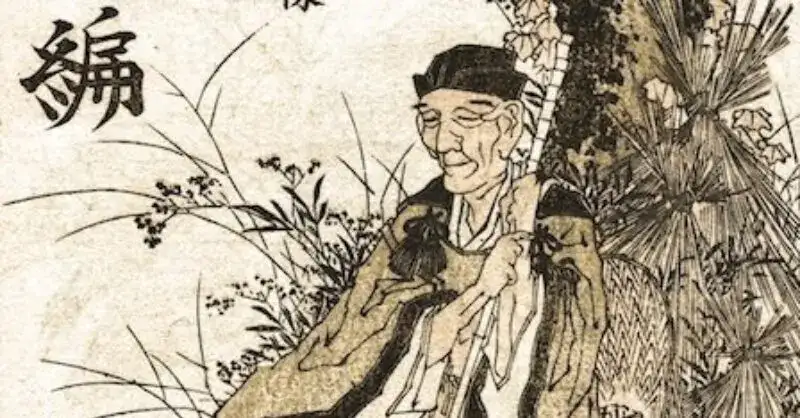
Quote of the day: Centuries before self-help books, motivational podcasts and social media gurus became part of modern culture, Matsuo Bashō was quietly teaching a deeper philosophy of life through poetry. The legendary Japanese poet transformed the art of haiku into something far greater than a literary exercise. His work explored silence, simplicity, nature and the emotional truths hidden inside ordinary moments. Bashō lived modestly, traveled extensively and believed wisdom could not be inherited simply by imitation. Instead, he encouraged people to pursue the deeper understanding that great thinkers once searched for themselves. In today’s world of constant comparison and trend-following, his words feel strikingly modern.
Quote of the day today
One of Bashō’s most celebrated reflections continues to inspire readers across generations:
“Do not seek to follow in the footsteps of the wise. Seek what they sought.”
The quote has endured because it challenges people to think independently rather than blindly copying the lives, habits or opinions of others.
Who was Matsuo Bashō?
Born in 1644 in Japan’s Iga province, Bashō is widely regarded as the greatest haiku poet in Japanese history. He helped elevate the 17-syllable poetic form from light entertainment into a respected art capable of expressing profound human emotion and philosophical insight.
As a young man, Bashō briefly lived the life of a samurai servant under a local feudal lord. But after his master died in 1666, he abandoned that path and devoted himself fully to poetry. Eventually, he moved to Edo, now modern-day Tokyo, where his reputation as both a poet and literary critic steadily grew.
His poetry stood apart because of its emotional restraint and simplicity. Rather than relying on flashy language or dramatic storytelling, Bashō captured fleeting moments in nature and everyday life with remarkable depth.
One of his earliest famous haiku reads:
On a withered branch
A crow has alighted:
Nightfall in autumn.
The poem’s quiet imagery became a defining example of Bashō’s style: calm, reflective and emotionally layered.
Quote of the day meaning
At first glance, Bashō’s quote appears to be simple advice about individuality. But its meaning runs much deeper.
The poet was not rejecting wisdom or mentorship. Instead, he was warning against imitation without understanding. Many people spend their lives trying to copy successful individuals, their routines, habits, careers or lifestyles, believing that repeating external actions will automatically produce the same results.
Bashō believed true wisdom comes from pursuing the deeper purpose behind those actions.
For example:
- A person may admire a philosopher’s discipline, but the real lesson is the search for truth.
- Someone may copy an artist’s style, but the deeper pursuit is creative freedom.
- A student may imitate a teacher’s words, but the true goal is understanding.
The quote encourages curiosity rather than blind imitation. It reminds readers that wisdom is not a costume people can wear. It is a journey they must experience for themselves.
Why the quote feels so relevant today
Bashō’s words resonate strongly in the age of social media, where millions of people constantly compare themselves to influencers, celebrities and entrepreneurs.
Modern culture often promotes replication:
- Follow this morning routine.
- Use this productivity hack.
- Copy this success formula.
- Live exactly like this billionaire.
But Bashō’s philosophy suggests that copying appearances without understanding deeper intentions leads nowhere meaningful.
Many successful people reached greatness not because they followed trends, but because they pursued truth, purpose or creativity in their own way. Bashō’s quote quietly urges people to stop obsessing over footprints and focus instead on direction.
That message feels increasingly important in a world where originality is often overshadowed by imitation.
Bashō’s connection to Zen philosophy
A major influence on Bashō’s work was Zen Buddhism, which emphasized mindfulness, simplicity and awareness of the present moment.
Rather than presenting loud declarations about life, Bashō often used small details from nature to reveal universal emotions. Falling leaves, old temples, rainstorms and fading flowers became symbols of impermanence and human reflection.
He believed the world’s deepest truths could be discovered through observation and stillness.
This philosophy shaped both his poetry and his lifestyle. Bashō lived simply in a small hermitage known as Bashō-an, or “Cottage of the Plantain Tree,” from which he took his pen name.
Unlike the extravagance associated with fame or artistic prestige, Bashō preferred solitude and travel. His journeys across Japan became central to his literary legacy.
The beauty of The Narrow Road to the Deep North
In 1684, Bashō began a series of travels across Japan that inspired some of his greatest works. His travel writings combined prose and haiku, creating emotionally rich reflections on landscapes, seasons and fleeting moments.
His most famous work, Oku no Hosomichi, translated as The Narrow Road to the Deep North , remains one of the most admired works in Japanese literature.
The book is treasured not only for its poetry but also for its meditative prose, which captures loneliness, wonder and spiritual discovery. For Bashō, travel was not simply movement from one place to another. It was a path toward deeper understanding.
That same spirit echoes in his famous quote about seeking what the wise once sought.
Why Bashō’s message still matters
Part of what makes Bashō’s words timeless is their emotional honesty. Many people today feel pressure to follow established paths, professionally, socially and creatively. There is comfort in imitation because it feels safe.
But Bashō reminds readers that wisdom cannot be borrowed secondhand.
Real growth comes from asking difficult questions, exploring personal meaning and remaining open to discovery. The quote is ultimately about courage, the courage to search for truth independently rather than hiding inside someone else’s identity.
More than 300 years after his death, Matsuo Bashō’s quiet philosophy continues to inspire readers around the world. In an era obsessed with copying success, his words offer a gentler and far more enduring lesson: the goal is not to walk exactly where great people walked, but to understand what inspired them to begin the journey in the first place.