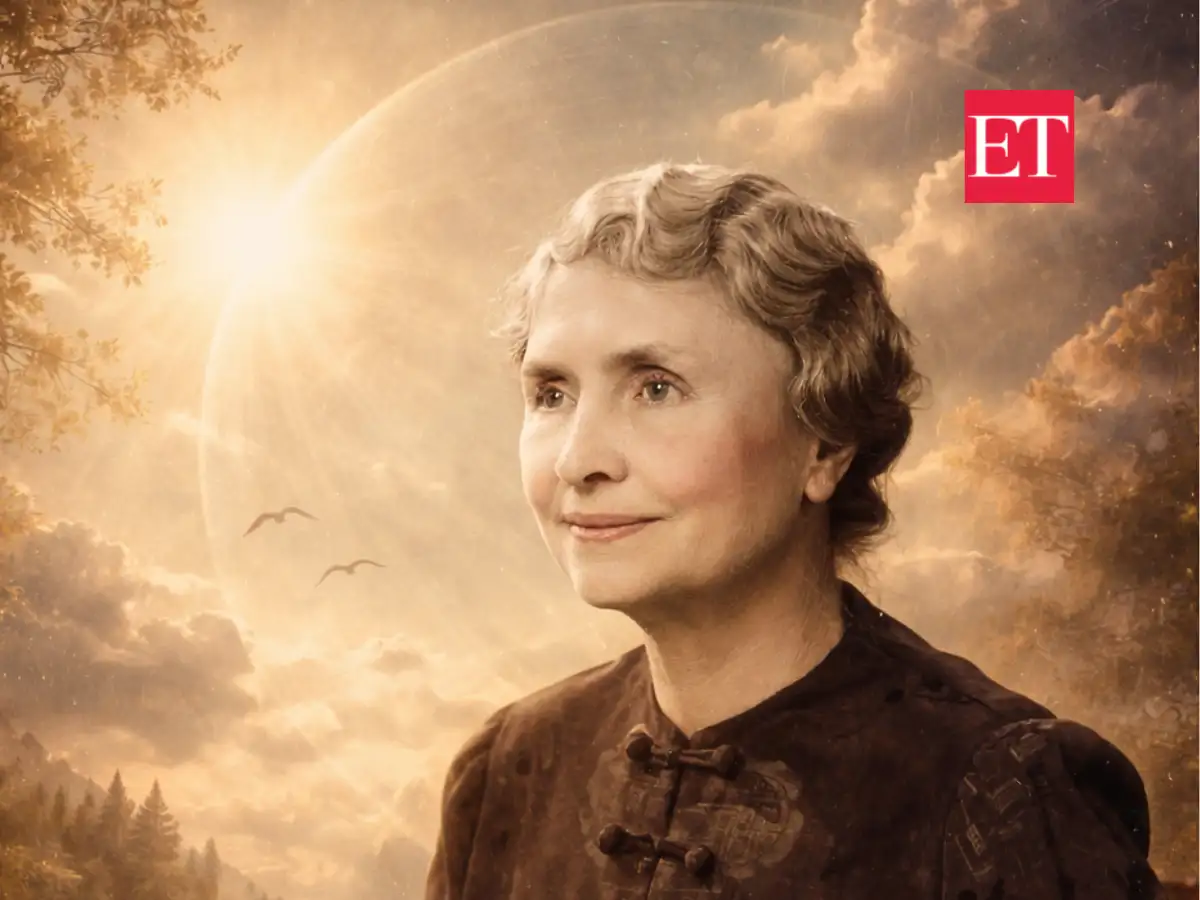
Quote of the day by Helen Keller talks about the message, “There is beauty in everything, even in silence and darkness.” The quote links human behavior, peace and love with the life journey of Helen Keller. Her story explains education, communication and social work. The article explains the meaning, relevance and life lessons of the quote. It also shares facts about her life, books, activism and public work. The goal is to explain the quote and its value in modern life.
Quote of the day today
The quote today says,
“There is beauty in everything, even in silence and darkness.”
The message talks about finding meaning in difficult moments. It encourages people to value quiet moments and inner strength. The quote connects daily life with peace and patience. Many people use this quote as motivation for emotional balance and hope.
Quote meaning and relevance
The meaning of the quote focuses on acceptance and awareness. Silence can represent calm and reflection. Darkness can represent struggle and hardship. The quote suggests that both can teach lessons. It asks people to see value in every experience.
The relevance of this quote remains strong today. Many people face stress, social pressure and personal challenges. The quote reminds people to look for peace in quiet moments. It also shows how acceptance helps mental balance. This message connects with modern life and emotional health.
Life lessons from the quote
The quote teaches lessons on peace, human behavior and love. It suggests that challenges can create growth. Silence can help reflection and understanding. Darkness can teach patience and strength.
The quote also promotes empathy. People often judge situations quickly. The quote encourages slower thinking and deeper understanding. It reminds people to respect emotions and experiences. This message supports healthy relationships and communication.
Life story of Helen Keller
Helen Keller was born on June 27, 1880, in Tuscumbia, Alabama, United States. She died on June 1, 1968, in Westport, Connecticut. She became known as an author and educator who was blind and deaf. Her education became an important milestone in disability education.
At 19 months old, Keller had an illness that caused blindness and deafness. The illness may have been scarlet fever. At age six, she met Alexander Graham Bell. He later connected her with teacher Anne Sullivan from the Perkins Institution for the Blind. Anne Sullivan began teaching Keller in March 1887 and stayed until her death in October 1936.
Helen Keller learning communication and education
Keller learned to connect objects with words using finger spelling. She learned to read sentences by touching raised words. She formed sentences using word frames. Between 1888 and 1890, she studied Braille at the Perkins Institution.
She later learned speech with Sarah Fuller from the Horace Mann School for the Deaf. She learned lip reading by touching the speaker’s lips and throat. At 14, she joined the Wright-Humason School for the Deaf in New York City. At 16, she joined the Cambridge School for Young Ladies in Massachusetts. She entered Radcliffe College in 1900 and graduated in 1904.
Helen Keller writing career and books
Keller began writing about blindness in magazines. Her work appeared in Ladies’ Home Journal, The Century, McClure’s and The Atlantic Monthly.
She wrote several books including:
- The Story of My Life (1903)
- Optimism (1903)
- The World I Live In (1908)
- Light in My Darkness and My Religion (1927)
- Helen Keller’s Journal (1938)
- The Open Door (1957)
Her books focused on life experience, faith, education and social change.
Public work and activism
In 1913, Keller started lecture tours with an interpreter. She worked with the American Foundation for the Blind and later created a $2 million endowment fund. She travelled across the world for awareness.
In 1920, she helped cofound the American Civil Liberties Union with Roger Nash Baldwin and others. Her work supported better treatment of the blind and deaf. Her efforts helped remove disabled people from asylums. By 1937, commissions for the blind existed in 30 states.
Cultural impact and legacy
Keller’s childhood education inspired the play The Miracle Worker in 1959 by William Gibson. The play won the Pulitzer Prize in 1960. A film adaptation released in 1962 won two Academy Awards. Her life continues to inspire education, disability rights and social awareness. Her quote still guides people toward hope and acceptance.