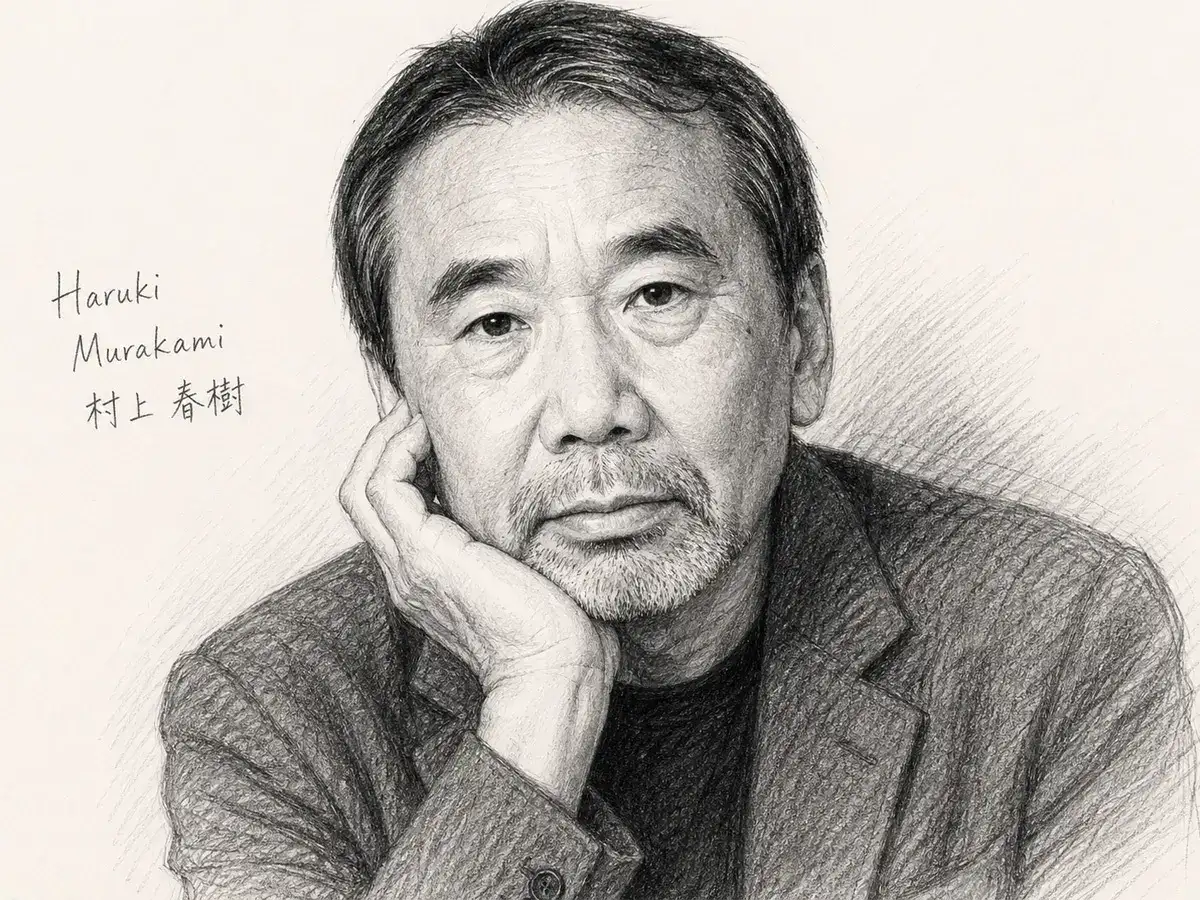
Late-night jazz bars, lonely streets, surreal conversations and characters searching for meaning in strange worlds, few modern writers have captured the feeling of quiet human longing quite like Haruki Murakami. Over the decades, the Japanese novelist built a global following through stories filled with mystery, memory, heartbreak and emotional isolation. But among his many unforgettable lines, one quote continues to strike readers with unusual simplicity.
The line feels deeply personal, almost like a quiet confession whispered during one of Murakami’s reflective novels. Yet for many readers, it has become something much larger. In a world often dominated by routine, pressure and uncertainty, the quote reminds people that dreaming may be one of the few things that keeps hope alive.
Iconic quote by Haruki Murakami
“ I dream. Sometimes I think that's the only right thing to do, " by Haruki Murakami , as per Goodreads.
Murakami’s writing has always explored the emotional space between reality and imagination. His characters often drift through lonely cities, haunted memories and surreal situations while trying to understand themselves. That is what makes this quote so powerful. It does not describe dreams as childish fantasies or impossible wishes. Instead, it presents dreaming as an act of survival.
Born in Kyoto, Japan, in 1949, Murakami grew up reading both Japanese and Western literature. Writers like Raymond Chandler, Franz Kafka and F. Scott Fitzgerald heavily influenced his work. Before becoming a novelist, he and his wife operated a small jazz café in Tokyo, where Murakami spent years immersed in music, books and long conversations.
His life changed unexpectedly during a baseball game in 1978. While watching a player hit a clean double at Jingu Stadium, Murakami suddenly felt the strange certainty that he could write a novel. He later described the moment as an instant that completely altered the direction of his life. Soon after, he wrote Hear the Wind Sing, the novel that launched his literary career.
That moment now feels deeply connected to the quote itself. Murakami chose to trust an impossible feeling before he had proof that success would follow. He dreamed first, and only later did the world begin recognising his voice.
What does the quote teach us about imagination and hope?
The quote resonates because many people eventually reach a point where logic alone no longer feels enough. Daily responsibilities, disappointments and uncertainty can slowly make life feel mechanical. Dreaming, in Murakami’s view, becomes a way of protecting the inner self from emotional numbness.
His words also suggest that dreams are not limited to fame or achievement. Sometimes dreaming simply means believing life can still change. It means imagining love after heartbreak, purpose after failure or meaning during loneliness.
That emotional idea appears throughout Murakami’s novels. In books like Norwegian Wood, Kafka on the Shore and 1Q84, characters often search for connection while struggling with grief, identity or emotional emptiness. Reality in his stories frequently feels fragmented, but dreams and imagination help his characters continue moving forward.
The quote also carries a quiet rebellion against cynicism. Modern society often praises practicality and certainty while dismissing imagination as unrealistic. Murakami instead suggests that without dreams, people risk losing curiosity, wonder and emotional depth.
Why Haruki Murakami’s words continue reaching readers worldwide
Murakami became one of the world’s most celebrated contemporary writers because his stories speak to emotional experiences that transcend culture and language. His books have sold millions of copies internationally and have been translated into dozens of languages, with readers drawn to his blend of melancholy, magical realism and philosophical reflection.
At the same time, Murakami’s career has not been without criticism. Some traditional literary critics in Japan viewed his style as too Western or unconventional. Yet that outsider perspective may be part of what made his voice so distinctive. His stories often focus on people who feel disconnected from society, quietly searching for meaning in confusing worlds.
Beyond literature, Murakami’s own life reflects discipline and introspection. He is also known as a marathon runner and wrote extensively about endurance, solitude and creativity in his memoir What I Talk About When I Talk About Running. Much like his fiction, the book explores how persistence and imagination shape human identity.
Today, as Murakami’s quotes continue circulating online and across social media, this particular line remains one of his most emotionally enduring reflections. Not because it promises easy success or certainty, but because it reminds people that even in difficult times, the ability to dream may still be one of the most human things we possess.