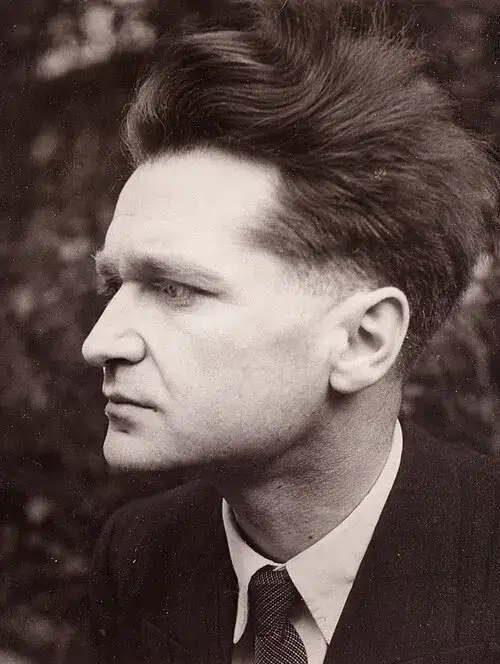
Quote of the Day: Emil Cioran’s haunting reflection on meaning, despair and survival still resonates today
A memorable Quote of the Day often survives because it speaks to emotions and questions that never truly disappear. Some quotes inspire hope, others encourage resilience, while a few challenge readers to confront uncomfortable truths about existence itself. Among the most provocative literary voices of the twentieth century was Emil Cioran, a philosopher and essayist whose writings explored despair, failure, loneliness and the contradictions of human life with startling honesty.
Unlike thinkers who tried to provide certainty or optimism, Cioran embraced doubt and contradiction. His work frequently examined the tension between meaninglessness and survival, making his reflections deeply unsettling yet strangely comforting to many readers. That is one reason why Quote of the Day selections remain important. They offer not only wisdom but also perspective, allowing readers to pause and reconsider the realities of modern life through the words of influential thinkers, writers and philosophers.
Quote of the Day Today May 13
The Quote of the Day today by Emil Cioran is:
“The fact that life has no meaning is a reason to live — moreover, the only one.”
The line captures the paradoxical philosophy that defined much of Cioran’s work. Rather than seeing meaninglessness as a reason for despair alone, he viewed it as a strange kind of liberation. If existence carries no predetermined purpose, then human beings are free from rigid expectations and illusions. The quote remains widely discussed because it transforms hopelessness into a form of philosophical rebellion.
Early Life of Emil Cioran
Emil Cioran was born in 1911 in Romania and later became one of the most distinctive literary and philosophical voices in France. Though French was not his native language, many critics eventually considered him among the finest prose stylists writing in French during the twentieth century.
Cioran grew into a writer who rejected conventional systems of philosophy. Instead of constructing rigid arguments, he preferred fragments, aphorisms and deeply personal reflections. His style was unsystematic, poetic and intensely emotional. He often described himself as “un homme de fragment,” meaning a man of fragments. For him, fragmented writing reflected the fragmented nature of human existence itself,as per information taken from Los Angeles Review of Books.
From an early age, Cioran was fascinated by despair, insomnia and existential anxiety. These themes became inseparable from both his life and his literary identity. He believed writing was not simply an intellectual activity but a way to survive inner collapse. In conversations later in life, he admitted that without writing he might have become destructive or even violent toward himself or others.
Writing, Insomnia and Despair
Cioran’s first major book, On the Heights of Despair, was written in 1934 when he was only twenty-three years old. He composed it during a severe period of insomnia that left a lasting mark on his philosophy. Sleeplessness became central to his understanding of suffering and consciousness.
He later explained that he could only truly write while overwhelmed by depression and exhaustion. According to Cioran, insomnia stripped away comforting illusions and forced people to confront existence in its rawest form. Writing became his method of coping with that endless psychological unrest.
One of his most famous observations reflected this belief perfectly, “A book is a suicide postponed.”
For Cioran, literature was not about entertainment or intellectual prestige. It was an act of survival. He wrote to keep himself from collapsing entirely under the weight of despair. This deeply personal relationship with writing gave his work an unusual emotional intensity that separated him from many traditional philosophers,as per information taken from Los Angeles Review of Books.
A Thinker Obsessed with Failure
Failure became one of the defining themes of Cioran’s philosophy. He examined failure not only in individuals but also in societies, nations and civilizations. Throughout his life he returned repeatedly to the idea that human beings are haunted by incompleteness and disappointment.
Cioran believed that failure revealed truths hidden by success. Success often created illusions, vanity and distance from the self, while failure forced people to confront their deepest realities. This perspective shaped both his philosophy and his understanding of human identity.
At times, his thinking became politically dangerous. During his younger years in Romania, Cioran expressed admiration for authoritarian movements and dictatorial power. Some of his writings from the 1930s praised irrational nationalism and even showed sympathy toward fascist ideas spreading through Europe at the time.
He later viewed these beliefs with shame and regret. After witnessing the horrors connected to fascism and the devastation of the Second World War, Cioran distanced himself from the political extremism of his youth. In later reflections, he described many of his earlier political writings as the “ravings of a wild madman.”
This confrontation with personal failure profoundly shaped his later work. Rather than presenting himself as morally certain, Cioran increasingly wrote about humiliation, shame and the painful contradictions within human nature,as per information taken from Los Angeles Review of Books.
Quote of the day: Reinvention in France
In 1937, Cioran left Romania and moved permanently to Paris. He considered the decision one of the smartest choices of his life. France became the setting for his intellectual reinvention. He gradually abandoned Romanian as his primary literary language and began writing almost entirely in French. The transformation was radical. Through French prose, Cioran developed the concise, elegant and devastating style that later made him internationally admired.
Despite his growing reputation, he avoided conventional success. He rejected fame, refused many literary prizes and distrusted public recognition. He often lived modestly, surviving through temporary support from friends and acquaintances while deliberately avoiding traditional employment.
Cioran believed that preserving personal freedom mattered more than career achievement. To him, accepting a stable office job would have represented spiritual defeat. He openly admitted that he preferred living like a parasite rather than sacrificing his independence.
This rejection of ambition became central to his philosophy. While society often glorifies productivity and success, Cioran questioned whether achievement actually brought fulfillment at all.
Quote of the Day Meaning
The meaning behind today’s Quote of the Day lies in its radical confrontation with existential emptiness.
“The fact that life has no meaning is a reason to live — moreover, the only one.”
At first glance, the statement appears deeply pessimistic. Yet beneath the bleakness is a strange form of freedom. Cioran suggests that if life lacks fixed meaning, then individuals are no longer trapped by expectations imposed by society, religion or ideology.
For many philosophers, meaninglessness represents a crisis. For Cioran, however, it becomes liberation from illusion. If existence has no predetermined purpose, then human beings can experience life without pretending that suffering, ambition or failure must fit into some grand cosmic design.
The quote also reflects Cioran’s lifelong suspicion of certainty. He distrusted rigid ideologies because he believed they often led people toward fanaticism or self-deception. By accepting uncertainty and absurdity, he thought individuals could approach life more honestly.
At the same time, the quote does not celebrate despair in a simplistic way. Instead, it acknowledges that human beings continue living despite knowing life offers no final answers. Survival itself becomes an act of defiance.
That tension between hopelessness and persistence is what gives the line its lasting power.
Literary Style and Philosophical Influence
Cioran’s work defied traditional philosophy. He rarely built systematic theories and instead preferred short reflections filled with irony, contradiction and emotional intensity. His writing influenced existential and modern philosophical thought, particularly discussions surrounding alienation, absurdity and human suffering. Yet unlike some philosophers who searched for solutions, Cioran remained fascinated by irresolution itself.
He admired contradiction because he believed consistency often belonged to dead ideas rather than living minds. For him, a truly alive consciousness constantly shifted between opposing emotions and perspectives.
Cioran also explored themes connected to religion, Gnosticism and metaphysical failure. He frequently described the universe as flawed or fallen, expressing deep skepticism toward optimistic interpretations of existence.
Still, despite the darkness of his writing, readers often found unexpected comfort in his honesty. His work resonated with people who felt alienated from modern optimism or frustrated by shallow motivational thinking.
Final Years and Death
In his later years, Cioran suffered from Alzheimer’s disease, a fate he deeply feared. The illness gradually erased the sharp intellect and memory that had defined his identity for decades. As his condition worsened, he lost the ability to recognize familiar places, words and eventually even himself. Yet traces of his dark humor reportedly survived longer than many other memories.
Emil Cioran died in Paris in 1995. By then, he had become recognized as one of the most original philosophical essayists of the twentieth century. His books, once considered too bleak or unconventional, had gained readers across the world.
Today, his reflections continue to attract people searching for philosophical honesty rather than comforting illusions.
Iconic Quotes by Emil Cioran
Beyond the Quote of the Day, Emil Cioran left behind many unforgettable lines that continue to circulate among readers of philosophy and literature:
“It is not worth the bother of killing yourself, since you always kill yourself too late.”
“Only optimists commit suicide, optimists who no longer succeed at being optimists. The others, having no reason to live, why would they have any to die?”
“A book is a suicide postponed.”
“I don’t understand why we must do things in this world, why we must have friends and aspirations, hopes and dreams. Wouldn’t it be better to retreat to a faraway corner of the world, where all its noise and complications would be heard no more? Then we could renounce culture and ambitions; we would lose everything and gain nothing; for what is there to be gained from this world?”
“Man starts over again everyday, in spite of all he knows, against all he knows.”
“Write books only if you are going to say in them the things you would never dare confide to anyone.”
“Chaos is rejecting all you have learned, Chaos is being yourself.
These quotes reveal the mixture of irony, despair, humor and brutal honesty that defined Cioran’s voice.
As a Quote of the Day, his observation about life’s lack of meaning continues to provoke reflection because it refuses easy reassurance. Instead, it confronts uncertainty directly and transforms it into a reason for endurance. More than philosophical pessimism, the line reflects a deeply human struggle to continue living even when certainty disappears.
Decades after his death, Emil Cioran remains one of the most haunting and unforgettable literary thinkers of modern times, and his words still challenge readers to confront existence without illusion.