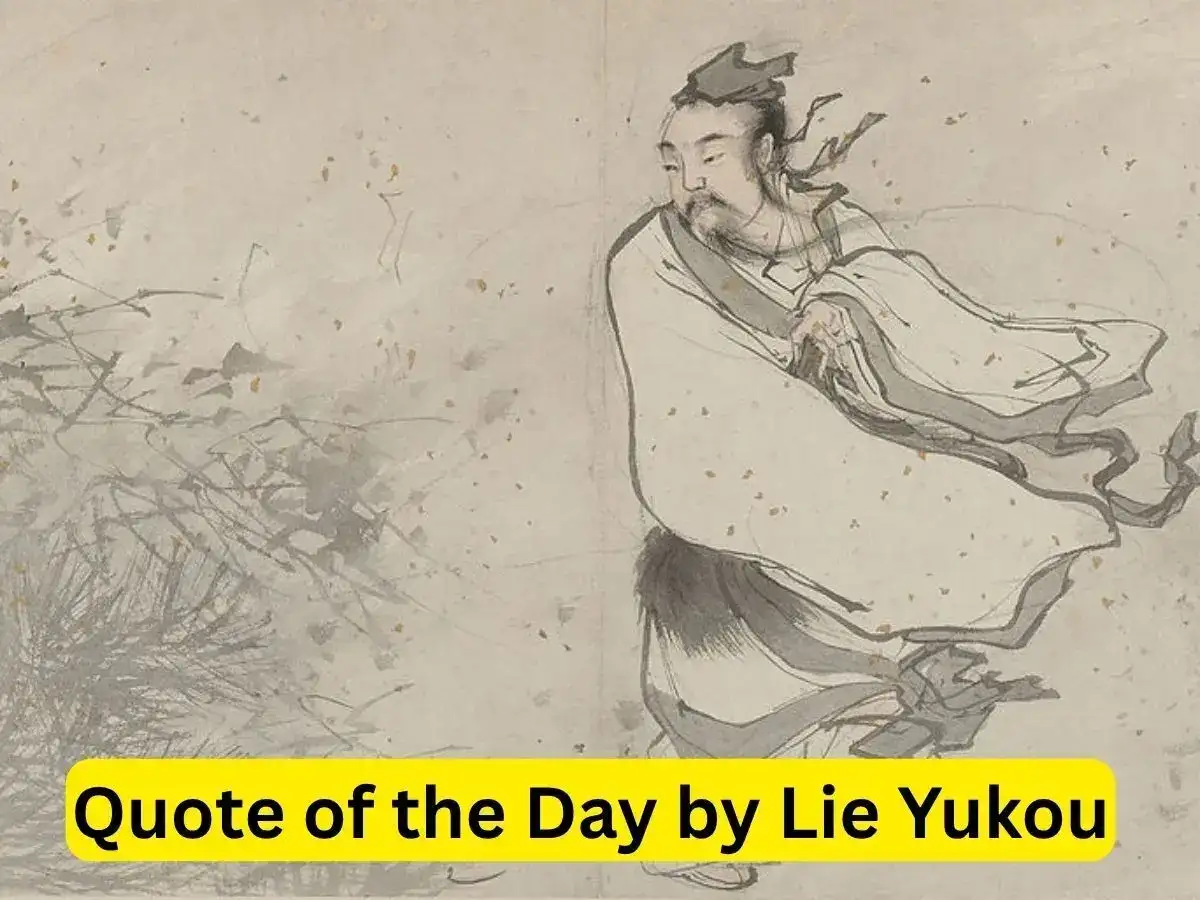
Quote of the Day by Lie Yukou: Some problems don’t disappear no matter how hard you try. You fix one thing, and something else breaks. They keep returning in different forms—new situations, new people, new stress. That's when this ancient thought by Lie Yukou, one of the three primary philosophers who developed the basic tenets of Daoist philosophy, feels deeply relevant today.
A simple line, “To solve a problem, you need to remove the cause, not the symptom,"-challenges how most people deal with life: quick fixes, surface solutions, and temporary relief. In simple words, many people focus only on what is visible, not what is creating what is visible in the first place.
ALSO READ: Former Google CEO Eric Schmidt booed by University of Arizona students
Quote of The Day
"To solve a problem, you need to remove the cause, not the symptom"- widely attributed to Liezi
The Illusion of Solving Problems
In everyday life, people often believe they are solving problems when they are actually only reducing discomfort. For example, when someone has a headache, they may take medicine to relieve the pain, but the real reason behind the headache could be lack of sleep, stress, or poor lifestyle habits. The pain disappears temporarily, but the cause remains untouched, and often we forget about it.
ALSO READ: Kash Patel's luxurious date-night outing with girlfriend sparks controversy
The same pattern repeats in emotional life, too. A person may feel stressed and distract themselves with entertainment, scrolling, or social media. For a short time, the stress feels lighter, but the pressure that created it still exists and haunts the person's mental peace. People try to avoid conflicts in relationships rather than addressing it. It might give you temporary peace but it does not resolve the underlying misunderstanding which might come up later.
This creates an illusion of control. It feels like the problem is solved because the symptoms are quieter. However, the root cause that produced the problem continues to remain unresolved.
What This Ancient Idea Is Really Saying
The philosophy connected to Liezi is rooted in Taoist thinking, where life is understood as a flow of natural causes and effects. In this view, nothing appears without a reason, and every visible outcome has an invisible source.
ALSO READ: Who is Kash Patel’s girlfriend Alexis Wilkins?
When this quote says to remove the cause rather than the symptom, it is pointing toward deeper awareness. It is suggesting that what we usually notice in life is not the real problem but only the result of something deeper.
Anger is not the root issue; it is often the result of frustration or unspoken pain. Stress is not the true cause; it is usually a response to pressure, imbalance, or uncertainty. Failure is not always the beginning of a problem; it is often the outcome of repeated patterns that were never corrected. If attention is only given to what appears on the surface, the deeper structure remains unchanged.
Why Life Problems Keep RepeatingMany people experience the same types of problems repeatedly. It may be similar relationship issues, repeated financial struggles, or ongoing emotional exhaustion. The situations may look different on the outside, but the pattern feels familiar.
This happens because the root cause is never addressed and solved. When only the surface-level issue is treated, the deeper pattern continues to generate new versions of the same problem.
For example, in relationships avoiding difficult conversations can lead to repeated misunderstandings. Similarly, overworking without rest can lead to continuous burnout. Suppressing emotions can result in sudden emotional breakdowns.
Why This Ancient Wisdom Still Matters Today
Modern life is built around speed and quick solutions and people prefer fast relief over slow understanding. There is always a way to reduce pain quickly, whether through distractions, shortcuts, or temporary fixes.
However, deeper problems do not respond to speed because they respond to awareness and correction. This is why this ancient idea still feels relevant today. It quietly challenges the habit of choosing comfort over clarity.
It asks a difficult but important question: are we actually solving problems, or are we only reducing how much they hurt in the moment?
The Shift This Quote Encourages
This idea changes the way problems are approached. Instead of reacting immediately to what is happening on the surface, it encourages a pause to understand where it is coming from.
It shifts attention from reaction to reflection. It moves focus from symptoms to systems. It encourages looking beyond immediate discomfort and searching for the deeper reason behind it.
This shift is not always easy because the cause is often less obvious and sometimes uncomfortable to face. But without identifying it, real change is not possible.
The wisdom behind this ancient idea attributed to Liezi is not just about solving problems. It is about understanding them differently. Once the cause is removed, the symptom no longer has a place to exist.