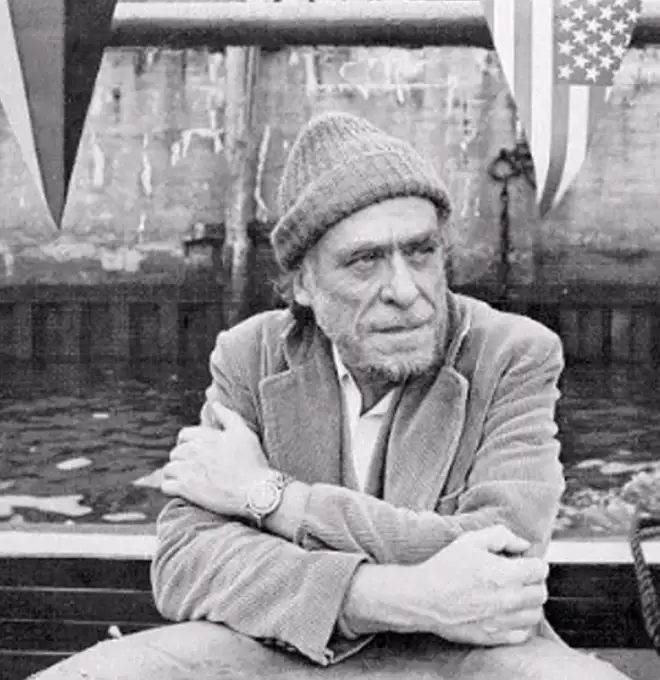
Quote of the day by Charles Bukowski : Human relationships often bring both emotional closeness and emotional risk. The people who make life feel intense, meaningful, and deeply personal can also become the source of heartbreak and disappointment. Love and attachment require openness, and with that openness comes vulnerability. Even when people understand that relationships can lead to pain, they still continue to seek connection because emotional bonds remain an important part of life. Feelings such as trust, passion, admiration, and affection can create strong emotional experiences, but they also make heartbreak feel more personal when things go wrong.
Quote of the Day Today: Charles Bukowski on Women, Love, Betrayal, and Human Nature
Charles Bukowski said, “ There are women who can make you feel more with their bodies and their souls, but these are the exact women who will turn the knife into you right in front of the crowd. Of course, I expect this, but the knife still cuts, ” as per BrainyQuote.
Understanding Vulnerability and Trust in Human Connections and Relationships
This quote by Charles Bukowski explores the emotional complexity of relationships and the pain that often comes with vulnerability. Bukowski suggests that the people who make us feel the strongest emotions, through love, passion, connection, or emotional intimacy, are also the ones capable of hurting us the most. The quote reflects the idea that emotional closeness creates both joy and risk at the same time.
Quote of the Day May 26: Why Emotional Intimacy Can Also Lead to Heartbreak
The “knife” mentioned in the quote is symbolic of betrayal, heartbreak, rejection, humiliation, or emotional pain. Bukowski describes a situation where someone deeply admired or loved becomes the source of emotional suffering. The phrase “right in front of the crowd” adds another layer to the pain, suggesting feelings of public embarrassment, exposure, or emotional helplessness.
Complexity of Human Emotions
One of the most important parts of the quote is when Bukowski says, “Of course, I expect this, but the knife still cuts.” This line highlights an important truth about human emotions: even when people know they may get hurt, the pain still feels real when it happens. Experience, caution, or emotional awareness do not completely protect people from heartbreak.
Emotional Truths About Love and Attachment Explained
Bukowski acknowledges that love and emotional attachment can bring intense experiences, but they also leave people emotionally exposed. Deep emotional connections require trust and openness, and with that openness comes the possibility of disappointment.
The quote captures a universal human experience: the closer someone becomes to our emotions, the greater their power to affect us, both positively and painfully.
Who Was Charles Bukowski
Charles Bukowski was a German-born American poet and novelist known for his raw, realistic writing about loneliness, survival, alcoholism, gambling, and life on society’s margins. Born on August 16, 1920, in Andernach, Germany, he spent most of his life in Los Angeles.
He briefly attended Los Angeles City College before working various low-paying jobs and writing short stories. After years of traveling across the United States as a struggling alcoholic drifter, he returned to Los Angeles and began publishing poetry in 1955, as per a Britannica report.
Bukowski gained recognition through poetry collections such as Flower, Fist and Bestial Wail, Love Is a Dog from Hell, and War All the Time. He also wrote notable novels and story collections including Post Office, Factotum, Ham on Rye, Notes of a Dirty Old Man, and Hot Water Music.
Many of his works featured his fictional alter ego, Henry Chinaski, a hard-drinking and struggling writer. Though he started as a cult underground writer, Bukowski later became one of the best-known American authors of the 20th century. He died on March 9, 1994, in San Pedro, California, as per the Britannica report.
Inspiring Quotes by Charles Bukowski
Here are a few more quotes by Charles Bukowski.
- "An intellectual says a simple thing in a hard way. An artist says a hard thing in a simple way," as per BrainyQuote.
- "If you're losing your soul and you know it, then you've still got a soul left to lose," as per BrainyQuote.
- "The difference between a democracy and a dictatorship is that in a democracy you vote first and take orders later; in a dictatorship you don't have to waste your time voting," as per BrainyQuote.
- "You begin saving the world by saving one man at a time; all else is grandiose romanticism or politics," as per BrainyQuote.
- "The free soul is rare, but you know it when you see it - basically because you feel good, very good, when you are near or with them," as per BrainyQuote.