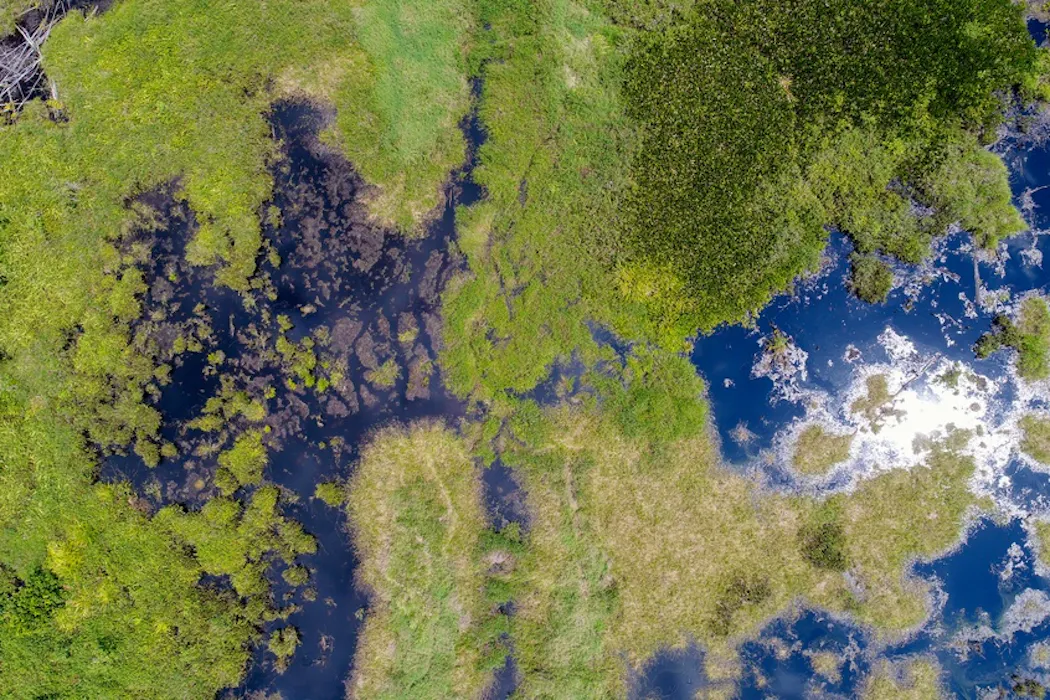
Peatland fires in Indonesia pose a major threat to habitats, wildlife and people. That risk is exacerbated by the country’s periodic El Niño warming phases, which bring prolonged drought.
Massive fires have occurred in all the recent El Niño years, including 2015, 2019 and 2023. With a major El Niño building this year, there are serious concerns that Indonesia is in store for another severe fire season.
Preventing these fires requires more than just an emergency response. It depends on restoring degraded peatlands and reducing the conditions that allow fires to spread.
As climate change intensifies wildfire risk globally, Indonesia’s experience offers important lessons for protecting vulnerable ecosystems and communities around the world.
The national restoration programme was established just after the major droughts brought about by the El Niño of 2015. That year, Indonesia experienced severe land and peat fires which saw around 2.6 million hectares of land burn.
Pollution and emissions from months of fires affected millions of people across Southeast Asia. Economic losses were estimated at more than US$16.1 billion (£9 billion), not including the enormous environmental and health consequences.
Those major fires weren’t caused solely by drought triggered by El Niño. They were also the result of peat ecosystem damage from deforestation and canal construction, plus land drainage for agriculture and other development.
In 2016, the Indonesian government established the Peatland Restoration Agency to restore ecosystems nationally and prevent fires. By 2020, this had evolved to include mangrove forest restoration, to help build the climate resilience of Indonesian coastlines.
Although wildfire hotspot numbers declined across Indonesia once this project was established, no research had measured the effectiveness of restoration as a factor in that decline. Our team’s recent research shows that large-scale peatland restoration reduced wildfire hotspots by up to 22% in restored areas of Indonesia during the 2019 El Niño. This reduced the number of peatland fires by 38% compared with 2015.
The urgency of peat restoration
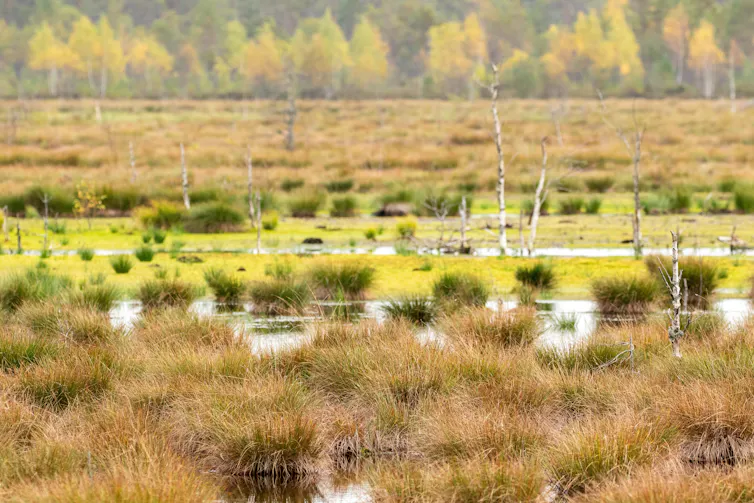
The restoration programme had restored around 1.6 million hectares of peatland by 2024. However, the continuity of this programme is now in question because that same year, the restoration agency’s mandate ended, and was transferred across multiple ministries.
The current, strong El Niño is due to peak later in 2026, leading to reduced rainfall. Hundreds of wildfire hotspots have already begun appearing, including many peatland areas. Between January and June 2026, the Indonesian government recorded more than 100,000 hectares of burned land.
Our study compared restored peatland areas with similar unrestored areas in Sumatra and Kalimantan. We evaluated two main rewetting restoration methods: canal blocking and deep wells.
The deep-well method is like watering a dry sponge using pumped water. When the dry season arrives and peatland begins to dry out, operators switch on pumps to draw water up from the wells. The aim is to wet the land around the well or help extinguish fires.
Canal blocking, on the other hand, keeps land wet by holding water in place so it doesn’t drain away.
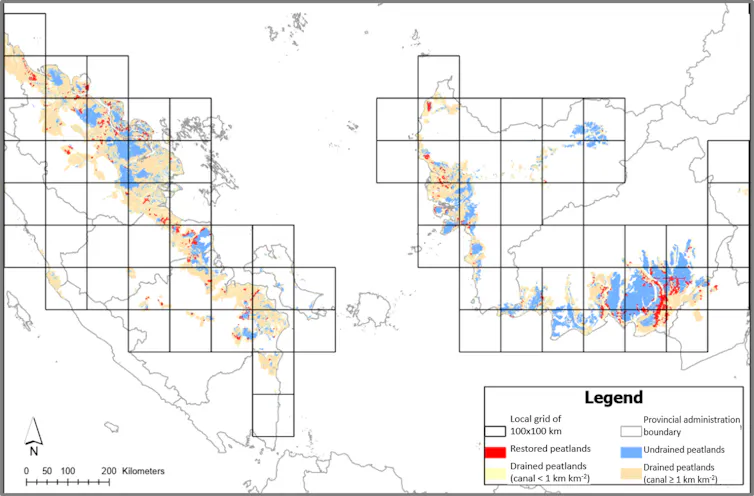
In all, our analysis found that restoration reduced fire hotspots by up to 22% overall between 2015 and 2019, across nearly 4,000km² of peatland where rewetting had been effective.
Deep wells were more effective at reducing fire risk than canal blocking. This is because pumped water directly wets dry peat and can also be used to put out fires. It reaches a wider area, and the infrastructure lasts longer.
Canal blocking, by contrast, doesn’t involve active pumping — it only affects land within a few hundred metres of its location. Under the right conditions, though, it can be more effective than deep wells at reducing fires – if suitable locations are chosen and enough canals are blocked, ideally in clusters.
However, a recent study of peatland restoration across Indonesia from 2015 to 2024 found that 70% of canal-blocking units were damaged. Our research shows that only canal blocks around a year old are genuinely effective at keeping peat wet. So, regular maintenance is essential to avoid the blocks losing their ability to keep peat wet.
UK efforts to restore degraded peatlands
Although Indonesia’s restoration programme has shown positive results, the threat of fire still looms over peatland that has already been degraded.
Even though the extent of these fires has declined over the past decade, hotspot density in restored areas is still up to ten times higher than in pristine peat forests that have never been logged or drained.
While the total burned area within peat forest regions remains consistently above 500,000 hectares, water table levels at the sites we studied remain below the safe threshold of 40cm. And there is still a great deal of degraded peatland that needs to be restored.
Despite these challenges, the reduction in wildfire occurrence on restored peatlands should encourage Indonesia and other nations to sustain and expand efforts to restore degraded peatlands.
In the UK, efforts to restore degraded peatlands across England and Scotland are ongoing. In those locations, benefits such as the reduction in wildfire risk need to be monitored and restoration methods continually refined.
But restoration, while beneficial, cannot replace intact peatlands. So, protecting these peatlands should remain the top priority – especially as the threat of severe droughts grows stronger and more intense, due to climate change.
This article was originally published on The Conversation. Read the original article.