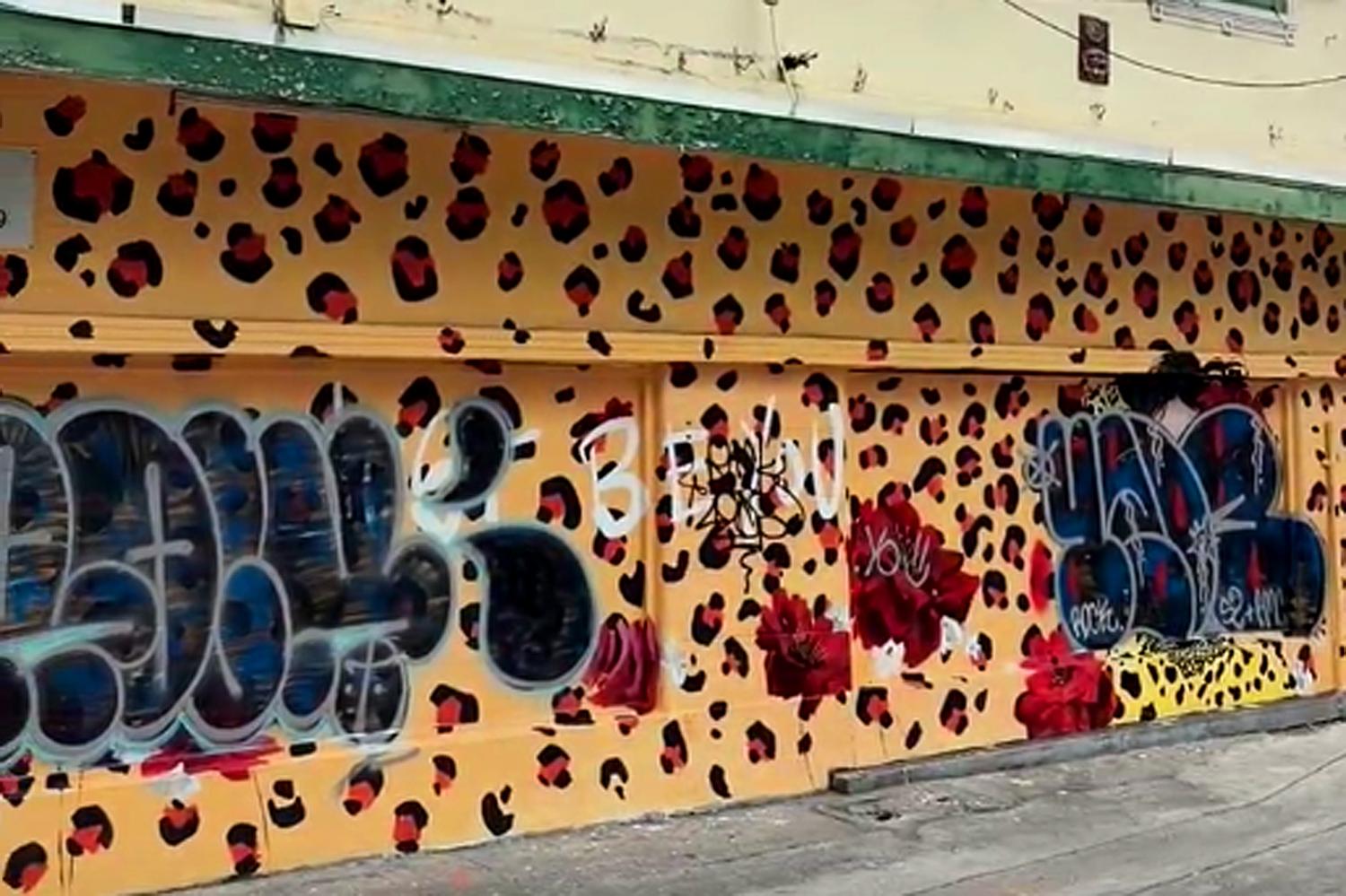
A few strokes of spray paint were all it took to ignite a national conversation.
When a globally recognised graffiti artist was fined after painting a wall in Chiang Mai's Old City last month, the incident was quickly framed as an act of vandalism under the Cleanliness and Orderliness Act B.E. 2535 (1992).
The city, after all, is in the midst of its bid for Unesco World Heritage status, where authenticity and preservation have become matters of international scrutiny.
Yet the debate that followed was never simply about one wall.
It sparked a dialogue about something far more difficult to define -- who has the right to shape public space in a city where history and contemporary culture collide?
For Prof Kachornpon Hiranchotepaisan of Silpakorn University, that question is more revealing than the familiar argument over whether graffiti is art or vandalism.
"The people living there reportedly welcomed the artwork," he says. "They saw it as something that could bring character to the neighbourhood. The authorities saw something entirely different."
The disagreement, he argues, exposes two competing ideas of ownership.
Legally, the answer is straightforward. Public space belongs to the state and is governed by regulations designed to protect the public interest. Socially, however, the picture is less clear.
Streets, walls and neighbourhoods are also shaped by the people who inhabit them every day.
"If a community embraces an artwork while the state rejects it, then what we're seeing is a gap between bureaucracy and lived experience," he says. "It suggests our institutions still struggle to understand contemporary public art."

His criticism is not directed at heritage protection itself.
Chiang Mai's pursuit of Unesco recognition inevitably raises the stakes. Historic districts are expected to preserve their authenticity, integrity and cultural significance. Ancient monuments cannot simply become blank canvases.
"The context changes completely," Prof Kachornpon says. "You obviously cannot paint directly onto heritage structures."
But protecting heritage, he argues, should not mean freezing an entire city in time. Across Thailand, examples already exist of contemporary art enriching historic places rather than competing with them.
Murals in Phuket's Old Town and Songkhla have become part of each city's cultural identity, while Lop Buri's large-scale public art projects have helped reshape perceptions of the ancient town beyond its famous monkey population.
In each case, the artwork was introduced through collaboration rather than conflict.
"The solution isn't to reject contemporary art," he says. "It's to create the right context for it." Graffiti artist Smith Phiromsank, who works under the name Montemith, approaches the debate from a different perspective but arrives at a surprisingly similar conclusion.

"For me, expression itself is art," he says.
Rather than asking whether graffiti belongs in public space, he believes the more meaningful question is why it appears there in the first place.
"What is the artist trying to communicate? Once you understand the intention, you understand the work," Montemith said.
He acknowledges that permission matters. If a property owner invites an artist to paint, the ethical dilemma largely disappears.
Public property, however, occupies a more complicated space, where questions of ownership, expression and responsibility inevitably overlap.
Unlike many graffiti artists, Montemith says his own practice has rarely been driven by protest.
"I'm more interested in the walls themselves," he says. "I love painting outdoors. I enjoy the scale, the process and the experience of making work in public."
That experience has also allowed him to witness how dramatically public attitudes have changed.
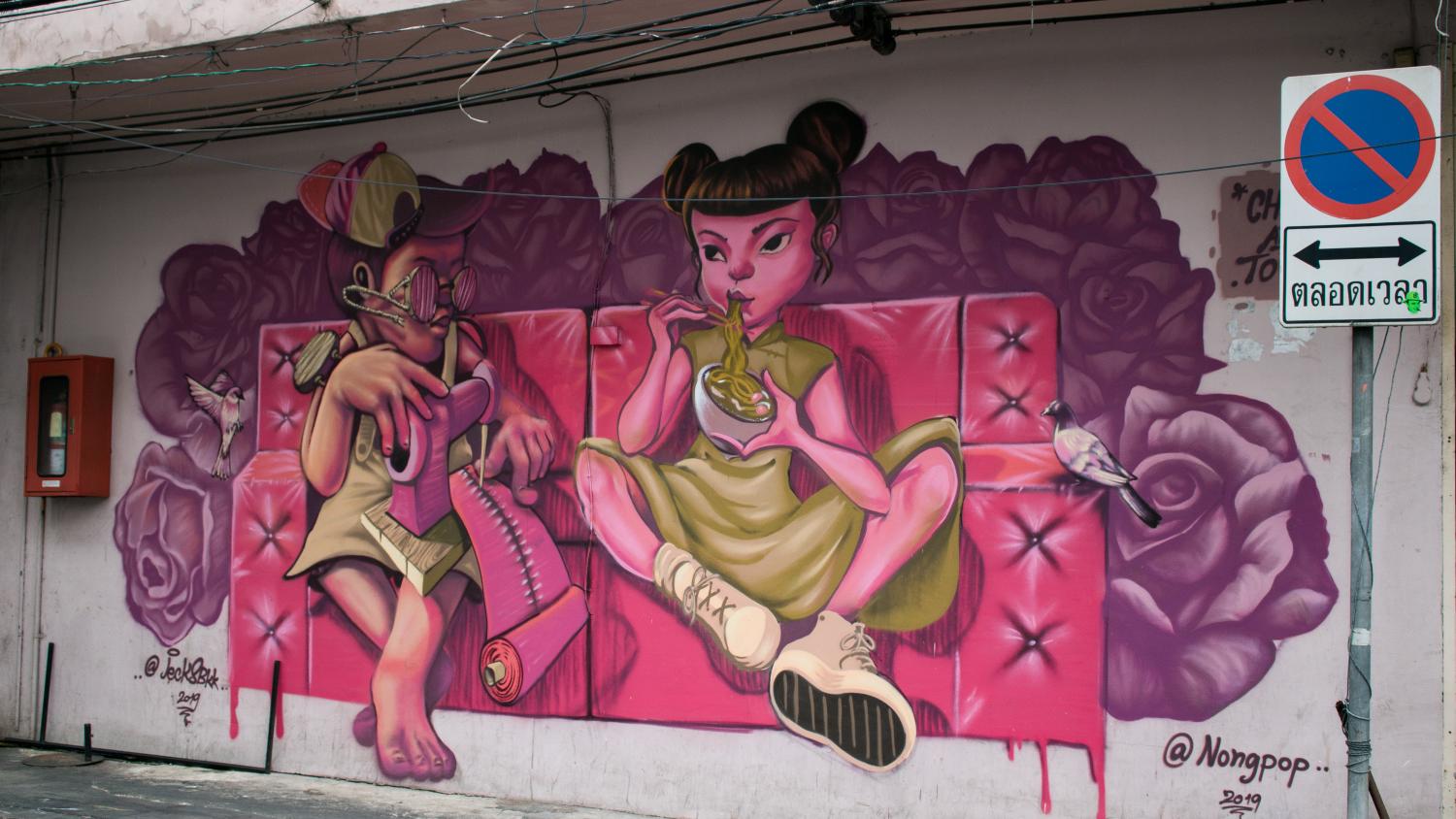
He recalls working on mural projects in Sakon Nakhon through the Art Terminal Exchange's "Mun Muang Sakon" contemporary art exhibition, where homeowners were initially reluctant to let artists paint their walls.
By the second visit, curiosity had replaced hesitation.
By the third time around, residents were actively asking for artists to participate on their local grounds.
"It's a gradual process," he says. "People begin by rejecting what they don't understand. Then they become curious. Eventually they begin to appreciate it."
That evolution mirrors the wider trajectory of graffiti itself.
Once dismissed almost exclusively as vandalism, graffiti has steadily entered galleries, museums and private collections. Artists who once painted anonymously on city walls now collaborate with global brands and command serious prices at auction.
A movement born outside the establishment has, in many ways, become part of it.
The irony is difficult to ignore.
As graffiti gains legitimacy within the art world, cities continue to wrestle with where it belongs outside museum walls.
Neither Prof Kachornpon nor Montemith argues that every surface should be open to artists. Both support protecting sites of genuine historical significance. Both recognise that heritage demands careful stewardship.
What they question is a more fundamental assumption -- that preservation and contemporary culture must exist in opposition.
Historic cities are not static monuments. They are living places, continually shaped by the generations that inhabit them. The challenge is not deciding whether heritage or contemporary expression deserves a place within them. It is finding the wisdom to make room for both.