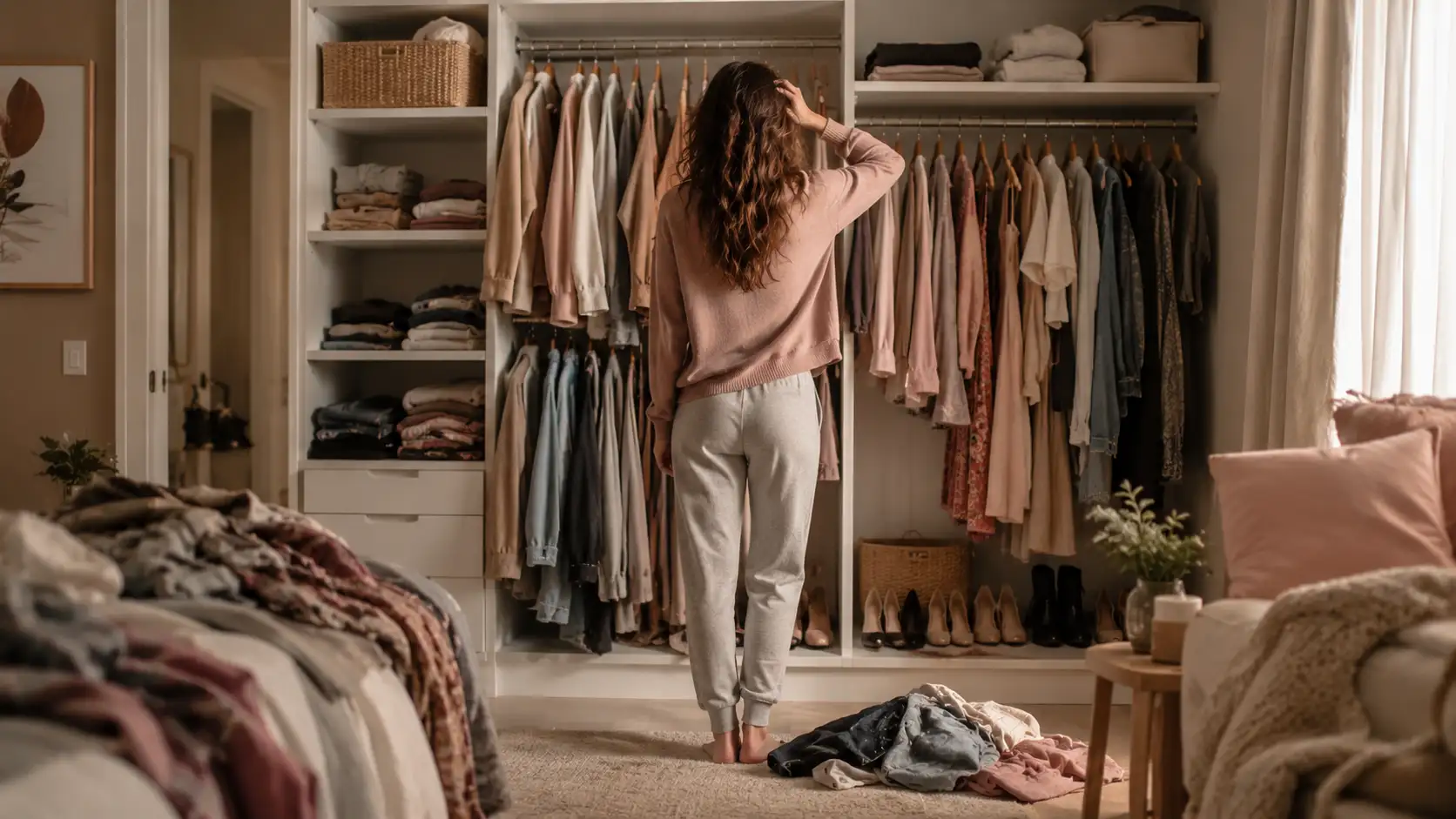
Many women have experienced the same frustrating moment: standing in front of a wardrobe packed with clothes and still feeling like there is “nothing to wear.” To outsiders, it may sound irrational or materialistic. But psychology says the feeling is often less about fashion and more about identity, emotion, self-expression, and mental overload. Experts suggest this common experience reflects the deep psychological connection between clothing, mood, confidence, and social expectations.
Clothes Are More Than FabricPsychologists explain that clothing is closely tied to self-concept, which refers to how people see themselves.
Women often use fashion not only for appearance but also for emotional expression. An outfit can reflect confidence, ambition, comfort, creativity, or even emotional protection.
According to research in Enclothed Cognition, introduced by Adam Galinsky, clothing can influence mood, behavior, and self-perception. This means choosing an outfit is not just a practical decision, it can affect how someone feels internally.
Why a Full Closet Can Still Feel Empty
One major reason is emotional mismatch. Many clothes in a wardrobe may belong to different versions of a person’s life, past jobs, old relationships, changing body image, or previous lifestyles.
When none of those clothes match how a woman currently feels or wants to feel, the closet suddenly seems “empty” despite being full.
Psychologists describe this as identity incongruence, where external appearance no longer aligns with internal identity.
Decision Fatigue Is Real
Modern wardrobes often contain too many options, which can overwhelm the brain. This connects to Decision Fatigue Theory, where repeated choices mentally exhaust people over time. Instead of making dressing easier, having endless clothing choices can increase stress and dissatisfaction.
In today’s world of fast fashion, social media trends, and online shopping, women are exposed to constant style comparisons, making outfit decisions even more emotionally loaded.
The Pressure of Social Comparison
Platforms like Instagram and TikTok have intensified appearance-related pressure.
Psychologists link this to Social Comparison Theory, developed by Leon Festinger. People naturally compare themselves to others, especially in highly visual environments.
Seeing influencers, celebrities, or peers constantly presenting curated outfits can create unrealistic expectations about always looking fresh, stylish, or perfect.
Clothing and Emotional State
Mood strongly affects clothing choices. On stressful or emotionally difficult days, many outfits may suddenly feel “wrong.”
Psychology suggests this happens because people unconsciously seek emotional alignment between how they feel and what they wear. If nothing matches the desired emotional state, frustration grows.
For example, someone preparing for an important event may reject multiple outfits because none create the emotional confidence they want to project.
Body Image and Self-Perception
Another important factor is body image. Even when clothes fit perfectly, emotional self-perception may influence how they feel.
Psychologists note that women are often exposed to unrealistic beauty standards from a young age. This can create moments where clothes are judged not by style but by how “acceptable” someone feels in them emotionally.
Celebrities like Selena Gomez and Zendaya have openly discussed how clothing confidence can fluctuate depending on emotional well-being rather than appearance alone.
The Desire for Reinvention
Sometimes the phrase “I have nothing to wear” reflects a deeper desire for change.
Psychologists connect this to the possible selves theory, where people imagine future versions of themselves. Clothing can symbolize growth, reinvention, or emotional transition.
This is why people often feel the urge to shop before major life events, career changes, or personal transformations.
It’s Often About Feeling, Not Impressing
Contrary to stereotypes, the frustration is not always about impressing others. For many women, it is about feeling emotionally comfortable, authentic, and confident within themselves.
Fashion becomes a personal emotional language rather than a superficial concern.
Real-Life Modern Examples
The rise of “capsule wardrobes” and outfit-repeating movements online shows many women are trying to reduce fashion stress and reconnect with personal comfort.
Even high-profile figures like Jennifer Lawrence have spoken about the emotional pressure tied to appearance expectations. This reflects a broader cultural shift toward authenticity over perfection.
It’s About Identity, Not Just ClothesThe psychology behind women saying they have “nothing to wear” reveals that the experience is often emotional rather than material. Clothing carries identity, memory, confidence, and social meaning. A full closet does not always guarantee emotional connection or self-expression. Sometimes, the real search is not for a new outfit, but for a version of oneself that feels comfortable, confident, and understood.
FAQs
Why do women say they have nothing to wear despite many clothes?
Psychology says it is often linked to identity, mood, body image, and emotional self-expression rather than lack of clothing.
What is enclothed cognition?
It is the psychological concept that clothing can influence mood, confidence, and behavior.