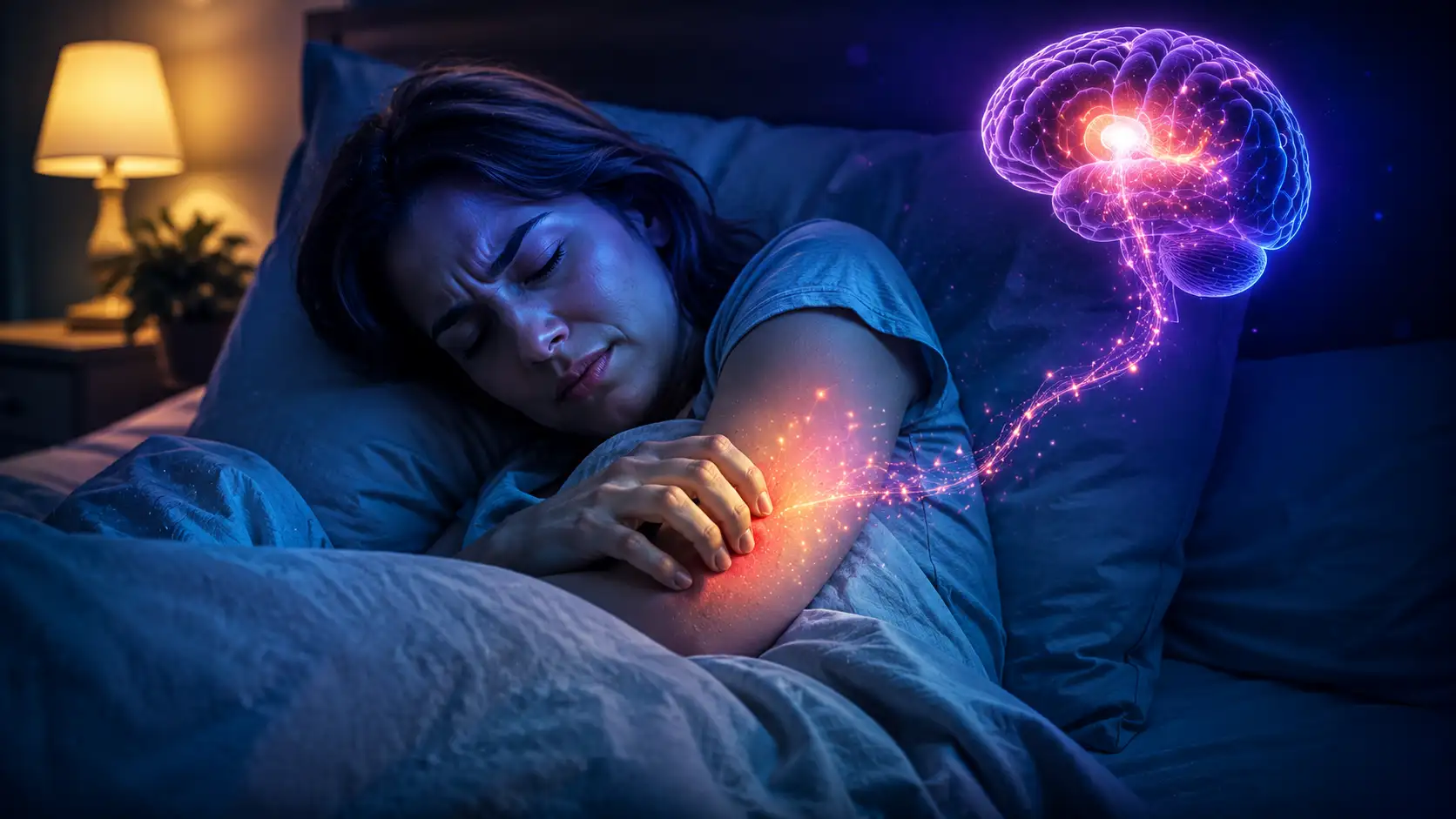
Many people experience the same puzzling pattern. Throughout the day, their skin feels perfectly normal. But the moment they lie down to sleep, they suddenly notice itching on their arms, legs, back, or scalp. Sometimes scratching one spot makes another area itch, creating an endless cycle that delays sleep. It's easy to assume the itching is "all in the mind" or that it must signal a serious skin condition.
Psychology and sleep science offer a more balanced explanation. Nighttime itching can certainly be caused by medical conditions such as eczema, allergies, dry skin, liver disease, or medication side effects. Those possibilities should always be considered, especially if the itching is severe, persistent, or accompanied by a rash. However, in many otherwise healthy people, psychological and neurological processes can also make normal skin sensations feel much more noticeable at bedtime.
Several well-established theories help explain why this happens.
Your brain notices more when everything else becomes quiet
One of the strongest explanations comes from Selective Attention. Throughout the day, the brain is busy processing conversations, work, traffic, phones, and countless other distractions.
When you finally get into bed, those distractions disappear. As a result, your attention naturally shifts inward. Small sensations that went unnoticed all day, such as mild tingling, pressure from clothing, or tiny skin irritations, suddenly become much more noticeable.
Imagine sitting in a silent room. Even the faint ticking of a clock suddenly seems loud. The same principle applies to sensations coming from your own body.
Stress can make itching feel stronger
Psychologists have long known that Stress affects how people experience physical sensations. The Biopsychosocial Model, proposed by psychiatrist George Engel, explains that biological, psychological, and social factors work together to influence health.
During stressful periods, the body releases hormones such as cortisol and activates the sympathetic nervous system. Although stress does not directly create every itch, it can increase awareness of physical discomfort and make existing itching feel more intense.
Many people notice their nighttime itching becomes worse during exams, work deadlines, family conflicts, or financial stress.
The itch-scratch cycle keeps itself going
Dermatologists and psychologists describe the Itch-Scratch Cycle. An itch leads to scratching. Scratching briefly relieves the sensation but also irritates the skin, triggering even more itching.
Before long, a small itch becomes a much larger problem. This cycle is partly driven by the nervous system, which continues sending itch signals after scratching damages the skin barrier. Breaking the cycle is often an important part of treatment.
The body changes after sunset
Sleep researchers also point to Circadian Rhythms. The body's internal clock influences skin temperature, hormone levels, immune activity, and water loss from the skin. At night, skin temperature naturally rises slightly, and the skin may lose more moisture.
These normal biological changes can make existing itching feel stronger, especially in people with dry or sensitive skin. This explains why symptoms often appear specifically around bedtime rather than during the day.
Hyperarousal makes the brain stay alert
Another explanation comes from Hyperarousal Theory. People experiencing stress, anxiety, or insomnia often have nervous systems that remain unusually alert even when trying to sleep.
Instead of gradually relaxing, the brain continues monitoring the environment, and the body, for possible problems. Minor sensations that would normally be ignored become amplified. This doesn't mean the itch is imaginary. It means the brain is paying much closer attention to it.
Expectations can increase awareness
Psychologists also recognize the role of the Nocebo Effect. If someone repeatedly expects to itch every night, that expectation itself can increase attention to bodily sensations.
The brain begins anticipating discomfort before it even occurs. Over time, this learned expectation may strengthen the perception of itching without any new skin problem developing.
Nighttime itching isn't always psychological
It's important not to assume every nighttime itch has a psychological cause. Persistent itching accompanied by rashes, swelling, fever, unexplained weight loss, or other physical symptoms should always be evaluated by a healthcare professional.
Psychology explains why itching can become more noticeable, but it does not replace proper medical assessment when symptoms persist. Sometimes the skin sends the signal. Other times, the quiet of the night simply allows the brain to hear it much more clearly.
FAQs
Why does my body itch only when I go to bed?
Psychologists and sleep researchers say reduced distractions, circadian rhythms, stress, and increased attention to bodily sensations can all make itching more noticeable at bedtime.
Can stress make itching worse?
Yes. Stress can increase awareness of physical sensations and intensify existing itching, even when it is not the original cause.