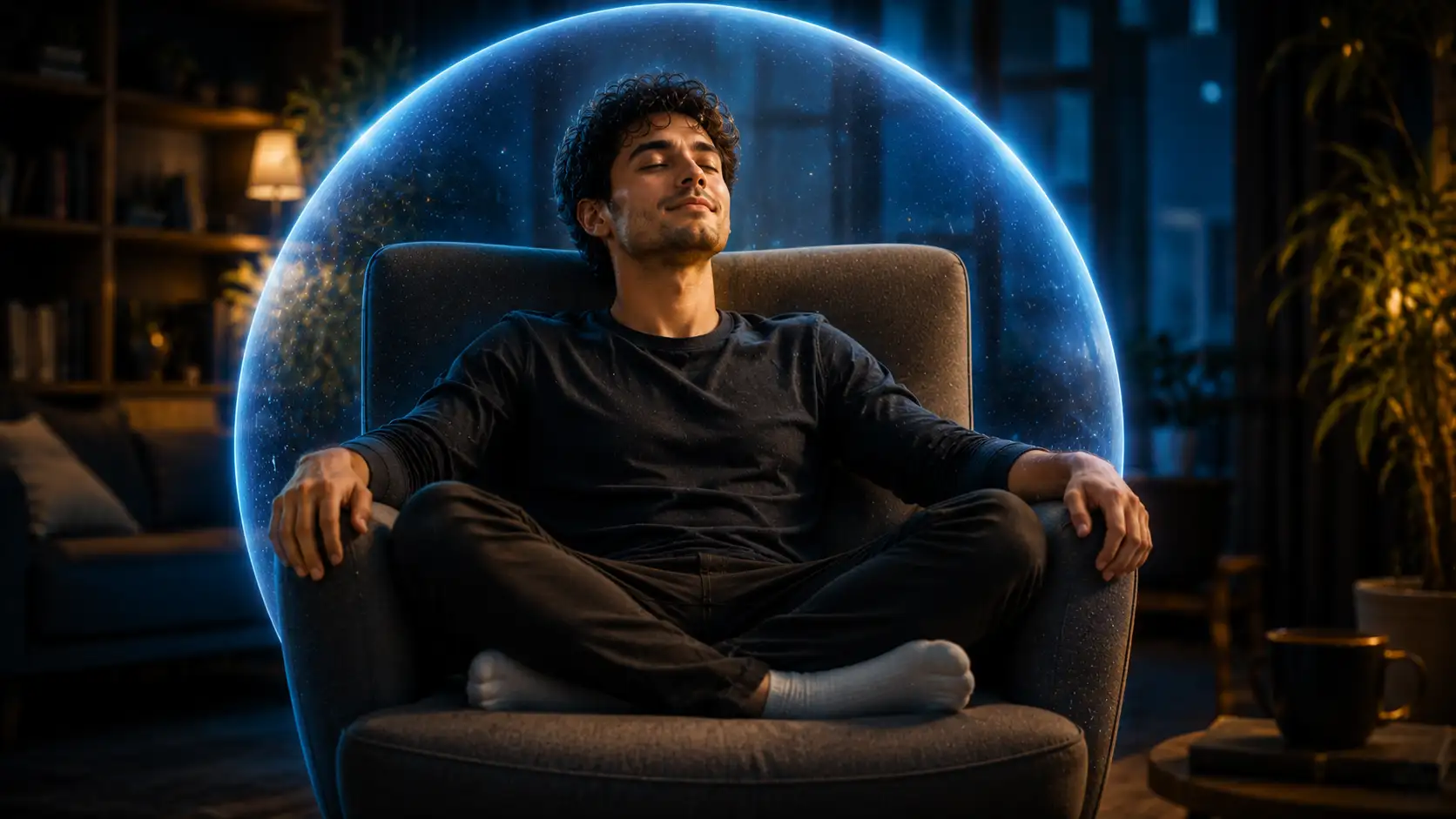
Everyone knows someone who does it. The moment they sit down, their legs come up onto the chair. Sometimes they sit cross-legged. Other times, they tuck one leg underneath themselves or curl up into a compact position. Whether they are working, reading, watching television or chatting with friends, it seems to be their default posture. To others, it may seem unusual, informal or even uncomfortable. But psychology suggests there may be more behind this behavior. People who regularly sit in chairs with their legs up and crossed are not necessarily being disrespectful or overly casual.
In many cases, their brains may be seeking comfort, safety and emotional regulation. The body and mind are deeply connected, and simple postures can reveal how the brain creates calm environments. Several psychological theories help explain why this habit is so common.
Embodied cognition suggests the body influences the mind
One of the strongest explanations comes from embodied cognition. This theory suggests physical states can influence emotional and mental states. In other words, the way we position our bodies can affect how we think and feel. When people pull their legs closer to their bodies, they often create a sense of containment. The posture can feel protective and comforting.
Many people unconsciously shift into these positions during moments of concentration or relaxation. Think about children. They frequently sit curled up while reading, drawing or watching television. Adults often continue similar behaviors without realizing it. The body remembers what feels safe.
Self-soothing behaviors may be the hidden explanation
Psychologists often describe repetitive comfort behaviors as self-soothing mechanisms. Humans naturally develop physical habits that help regulate emotions. Some people play with their hair. Others hold a pillow while sleeping. Some individuals sit with their legs tucked up. These behaviors can reduce emotional tension.
By bringing the body inward, people may create a subtle feeling of protection. For example, someone working through a stressful assignment may automatically pull their legs onto the chair without consciously deciding to do it. The body may be responding before the brain fully notices the stress.
The brain often associates smaller spaces with safety
Environmental psychology offers another explanation. Humans tend to seek environments that feel secure and predictable. Making the body smaller may unintentionally recreate those feelings. Psychologists sometimes refer to this as protective posturing. It is not a sign of fear. Instead, it can be a way of creating comfort. Think about everyday examples.
People often wrap themselves in blankets when stressed. Many prefer cozy corners in cafés instead of large open spaces. Some sleep better with multiple pillows around them. The brain often enjoys boundaries because boundaries create a sense of security.
Proprioception may explain why some people prefer this position
Another factor is proprioception, the body's ability to sense its own position in space. Some people have heightened body awareness. They constantly adjust their posture until they feel comfortable. For these individuals, sitting with both feet flat on the floor may simply feel unnatural.
Bringing their legs upward may create a stronger sense of physical balance. It is similar to how some people prefer firm mattresses while others prefer softer ones. The brain interprets comfort differently from person to person.
Emotional regulation theory may also play a role
Psychologist James Gross is known for his work on emotional regulation. Many everyday habits quietly help people manage their emotions. Sitting with legs up and crossed may be one of them.
The posture often appears during activities that require focus, such as reading, working on a laptop or studying. The body may be helping the brain settle into a calmer state. This does not mean people are anxious. It simply means they have discovered a position that makes concentration easier. The body and brain are working together.
Habit loops may make the behavior automatic
Behavioral psychology also explains how habits develop. According to habit loop theory, repeated actions become automatic over time. The cue may be sitting down. The routine is bringing the legs up. The reward is immediate comfort. After years of repetition, the behavior no longer requires conscious thought.
Many people do not even realize they are doing it until someone points it out. The brain simply follows a familiar script.
Personality traits may influence the preference
Research involving the Big Five personality model suggests people high in openness and introversion sometimes place greater value on personal comfort and internal experiences.
That does not mean all introverts sit this way. But individuals who enjoy creating cozy, low-stimulation environments may naturally gravitate toward these postures. For example, many remote workers unconsciously adopt relaxed seating positions throughout the day because formal posture is no longer required. The environment influences behavior. When people feel safe, their bodies often become less rigid.
The nervous system may be seeking calm
The nervous system constantly evaluates whether environments are safe or stressful. Psychologist Stephen Porges developed the Polyvagal Theory, which explores how feelings of safety influence physical states. When people feel safe, their bodies often shift into more relaxed and natural positions. Curled-up postures may simply reflect that relaxation. Instead of maintaining formal, alert body language, the nervous system allows comfort to take over.
The posture may have less to do with manners and more to do with emotional comfort
Psychology teaches us that simple body positions can reveal deeper emotional and mental needs. Sitting with legs up and crossed is rarely just about the chair itself. More often, it is a way of creating comfort, building a sense of safety, and helping the nervous system regulate itself.
People who sit this way are not necessarily being impolite or overly casual. In many cases, they are simply choosing a position that feels secure, calming, and natural to them. Their brains may simply be creating a physical environment that feels secure and familiar. Sometimes, a small change in posture is not about the body at all. It is the brain's way of quietly saying, "I feel comfortable here."
FAQs
Is sitting with legs up and crossed a psychological habit?
Yes. For many people, it becomes a comfort behavior connected to emotional relaxation and body awareness.
Why do some people dislike sitting with both feet on the floor?
Their brains may simply find curled-up positions more relaxing and less stressful.