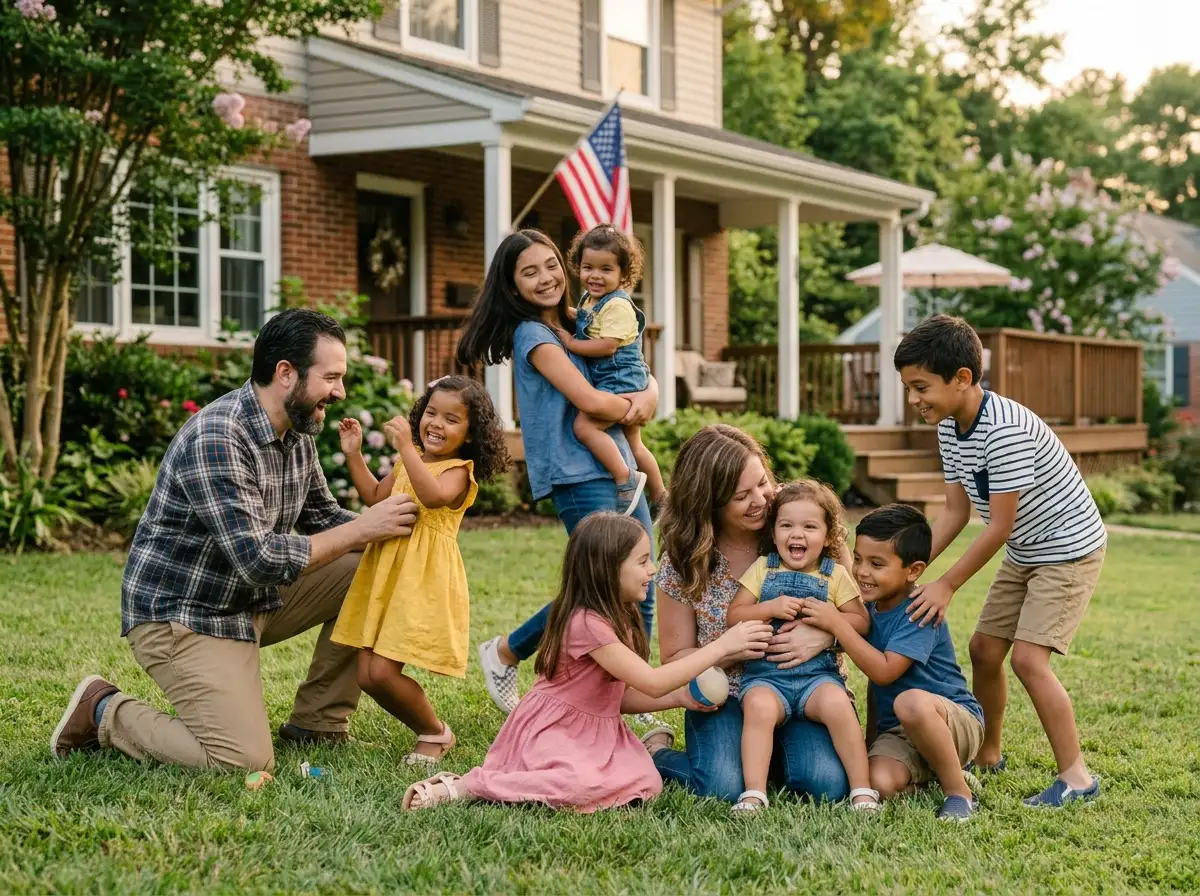
Psychology says people who raise several children aren't all making the same life choice for the same reason. Many people believe that having a large family reflects one personality trait or one mindset. However, psychology does not support that belief. Researchers have found that decisions about family size depend on many factors. These include personal beliefs, childhood experiences, financial conditions, cultural traditions, religious values, health, and relationships. Psychology studies show that parenting choices result from several influences working together. Understanding these influences helps explain why different families make different decisions about raising children and building their households.
Psychology says people who raise several children aren't driven by a single personality trait
Psychology says people who raise several children aren't driven by one common personality trait or one universal reason. Research shows that decisions about family size are shaped by personal values, cultural traditions, religious beliefs, financial conditions, relationships, health, and life experiences. Some people always plan to have a large family, while others make that decision over time as their circumstances change. Psychologists explain that human behavior is complex, so no single explanation can describe why every parent chooses to raise many children.
Family size is influenced by many factors
People often assume that parents with many children share one common personality. Psychology says this assumption is not correct. There is no single psychological profile that explains why someone chooses to have a large family.
Research shows that family size depends on many influences. Some couples always wanted a large family. Others make decisions one child at a time. Some families grow because of cultural traditions. Others are influenced by religion, family expectations, or community values.
Economic conditions also affect decisions. Some people delay having children because of financial concerns. Others feel supported by extended family and decide to have more children. Health, fertility, age, education, employment, and access to childcare also play a role. Psychologists explain that human decisions are rarely based on only one reason. Instead, different factors combine to shape personal choices.
What psychology says?
Psychology explains that raising many children is a personal decision shaped by internal and external influences. People may value family life differently based on their upbringing, beliefs, experiences, and future goals.
Some individuals enjoy caregiving and family interaction. Others place importance on continuing family traditions. Some want siblings to grow up together. Others simply find satisfaction in parenting.
Psychologists also point out that people change over time. A couple may initially plan for two children but later decide to have more because of changing circumstances. This means psychology does not classify parents with many children into one fixed category.
What does this mean?
This means people should avoid making assumptions about parents based only on family size. A large family does not automatically indicate higher happiness, lower happiness, stronger relationships, weaker relationships, or any specific personality trait.
Psychology encourages people to understand individual differences. Every family has its own story. Personal values, life experiences, available resources, and social environments all contribute to parenting decisions. Looking at behavior without considering context can lead to incorrect conclusions.
Why is it done?
People choose to raise many children for different reasons. Some enjoy parenting and want a larger family. Others grow up in households where having several children is common. Religious beliefs may encourage larger families. Cultural traditions can also influence family planning.
Some parents believe that siblings provide lifelong support. Others want children to experience family relationships throughout life. In some societies, practical reasons such as family businesses, farming, or caregiving responsibilities have historically encouraged larger families. Psychology recognizes that these reasons vary across individuals and communities.
Which psychology theory explains this behaviour?
Several psychological theories help explain why people decide to have more children.
Maslow's Hierarchy of Needs suggests that people seek belonging, love, purpose, and fulfillment. Parenting may help meet these needs for some individuals.
Social Learning Theory explains that people often learn behaviors by observing parents, relatives, and communities. Someone raised in a large family may view that lifestyle as normal.
Attachment Theory focuses on emotional bonds. Strong family relationships may encourage people to build larger families.
Evolutionary Psychology suggests that reproduction is one part of human survival and continuation. However, modern decisions also involve education, careers, finances, and personal goals.
Each theory explains one part of human behavior. None fully explains every parenting decision.
This psychology study says?
Many studies examining fertility, parenting, and family decisions show that psychological, economic, biological, and cultural influences work together. Researchers consistently report that family planning cannot be explained by personality alone. Studies have found that education levels, income, relationship quality, community support, childhood experiences, religious beliefs, employment opportunities, and social expectations all influence family size.
Researchers also note that parenting satisfaction differs between individuals. Some parents report high satisfaction with larger families, while others prefer fewer children. These experiences depend on personal circumstances rather than family size itself. The overall finding remains consistent. Human behavior is complex, and parenting choices reflect multiple influences rather than one psychological characteristic.
Research links life satisfaction with family size decisions
A study by researchers Olga Gómez-Ortiz and Cristina Sánchez-Sánchez, published in the International Journal of Environmental Research and Public Health (IJERPH), examined why some parents with one child are more willing to have another. The researchers surveyed 96 Spanish parents with one child in early childhood education using questionnaires that measured life satisfaction, personality, parental stress, rumination, perfectionism, social support, work-family conflict, and child temperament.
The study found that parents who wanted more children reported higher life satisfaction, greater extroversion, and adaptive perfectionism, along with lower parental stress and rumination. The findings suggest that psychological well-being, rather than a single personality trait, plays an important role in decisions about expanding a family, supporting the idea that family size is shaped by multiple psychological and social factors.
The principle behind it
The main psychological principle is that behavior develops through interactions between personal beliefs and environmental influences. Psychologists describe this as a combination of biological, psychological, and social factors.
People make decisions after considering their values, available resources, relationships, responsibilities, and future expectations. Family size is therefore viewed as the result of many connected influences instead of one isolated cause. This principle applies to many life decisions beyond parenting.
What can people learn from it?
One important lesson is to avoid judging people based on visible choices. Families have different priorities, experiences, and circumstances. Understanding those differences encourages empathy and respectful conversations.
Psychology also reminds people that personal decisions evolve over time. Life events, careers, finances, health, and relationships may all change future plans. Recognizing this complexity helps people understand human behavior more accurately.
Life lessons from the behavior
The discussion around family size offers several lessons about human psychology. People make decisions based on their own values and experiences. No single explanation fits everyone. Understanding behavior requires looking beyond assumptions. Family choices deserve respect because every household faces different opportunities and challenges.
Psychology encourages people to focus on evidence instead of stereotypes. It also shows that complex human behavior usually results from many influences working together. Parents who raise many children are not defined by one personality trait. Their decisions reflect individual circumstances that differ from family to family.