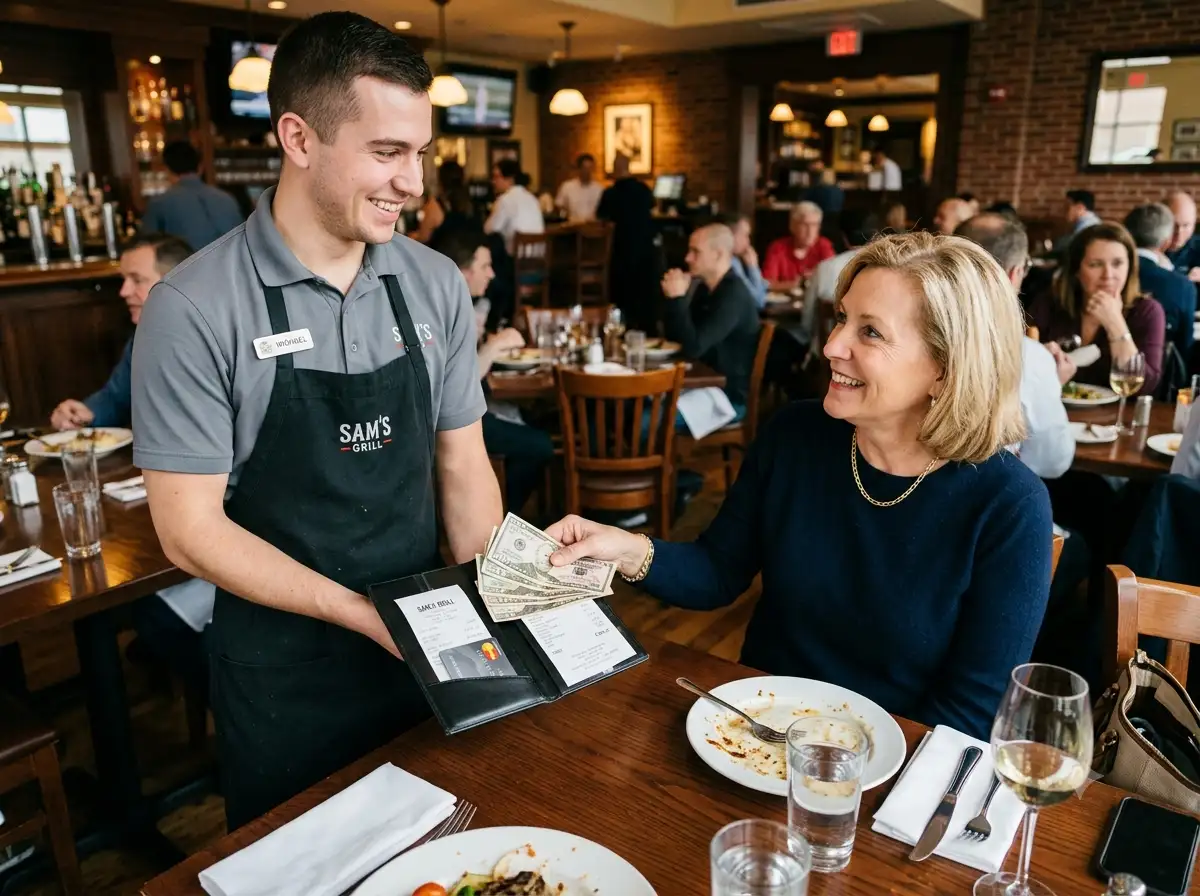
Psychology says people who leave generous tip for the waiters at any restaurant and bar aren't always motivated by status or public image. People often assume generous tipping is about showing off money. Psychology offers a different explanation. Human behavior is shaped by emotions, values, experiences, and social norms. When someone leaves a larger tip, the action may reflect appreciation for service, empathy for workers, or a personal belief in fairness. Researchers have long studied why people reward others even when there is no direct benefit. Understanding this behavior helps explain how generosity works in daily life.
Psychology says people who leave generous tip for the waiters at any restaurant and bar aren't simply showing off
Many people believe that generous tippers are trying to impress others. Psychology suggests this is not always true. A generous tip may reflect gratitude for the effort made by restaurant staff. It can also show respect for people who work in service jobs. Many customers understand that waiters often spend long hours serving guests. Leaving a larger tip may become a way to acknowledge that work.
In many cases, the person giving the tip does not expect anything in return. They may never visit the restaurant again. This makes the action an example of voluntary helping behavior. Psychologists say that people often feel satisfaction after helping someone. This feeling encourages similar actions in the future.
What psychology says?
Psychology explains tipping through several ideas about human behavior. People naturally respond to acts they value. When someone experiences friendly service, quick responses, or extra care, they often feel thankful. Gratitude creates a desire to return kindness. A tip becomes one way of expressing that appreciation.
Psychologists also explain that generosity strengthens relationships between people, even during short interactions. Some individuals develop habits of rewarding effort because they believe everyone deserves fair treatment.
Others tip because helping another person matches their personal values. The motivation often comes from internal beliefs rather than outside pressure.
What does this mean?
Generous tipping may reveal more than financial ability. It may show that a person notices the work performed by others. It can indicate empathy, respect, and awareness of another person's situation.
People who leave larger tips may pay attention to how their actions affect someone else's day. The behavior may also reflect emotional intelligence because the individual recognizes another person's effort and responds with appreciation.
Psychology says actions often communicate values better than words. A tip becomes one small action that reflects kindness, fairness, and gratitude.
Why is it done?
There is no single reason why people leave generous tips. Some people do it because they received excellent service. Others believe restaurant workers depend partly on tips for their income. Some customers simply enjoy rewarding effort.
Many people also remember their own experiences working in customer service jobs. These memories increase empathy toward restaurant employees. Culture also influences tipping behavior. In countries where tipping is common, people often learn from family members, friends, or society that rewarding good service is expected. Personal experiences, values, emotions, and social learning all contribute to the decision.
Which psychology theory explains this behaviour?
Several psychological theories help explain generous tipping.
Reciprocity Theory suggests people naturally return positive actions with positive responses. Good service creates a feeling of obligation to give something back.
Social Exchange Theory explains that relationships involve exchanges of benefits. Even short interactions between customers and waiters can create positive exchanges where appreciation is shown through tipping.
Empathy-Altruism Theory proposes that people help others because they genuinely care about another person's wellbeing rather than expecting rewards.
Operant Conditioning also offers an explanation. When generous tipping creates positive feelings or appreciation from staff, the customer experiences emotional satisfaction. This increases the chance of repeating the behavior.
These theories show that generosity is influenced by multiple psychological processes rather than a single motivation.
The principle behind it
The basic psychological principle behind generous tipping is positive reinforcement. People reward behaviors they appreciate. When customers receive polite service, timely assistance, and respectful treatment, they often reinforce those actions by leaving a tip.
Another principle involves fairness. Many individuals believe effort deserves recognition. Providing financial appreciation becomes a practical way to recognize work that may otherwise go unnoticed. Social norms also play a role. People observe how others behave and gradually develop similar habits within their communities. Over time, tipping becomes both a personal choice and a learned social practice.
What to learn from it?
This behavior offers several lessons about human interaction. Small actions can make a difference in someone else's day. Showing appreciation does not always require expensive gifts or lengthy conversations. Simple gestures often communicate respect.
The behavior also reminds people to notice work that often happens behind the scenes. Restaurant staff manage multiple responsibilities while serving customers. Recognizing that effort helps create positive social interactions. Psychology also teaches that generosity benefits both the giver and the receiver. Helping others often creates positive emotions that improve personal wellbeing.
Life lessons from the behavior
Generous tipping offers practical lessons for everyday life.
- Gratitude becomes stronger when expressed through actions.
- Respect for workers builds healthier communities.
- Small acts of kindness can create lasting memories.
- Empathy helps people understand different life experiences.
- Fairness encourages stronger relationships.
- Positive actions often inspire similar behavior in others.
- Recognizing effort improves social connections.
- Giving without expecting rewards reflects personal values.
- Everyday choices reveal character.
- Kindness often spreads from one person to another.
These lessons extend beyond restaurants and bars. People can apply the same mindset in workplaces, schools, neighborhoods, and daily interactions. Understanding the psychology behind generosity helps explain why many people willingly support others without expecting personal gain.