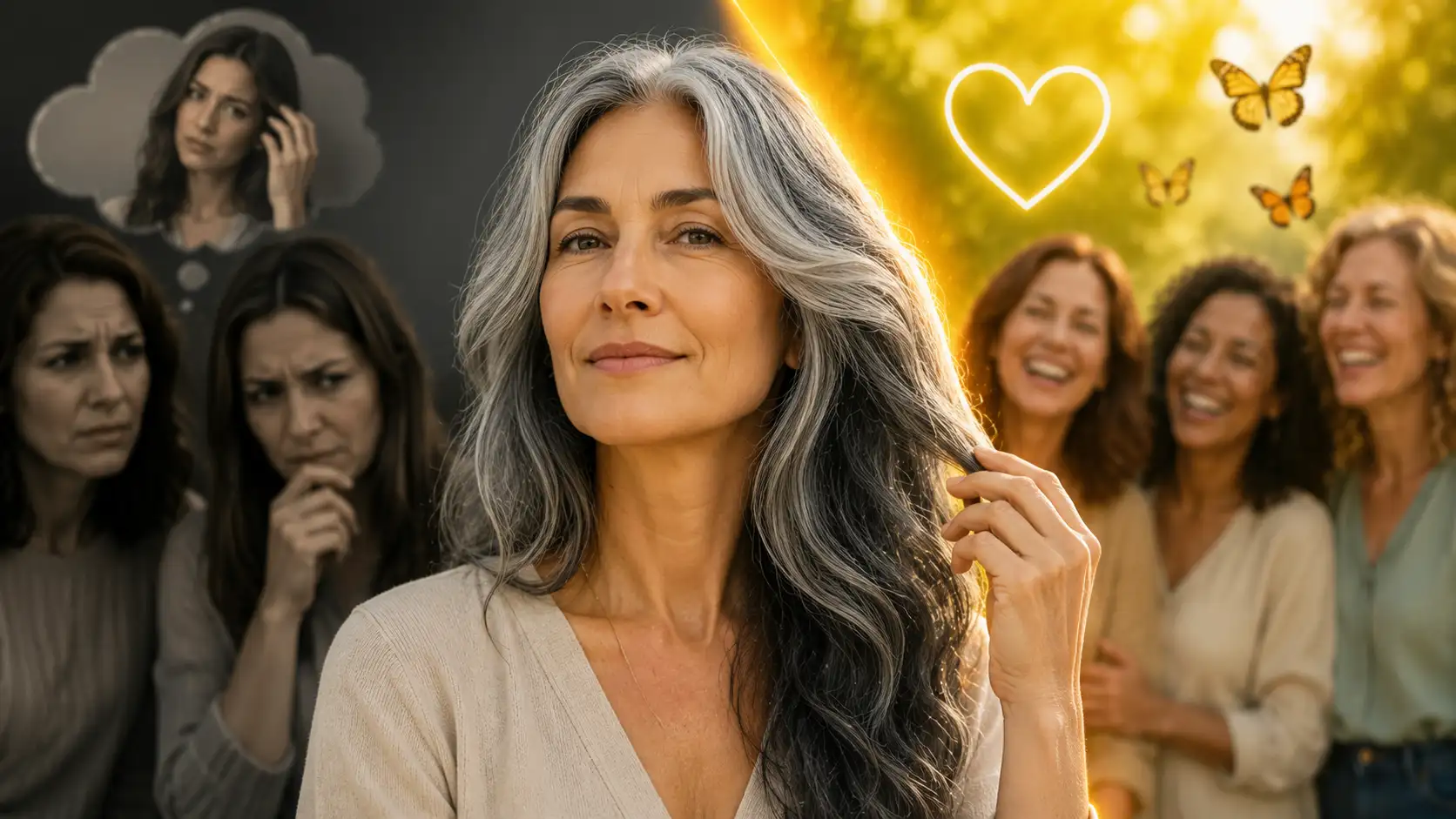
For decades, gray hair has carried a social message. Many people have been taught to see it as something to hide, fix or reverse. Entire industries have been built around the idea that aging should remain invisible. Yet an increasing number of adults are making a different choice. They are putting away the hair dye and allowing their natural gray hair to grow. To some people, this may seem surprising. Others may assume it is a sign that someone no longer cares about their appearance. But psychology suggests something very different. For many people, the decision has little to do with laziness or surrender. Instead, it often reflects a shift in priorities, identity and self-acceptance. Here is what psychology says may actually be happening.
Psychology says Self-Determination Theory may explain this growing trend
One of the strongest explanations comes from Self-Determination Theory, developed by psychologists Edward Deci and Richard Ryan. The theory suggests people thrive psychologically when three needs are fulfilled:
- Autonomy
- Competence
- Relatedness
Autonomy is especially important here.
Autonomy means making decisions based on personal values rather than external pressure. For many adults, choosing not to color gray hair becomes an act of personal agency. Instead of asking, "What will people think?" they begin asking, "What feels right for me?" The decision shifts from social expectation to personal preference.
Self-Concept Theory says people become more comfortable with their true identity
Another explanation comes from Self-Concept Theory, associated with psychologist Carl Rogers. The theory suggests psychological well-being improves when there is alignment between who people are and how they present themselves to the world. Rogers called this congruence. When external appearance matches internal identity, people often experience greater authenticity.
For some individuals, constantly maintaining a younger appearance eventually creates emotional exhaustion. Allowing gray hair to appear can become a way of reducing that tension. The person is no longer managing two versions of themselves. They are simply presenting themselves as they are.
Socioemotional Selectivity Theory says priorities naturally change with age
One of the most well-established theories in aging psychology is Socioemotional Selectivity Theory, developed by psychologist Laura Carstensen. The theory explains that as people get older, they often shift their priorities.
Instead of chasing external validation, they begin focusing on emotionally meaningful experiences. Energy becomes more valuable. Time feels more precious. Many people stop investing heavily in activities they no longer find personally rewarding. This is why some adults may suddenly decide to stop coloring their hair after decades of doing it. It is not rebellion. It is reprioritization.
Social Comparison Theory explains why this decision can feel difficult
Psychologist Leon Festinger developed Social Comparison Theory, which explains that people naturally compare themselves to others. Appearance is one of the strongest areas where comparisons happen.
Social media has amplified this tendency. People are constantly exposed to carefully curated images of beauty. Celebrities, influencers and edited photos can create unrealistic expectations about aging. Modern examples are everywhere. Many public figures have openly embraced their natural gray hair, helping normalize the decision. This visibility can reduce social pressure and encourage others to make choices that align with their own values. At the same time, comparisons can still make the transition emotionally challenging.
Authenticity research suggests being yourself supports psychological well-being
Psychologists increasingly study Authenticity Theory, which refers to behaving in ways that reflect one's true values and identity. Research has repeatedly linked authenticity to higher life satisfaction and emotional well-being. Authenticity does not mean rejecting beauty routines. It simply means those choices come from personal desire rather than fear.
Some people genuinely enjoy coloring their hair. Others genuinely enjoy keeping it natural. Both decisions can be psychologically healthy. The difference lies in motivation. The question becomes: "Am I doing this because I want to or because I feel obligated to?"
Age Identity research says chronological age and personal identity are not the same
Researchers also study Age Identity, which is how old people feel rather than how old they are. Interestingly, many adults who embrace gray hair do not suddenly feel older. In fact, some report feeling more confident. This is because confidence often comes from accepting change rather than fighting it. Professionals are increasingly embracing gray hair in corporate environments. Many social media communities now celebrate natural aging rather than hiding it. The conversation itself is evolving.
Psychology of gray hair
Psychology teaches us that everyday choices often reveal deeper values. The gray hair is not the story. Identity is. Authenticity is. Freedom is. For many people, choosing not to color gray hair is not an act of giving up. It is an act of deciding what matters most. Some people will continue coloring their hair because it makes them feel good.
Others will stop because it no longer feels necessary. Neither choice is superior. What psychology consistently suggests is that psychological well-being often grows when decisions come from personal values rather than social pressure. Because eventually, many people discover something surprising. Confidence does not always come from looking younger. Sometimes it comes from no longer needing to hide the passage of time.
FAQs
Is not coloring gray hair a sign of low self-esteem?
No. Research suggests it is often connected to authenticity and personal choice.
Why do some people suddenly stop dyeing their hair?
Psychologists suggest priorities often shift over time, leading people to value comfort and authenticity more.