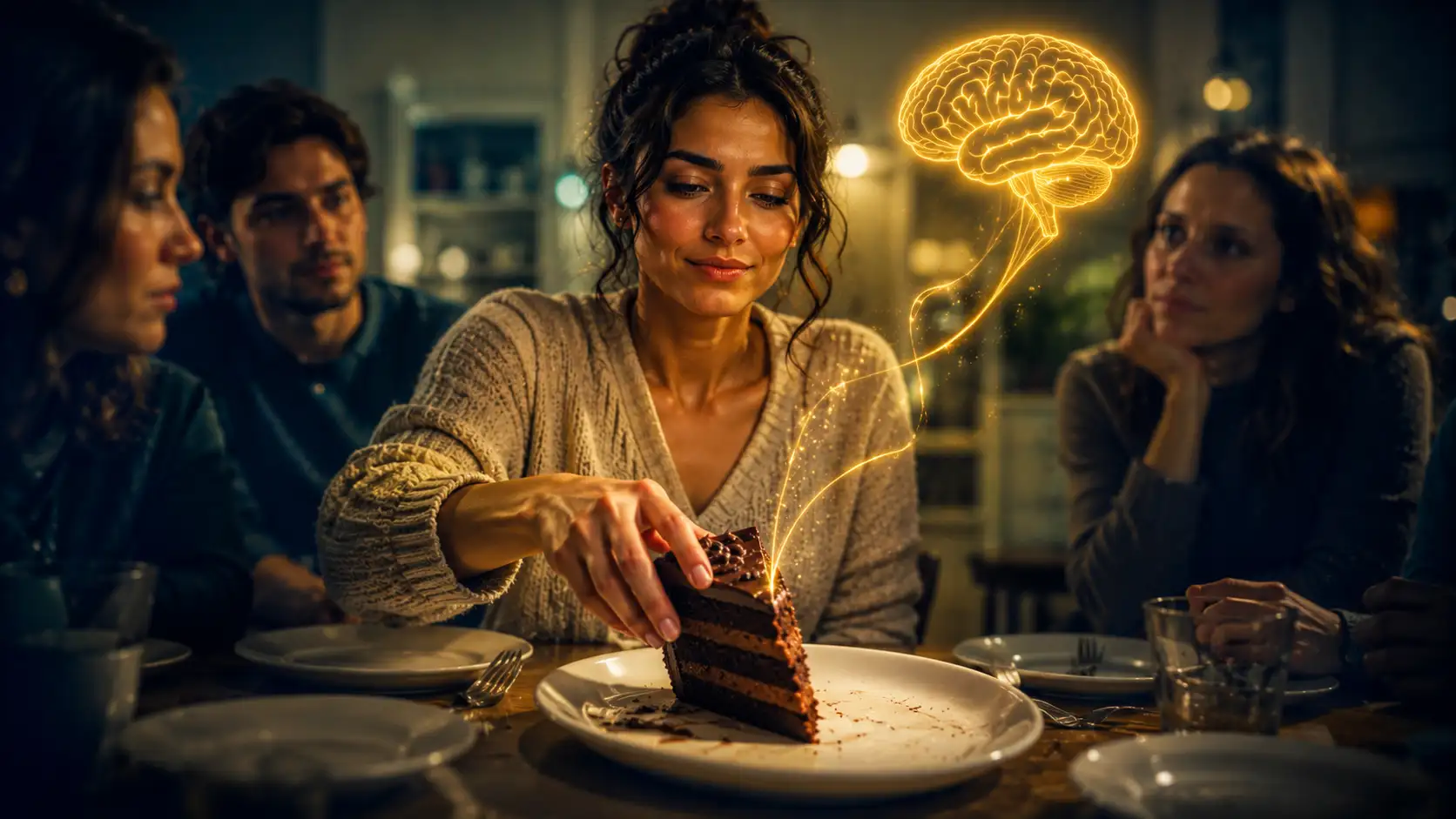
Imagine a family dinner, an office celebration, or a birthday party. Everyone has finished eating, but one slice of cake remains untouched on the plate. Minutes pass. People look at it. Some smile awkwardly. Others pretend not to notice it at all. Then one person confidently picks it up and eats it. Interestingly, this tiny moment reveals a fascinating psychological story. For years, people have jokingly divided society into two groups: those who take the last piece of cake and those who refuse to touch it. Psychology suggests this behavior is not simply about hunger or selfishness. It often reflects deeper patterns involving social norms, decision-making, guilt, confidence, and our relationship with scarcity. The last piece of cake is not just food. For the human brain, it becomes a social test.
Why The Last Piece Suddenly Feels Different
One of the strongest explanations comes from Social Norm Theory. Humans constantly adapt their behavior based on unwritten social expectations. The moment a single piece remains, its meaning changes. It no longer feels like food available to everyone. It becomes a shared social object. Many people immediately begin asking themselves questions.
"Will others think I'm greedy?"
"Should I leave it for someone else?"
"What if another person wanted it?"
The brain temporarily prioritizes social harmony over personal desire. This is why people who would normally grab a piece of cake without hesitation suddenly become indecisive.
Why Some People Feel Guilty Taking It
Psychologists also connect this to Impression Management Theory, developed by sociologist Erving Goffman. Humans naturally manage how they appear to others. Taking the final piece can create a fear of negative judgment.
People may worry about appearing selfish, inconsiderate, or overly eager. This is especially common in professional settings. Imagine an office meeting where one doughnut remains in the break room. Many employees avoid taking it because workplace environments amplify social awareness. The decision becomes less about appetite and more about reputation.
Why Confident People Sometimes Take It More Easily
Interestingly, people who take the last piece are not necessarily less considerate. Some may simply experience lower levels of social hesitation. Psychologists call this self-assured decision-making. These individuals tend to separate practical decisions from social overanalysis. Their thinking may be straightforward:
"Nobody else is taking it."
"Food should not go to waste."
"It's available, so I'll have it."
This does not automatically indicate selfishness. It may simply reflect comfort with making decisions without excessive concern about external judgment.
Why Scarcity Makes The Last Piece More Attractive
Another explanation comes from Scarcity Theory. Humans naturally assign greater value to things that are limited. The final slice instantly becomes unique because it is the only one left. Researchers have repeatedly found that scarcity increases perceived value.
This same principle drives many modern behaviors.
For example:
- Limited-edition product launches sell out quickly.
- Flash sales create urgency.
- Social media users rush to buy trending products before they disappear.
The brain often interprets rarity as importance. Suddenly, the last piece of cake feels more desirable than the first piece ever did.
Why Some People Refuse To Take It Even When They Want It
Psychologists also point to Conflict Avoidance Behavior. Some individuals prioritize group harmony over personal satisfaction. These people often suppress small desires to avoid even minimal social tension. This tendency may develop during childhood.
Adults raised in highly accommodating environments often become skilled at putting others first. While this can strengthen relationships, it may also create patterns of self-denial.
Over time, people may stop taking opportunities—not because they do not want them, but because they are accustomed to stepping aside. The cake simply becomes another example of this larger pattern.
Why Modern Culture Has Made This More Complicated
Social media has amplified people's awareness of how they are perceived. Many younger adults constantly think about external opinions. Psychologists connect this to Social Evaluation Anxiety, where people become highly sensitive to judgment. This tendency appears everywhere.
People hesitate before posting online, sending messages, or expressing opinions. Even tiny actions become overanalyzed. Taking the final slice of cake may seem trivial, but for socially conscious individuals, it can activate the same mental systems. The brain quietly asks:
"How will people interpret this?"
Why Group Dynamics Matter More Than Hunger
Research on Diffusion of Responsibility also helps explain this behavior. When multiple people are present, individuals often assume someone else should act first. Everyone waits for social permission. This creates a funny paradox. Ten people may secretly want the cake while nobody touches it. Eventually, one person breaks the social stalemate. That individual often appears bold, even though they simply made a decision everyone else was delaying.
The Bigger Psychological Truth
Psychology suggests the last piece of cake is never just about food. It becomes a symbol of opportunity, social acceptance, and decision-making. The most important insight is that people who take the final piece are not necessarily selfish.
Likewise, people who avoid it are not automatically more considerate. Both behaviors often reflect different ways humans manage social relationships. Perhaps the deeper lesson is this: The last piece of cake reveals how comfortable we are balancing our own needs with the invisible expectations of others.
Sometimes that balance is healthy. Sometimes we overthink a decision that was never that serious to begin with. After all, the cake was made to be eaten, not to become a silent psychological negotiation sitting in the middle of the table.
FAQs
What does it mean if someone always takes the last piece of cake?
Psychology suggests it may reflect confidence, decisiveness, or comfort with social situations rather than selfishness.
Why do people hesitate to take the final slice?
Many people fear appearing greedy or inconsiderate in front of others.