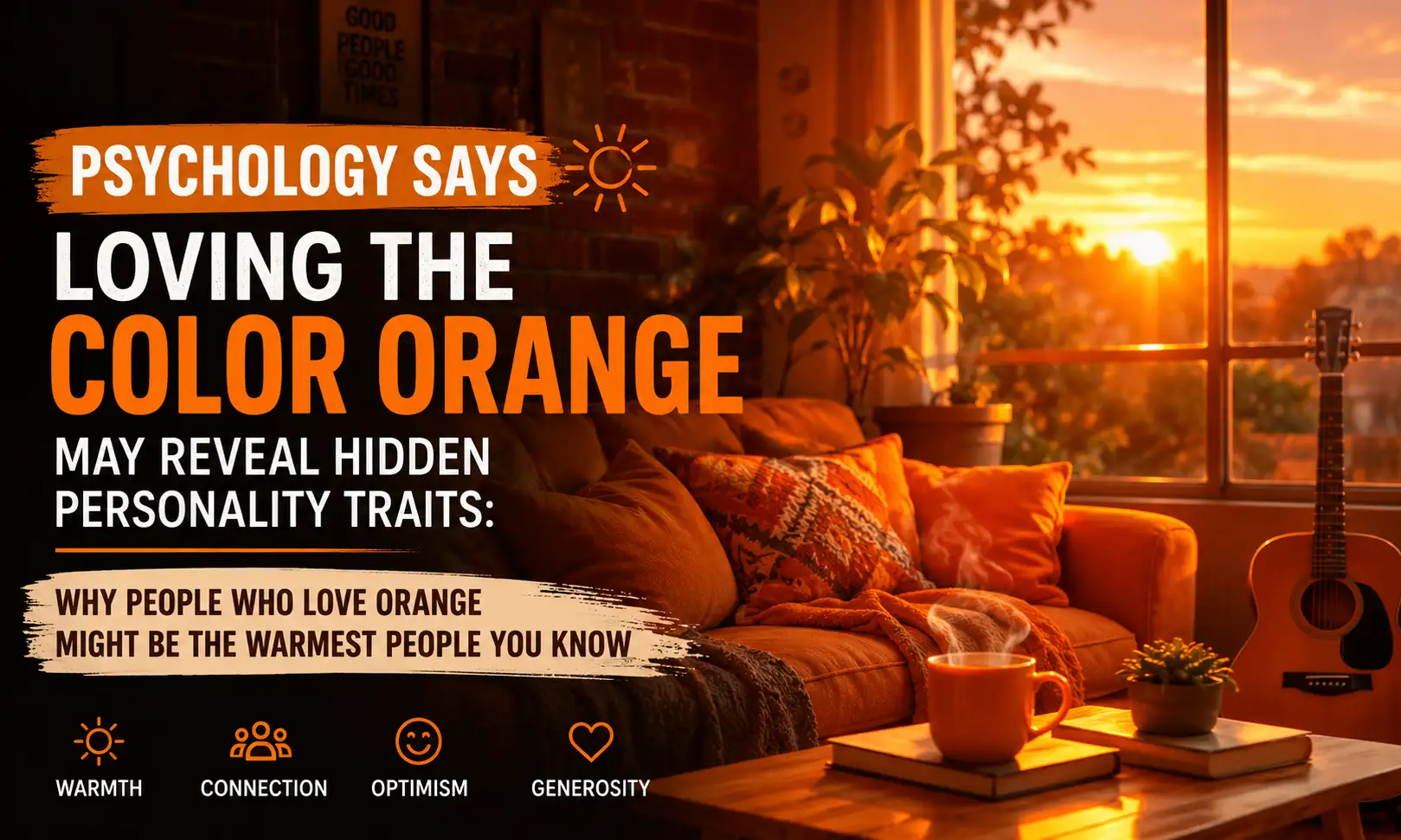
What Does Color Psychology Really Tell Us About Orange Lovers? Ask someone what their favorite color says about them, and you'll usually get a shrug. But color psychologists argue that our preferences aren't as arbitrary as they seem — and orange, in particular, tends to attract a very specific kind of person.
Orange occupies an unusual spot on the color wheel. It borrows red's energy but not its intensity, and yellow's brightness but not its glare. The result is a color that feels active without feeling aggressive — which may explain why people drawn to it often carry that same balance in their personalities.
Psychology says loving the color orange may not be random: Why orange lovers naturally make everyone feel at home
There's more than anecdote behind orange's reputation as an "activating" color. Researchers at the University of Liège found that exposure to orange light increased activity in the brain's frontal lobes — the regions responsible for alertness and cognitive processing — more than other light conditions tested. In other words, orange doesn't just look energetic. It may actually nudge the brain toward a more alert, engaged state.
That could be part of why orange shows up so often in spaces built for connection: kitchens, living rooms, restaurants, festival branding. It's a color that seems to lower social barriers before anyone says a word.
What Orange Lovers Tend to Have in Common
People who gravitate toward orange are frequently described as warm without trying to be. They're the ones who somehow become the default host, the friend whose house everyone ends up at by the end of the night. There's often a playful streak too — a knack for defusing tension with humor rather than avoiding it.
Generosity tends to follow. Orange lovers are often described as people who give their time and attention freely, sometimes to a fault. And there's usually an underlying optimism at work — not a naive one, but a genuine tendency to expect good things and, in doing so, help create them.
Perhaps the most distinctive trait, though, is presence. Orange personalities are often the ones fully in the moment — enjoying the meal in front of them instead of mentally drafting tomorrow's to-do list.
That same warmth has a cost. People who center connection and comfort so heavily often avoid conflict longer than they should, letting small tensions calcify into bigger problems. The habit of prioritizing everyone else's comfort can also mean their own needs quietly go unmet — sometimes for years before they notice.
And there's a subtler cost: because orange lovers make everything look easy, people around them can underestimate how much depth or ambition sits underneath the warmth. Over time, some orange lovers start to believe that underestimation themselves.
None of this means your favorite color determines your fate. But color preference does seem to function as a kind of low-stakes mirror — a small, consistent signal about what environments make you feel most like yourself. If orange is your color, it might be worth asking not just "why do I like this?" but "what does this tell me about what I actually need — comfort, connection, presence — and am I making room for that in my own life, not just everyone else's?"
Sometimes the smallest preferences point at the biggest patterns.
FAQs:
What does psychology say about people whose favorite color is orange?
Psychology says people who love the color orange are often drawn to warmth, human connection and optimism. Color psychology experts believe orange combines the energy of red with the friendliness of yellow, making it a color associated with generosity, hospitality, emotional openness and living fully in the present. While a favorite color cannot define personality, it may reflect emotional preferences and social tendencies.
Why do people naturally feel comfortable around orange lovers?
According to color psychology, people who love orange often create a welcoming, judgment-free atmosphere. They tend to be approachable, generous with their time and naturally skilled at making others feel included. Experts suggest this emotional warmth helps build trust quickly, which is why orange lovers are frequently seen as dependable friends, thoughtful hosts and strong relationship builders.
Can your favorite color really reveal personality traits?
Researchers and color psychology experts say favorite colors may offer clues about emotional needs and behavioral patterns, but they are not scientific personality tests. Your preferred color often reflects what makes you feel safe, energized or emotionally balanced. It should be viewed as one piece of your psychological profile rather than a complete explanation of who you are.
What are the biggest challenges people who love orange may face?
Despite their positive outlook, orange lovers can struggle with setting boundaries. Psychology suggests they may avoid conflict to preserve harmony, give too much of themselves emotionally and sometimes underestimate their own abilities. Learning to balance kindness with self-advocacy can help them protect their energy while maintaining the warmth that defines their personality.