There’s no better way to teach kids about science than for them to get their hands dirty with some fun and practical experiments. Here are some simple suggestions you can try together at home to bring out the boffin in your kids.
Tin can phones
Kids today may be accustomed to smartphones with cameras and apps, but there’s still fun to be had in knocking up this homemade phone.
You will need
• 2 clean tin cans without lids
• 2 nails
• A hammer
• Approximately 20ft of string
Using a hammer, bang the nail into the bottom of the can. If there are any jagged edges, wrap them in tape to keep little fingers safe.
Feed one end of the string through the hole and knot it to secure it. Do the same to the other so the cans are linked. Now move apart so the string is taut. The sound waves created by speech cause the can and string to vibrate. When these vibrations reach the can, it acts like a speaker to transmit the sound.
Baking soda volcano
This classic experiment produces cool-looking red lava – the result of a chemical reaction between the baking soda and the vinegar – which then “erupts” in an explosion powered by carbon dioxide.
You will need
• 6 cups of flour
• 2 cups of salt
• 4 tbsp cooking oil
• Red food colouring
• Vinegar
• Dishwasher detergent
• 2 tbsp baking soda
• A plastic bottle
• A baking tray
First make the “cone” of your volcano by mixing the flour, salt, cooking oil and water. Then stand the bottle in the baking tray and mould the dough around it into a volcano shape. Fill the bottle with warm water and some red food colouring.
Add six drops of detergent to the bottle. Then add 2 tbsp of baking soda. Slowly pour the vinegar into the bottle and watch with amazement as your volcano erupts.
Lemon-powered battery
Batteries consist of two different metals suspended in an acidic solution, so with a citrus fruit, a coin and a nail you can make your own.
You will need
• A juicy lemon
• A zinc tablet or galvanised nail
• A penny
• Sandpaper
• Connecting wire and an LED
Rub a penny and a zinc tablet or galvanised nail with sandpaper until they’re clean and smooth. Squeeze the lemon without breaking the skin to loosen the juices.
Slice two slits into one side of the lemon, about 1in apart. Pop the penny in one slit and the zinc tablet or nail into the other – do not let the metal touch. Use the wire to power-up your LED – you may want to use more than one lemon to get a strong charge.
If you do one thing ...
Alom Shaha, a physics teacher and producer of the Royal Institution of Great Britain’s video series ExpeRimental says: When it comes to encouraging kids to take an interest in science – “Look, Play, Ask” are our three key terms.
“Science is a particular way of looking at the world, and parents can help children develop their scientific thinking skills through doing simple activities and appropriate questioning.
“Take an interest in the natural world around you – if you go for a walk, look at how the leaves are changing and think about how and why they do this. Encourage children to look closely at things - don’t miss out on natural phenomena.
“Think about how things work, and get your kids to question what would happen if you changed just one thing.”
Try experiments at home – there are loads of things on the internet – visit www.rigb.org/experimental
Why not buy
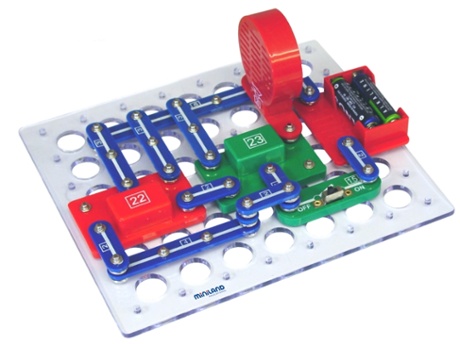
Electrokit 88 – £24 from Miniland Educational.
This fab introduction to the world of electricity has 88 different experiments that kids can try at home.