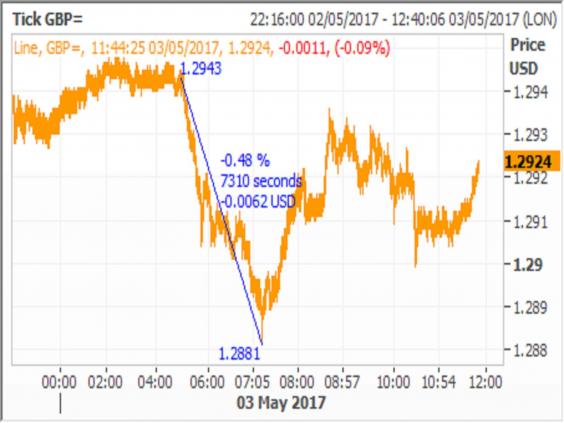
The pound was volatile in trading on Wednesday amid reports of a troubled start to Brexit divorce negotiations and fresh talk of a possible "no deal" outcome.
Sterling dipped more than half a cent to $1.2881 by 7.15am as media reports suggested Theresa May will be prevented from joining discussions at future European Union heads of state meetings and the Brexit Secretary David Davis again spoke of the possibility of walking away from the bloc without a trade deal.
However, the UK currency bounced back to $1.2936 and was trading at $1.2921 just before midday, down 0.11 per cent on the day.
The volatility follows reports over the weekend of a deeply acrimonious dinner at Downing Street last week between Ms May and the European Commission President Jean-Claude Juncker.
Mr Juncker was said to have emerged from the meeting "ten times more sceptical" about the possibility of an amicable deal with the UK.
The Times reported Wednesday morning that Ms May had also been informed by Mr Juncker at last week's dinner that she would not be able to negotiate directly with other EU heads of state, despite UK hopes that the Prime Minister might be be able bypass the Commission, which has formal control of the Brexit negotiations on behalf of the EU.
Later Mr Davis, speaking on the BBC Today programme, said that Britain has to "maintain the alternative option" of walking away from the EU negotiations without a deal.
Pound falls on Brexit deal doubts
Richard Falkenhall, a strategist at SEB in Stockholm, said he was "quite negative" on the pound's outlook.
“There are several parts in the negotiations which to me seem very tricky to find solutions on. This sort of political uncertainty will continue to be reflected in sterling going forward, and on top of that you have to add the signs we have seen since the beginning of the year, where you’re seeing slower growth in the UK.”
He added: “What you will end up with toward the second half of the year is the situation where you have the political uncertainty having a negative impact on capital spending in the UK and on top of that you have growth slowdown from more cautious consumers. That sort of mix is not very positive for sterling.”
However, others were more sanguine.
"The political Brexit timeline may provide 'flashpoints' as today's news suggests, but the market seems to be taking them on the chin and they are largely priced in," said analysts at the Japanese bank Nomura.
Sterling suffered a record one-day collapse against the dollar on the night of the Brexit referendum on 23 June, hitting a 31-year low.
It was down as much as 19 per cent at $1.2043 in January but rose strongly after Ms May announced a snap June general election last month.
The currency now stands around 13.4 per cent below its level at the date of the referendum.