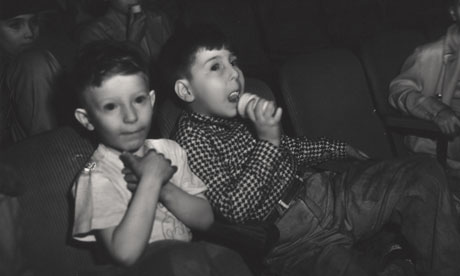
Ice-cream during the interval is an age-old theatre tradition. But, as I was tucking into my miniature tub of mint choc chip in the stalls the other day, I started to wonder why, how and when the stuff first made its way into our theatres.
It's not an obvious match. While ice-cream is, in some ways, well-suited to eating mid-performance – it's much quieter than, say, popcorn – it also has its disadvantages, the most obvious of which is that it needs on-site refrigeration and is likely to melt in our often-overheated theatres. I thought there must be a story behind this, a reason why ice-cream has become as much a part of the theatre experience as overpriced programmes and the scrum for interval drinks.
I started looking into it a few weeks ago. I've spoken to theatre producers, theatre researchers and even Loseley, one of the longest-serving and most-widespread suppliers of ice-cream to the theatre market. Thus far, nobody has been able to give me a reliable answer.
There have been plenty of good suggestions: that theatres followed the practice of cinemas in supplying sweets and ice-creams; that it was a Victorian craze and swept off the promenades and piers into the music halls and theatres of seaside resorts like Brighton. Most seem sure it has something to do with 19th-century Italian immigrants to the UK (although there seems to be some dispute as to whether those Italians were from Naples, Florence or Venice). Perhaps, say some, it is even a tradition brought over from Italian theatre or opera. Nobody seems to know for sure. Loseley can date their own involvement with theatre back to 1969 – when they began supplying the Royal Opera House – but ice-cream certainly began being sold in theatres well before this.
I've managed to narrow down the dates a little. I'm confident that ice-cream was introduced to UK theatres at some point between 1849 (when the dessert first became widely available in the UK) and 1924, which is the date on a parliamentary question I've found in Hansard that directly references the sale of ice-cream in theatres. Indeed, it claims that theatres were breaking the law by selling ice-cream after 9.30pm. This was part of an ongoing feud between theatres and confectioners during the 1920s over whether theatres should be allowed to sell sweets, including ice-cream.
There's more in the archive of my employers, the Stage, dating back to 1920, which would seem to indicate (but doesn't confirm) that ice-cream was sold in theatres before 1920.
Still, nothing concrete. The best suggestion with which I've so far been presented – via @Geoffrey_Crayon on Twitter – is that Carlo Gatti might have been the man to introduce ice-cream to theatres. He was a Swiss gentleman who came to London in the 19th century and is credited with first making ice-cream available to the general public. During the 1860s and 1870s, he also happened to run a number of London music halls. Unfortunately, I can't find any evidence that he merged his two interests and served ice-cream while people were watching a show.
As you can probably tell by now, it's something of a wild goose chase – so I'm hoping that someone out there can put me out of my misery with a definitive explanation. In return, one ice-cream related factoid: according to Loseley, the most popular flavour in theatres is (and has always been) vanilla.