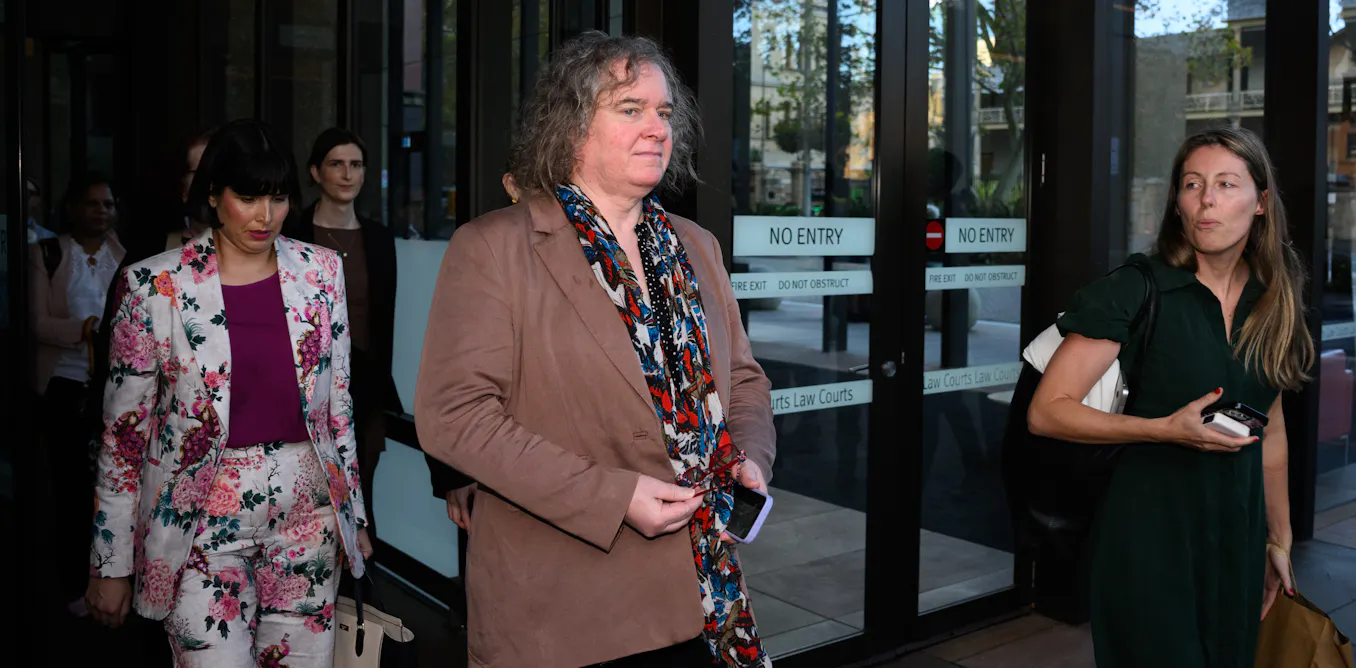
Last week, the Federal Court found a transgender woman, Roxanne Tickle, had been directly discriminated against when she was removed from a women-only social media app, Giggle for Girls.
The historic decision followed a long court saga, with the first judgement in 2024. The app’s founder, Sall Grover, has said this week she plans to appeal the “Giggle v Tickle” case in the High Court.
To unpack the case and its ongoing implications, we are joined on the podcast by Australian National University Emerita Professor Margaret Thornton. She is an expert in gender equality, anti-discrimination law and feminist legal theory.
On Grover’s plan to appeal to the High Court, Thornton outlined why it was likely to proceed.
Appeals to the High Court are not automatic. But any appeal from Giggle and Tickle would almost certainly go ahead because it’s such an unusual issue, [the] first time that it’s been considered by an Australian court.
[…] How would the court decide? Who knows? But do note that four experienced federal court judges have already decided in favour of Ms Tickle on a fairly straightforward interpretation of the Sex Discrimination Act. And that would carry significant weight.
On the other hand, only three cases on sex gender discrimination have proceeded to the High Court in over 40 years, largely because of the cost of litigation is totally off putting to individuals.
Following the Federal Court’s ruling, Federal Opposition Leader Angus Taylor promised a future Coalition government would legislate to clearly protect single sex spaces, based on biological sex, defined as a person’s sex at birth.
However, Thornton said this might break some of Australia’s international anti-discrimination obligations.
The convention on the elimination of all forms of discrimination against women is really the primary [United Nations] instrument that underpins the [Australian] Sex Discrimination Act, and indeed gives it its constitutional basis.
So I think that would be a major issue. And it may well be something that the High Court would have to consider […] if they proceed with that appeal.
On others’ calls to restrict trans women from sports and women’s prisons, Thornton says the outcome of this court case isn’t likely to directly affect those issues.
The issue of sport is actually excluded from the Sex Discrimination Act, if it’s a case of the strength, stamina or physique of a person. But it continues to be controversial at the wider level.
And also I think that prisons are another ongoing site of contests. They’re not directly impacted. But some states, such as Victoria, I know are addressing the issue at the moment.
But the indirect effect of Giggle and Tickle could have the effect of encouraging a fairer and less stereotypical approach in these areas.
This article was originally published on The Conversation. Read the original article.