Though few may recognise his name, Gareth Lewis is the seventh longest-serving actor in a continuous role in British television history, with 38 years’ service behind him. This puts him up there with William Roache, Barbara Knox and Anne Kirkbride, but Lewis is not in Coronation Street. He plays put-upon local business mogul Meic Pierce in Pobol y Cwm (People of the Valley), the Welsh-language soap that celebrates its 40th anniversary on 16 October. Fair play to him, you might say.
Produced by BBC Wales since 1974 and set in the fictional one-estate-agent-village Cwmderi, it is a full nine years older than its BBC cousin EastEnders. Recent intrigues have included the illegal use of red diesel, a co-operative scheme to buy the pub and the theft of a ram. The five-nights-a-week soap acts as a ratings anchor for its channel S4C, only ever beaten in viewing figures by rugby.
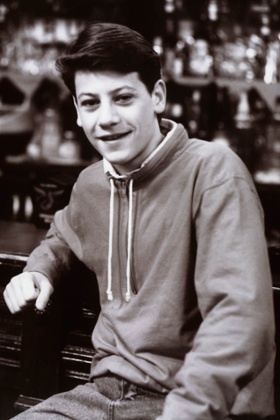
Though it measures its success in the tens of thousands, not millions, the show has hothoused a parade of young Welsh actors, including Ioan Gruffudd (Hornblower, Fantastic Four, Forever), Iwan Rheon (Misfits, Game of Thrones) and Alexandra Roach (Utopia, Hunderby). And after the critical and commercial success last year of noirish detective show Y Gwyll (Hinterland), an S4C/BBC Cymru co-production part-funded by Danish broadcaster DR (The Killing, Borgen), Welsh-language TV is finally staking a claim in a globalised market, where Scandi-enlightened viewers have never been more lingually liberal.
I asked Pobol y Cwm series producer (and exec on series two of Y Gwyll) Ynyr Williams what makes Welsh drama unique. “Our performing heritage, our strong sense of identity and unique understanding of our poetic traditions,” he said.
Although Y Gwyll was cunningly shot twice, in Welsh and English, to double its saleability – a trick first pulled by Aberyswyth CSI-foreshadowing 90s police hit A Mind to Kill – language is no longer a barrier. All of S4C’s output is available to view with English subtitles on digital catchup, a far cry from the situation in the 70s, when regional opt-outs meant the BBC sometimes “went all Welsh” during the dark hours of daytime.
The Welsh tongue has had to fight for equality. The first BBC transmitter arrived in Glamorgan in August 1952 and the first Welsh-language broadcast appeared in March 1953 (a 20-minute documentary about “quarryman turned autodidact, Bob Owen of Croesor”, according to Joe Moran’s splendid chronicle Armchair Nation). Progress was hampered by early signal weakness in the valleys and having to piggyback an ITV franchise with the West Country. Protests about the lack of indigenous product on HTV (Harlech Television) peaked in 1977, when an episode of Raffles was yanked off air during a nationalist occupation of the transmitter building.
According to Moran, one submission to a 1973 Committee on Broadcast Coverage stated that token Welsh-language shows made the non-Welsh-speaking majority feel like “aliens at their own firesides”. Peace finally broke out in 1982, when all-Welsh programming was transferred to the newly-launched S4C (Sianel Pedwar Cymru), including Pobol y Cwm.
Wales has now established itself as a TV production powerhouse. The 2005 comeback of Doctor Who established Cardiff as a viable BBC base. Along with Casualty, it is now made at the purpose-built, 170,000 sq ft Roath Lock studio complex. “What’s really important with Hinterland is that it’s brought in hard cash,” says Williams. Last year, the US historical fantasy Da Vinci’s Demons was shot in Swansea and Port Talbot, thanks to a BBC Worldwide deal with cable network Starz, creating 3,000 part-time jobs locally.
If it had been closer to Carmarthen, it would have made a tidy storyline on Pobol y Cwm.