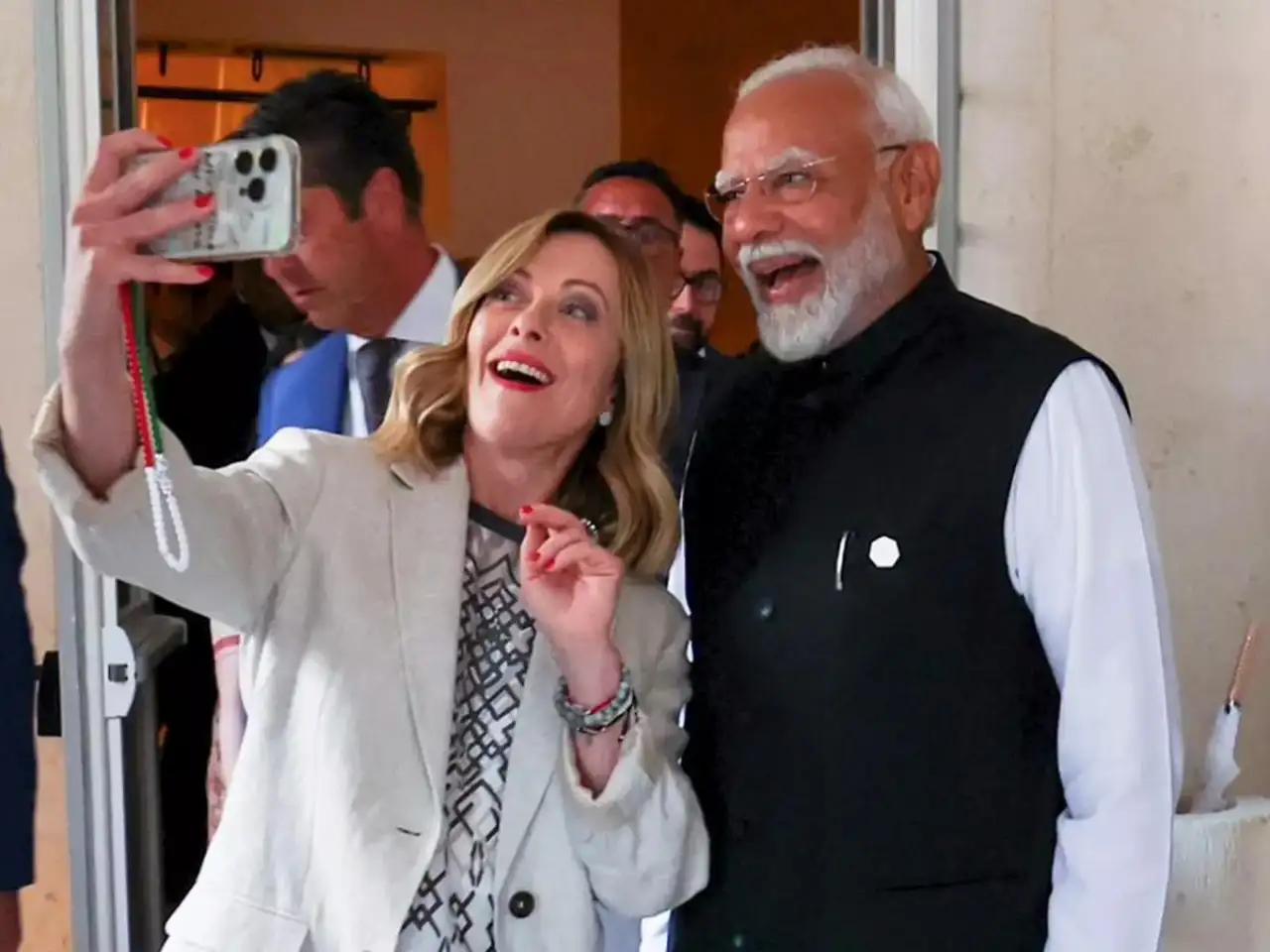
The relationship between India and Italy has reached a decisive stage. In recent years, it has evolved from cordial friendship to special strategic partnership grounded in the values of freedom and democracy, and a common vision for the future.
At a time when the international system is undergoing a profound change, the partnership is guided by regular exchanges at higher political and institutional levels that combines economic dynamism, societal creativity, and civilisational wisdom. The two countries have committed to deepen and diversify bilateral relationship to pursue new objectives and pool their complementary strengths.
The aim is to forge a powerful synergy between Italian design, manufacturing excellence, and world-class supercomputers and India's rapid economic growth, engineering talent, scale, and innovation and entrepreneurial ecosystem. This is a value co-creation where respective industrial strengths amplify one another.
Also Read: Trade pacts set stage for 'golden era' in India-Nordic ties, says PM Modi
The India-EU FTA paves the way for increased trade and investment in both directions. The aim is to reach and exceed the $20 b target for trade between Italy and India by 2029, with a focus on defence and aerospace, clean tech, machinery, auto components, chemicals, pharma, textiles, agri-food, and tourism.
'Made in Italy' has been synonymous with excellence. Today it finds a natural synergy with high-quality goals of 'Make in India'. Tech innovation lies at the very heart of this partnership. Growing exchanges between universities and research centres will support this. Italy and India have long been collaborating to ensure that AI development is responsible and human-centred.
Building on India's vision of MANAV-Moral/Ethical Systems, Accountable Governance, National Sovereignty, Accessible/Inclusive Tech, and Valid/Legitimate Systems-and Italy's leadership in promoting a human-centric 'algor-ethics' rooted in its humanist tradition, the partnership seeks to ensure that AI acts as a catalyst for social empowerment. This perspective forms the core of Italy's G7 presidency and outcomes of New Delhi AI Impact Summit 2026. India's advancements in space exploration and satellite tech, together with Italy's aerospace engineering excellence, offer other significant opportunities for JVs and next-gen tech development.
Also Read: Marco Rubio to visit India from May 23-26
Security and stability remain essential to ensuring nations' prosperity. Collaboration in defence, security and strategic technologies will help ensure security of critical maritime routes, strengthen resilience against terrorism, international criminal networks, drug trafficking, cyber-crimes, and human trafficking.
Energy is another key pillar of the partnership. India and Italy are collaborating from RE and hydrogen technologies to smart grids and resilient infra. While India's push to become a hub for green hydrogen exports offers immense potential, it complements Italy's advanced technology in renewable infrastructure and its strategic role as an energy gateway for Europe. Collaboration with other countries in key India-led initiatives like International Solar Alliance (ISA), Coalition for Disaster Resilient Infrastructure (CDRI), and Global Biofuels Alliance (GBA) is also important.
Physical, digital, and human connectivity weaves both countries together. India and Italy are located at the very heart of two crucial hubs of the global economy--the Indo-Pacific and Mediterranean. They cannot be viewed as separate spheres, but as increasingly interconnected spaces. We are witnessing emergence of the 'Indo-Mediterranean,' an important corridor for trade, tech, energy, data and ideas tying the Indian Ocean to Europe. It's within this interconnected space that the bond naturally evolves into a special partnership, one that bridges two continents and shapes new global dynamics.
India-Middle East-Europe Economic Corridor (IMEC) represents a vision aimed at connecting the regions through modern transport and infra, digital networks, energy systems, and resilient supply chains. India and Italy are committed with other partners to make this vision a reality.
'Dharma' evokes the sense of responsibility that must guide actions, while 'Vasudhaiva Kutumbakam'-world is one family-resonates in this interconnected digAital age. Such values find a natural echo in Italy's humanist tradition, rooted in the European Renaissance, which highlights the dignity of each individual and power of culture to unite peoples and societies.