Indian Prime Minister Narendra Modi is taking steps to reduce key imports into the economy in order to protect supply chains and ease pressure on the currency as geopolitical risks escalate.
Modi’s office ordered key ministries to identify categories of goods in which import dependence is high, and can be replaced by locally made products, according to officials familiar with the matter. The government is considering subsidies and other incentives to help boost domestic production, they said, asking not to be identified because the discussions are private
Also Read: The biggest prize in the India-UK FTA may not be export boost
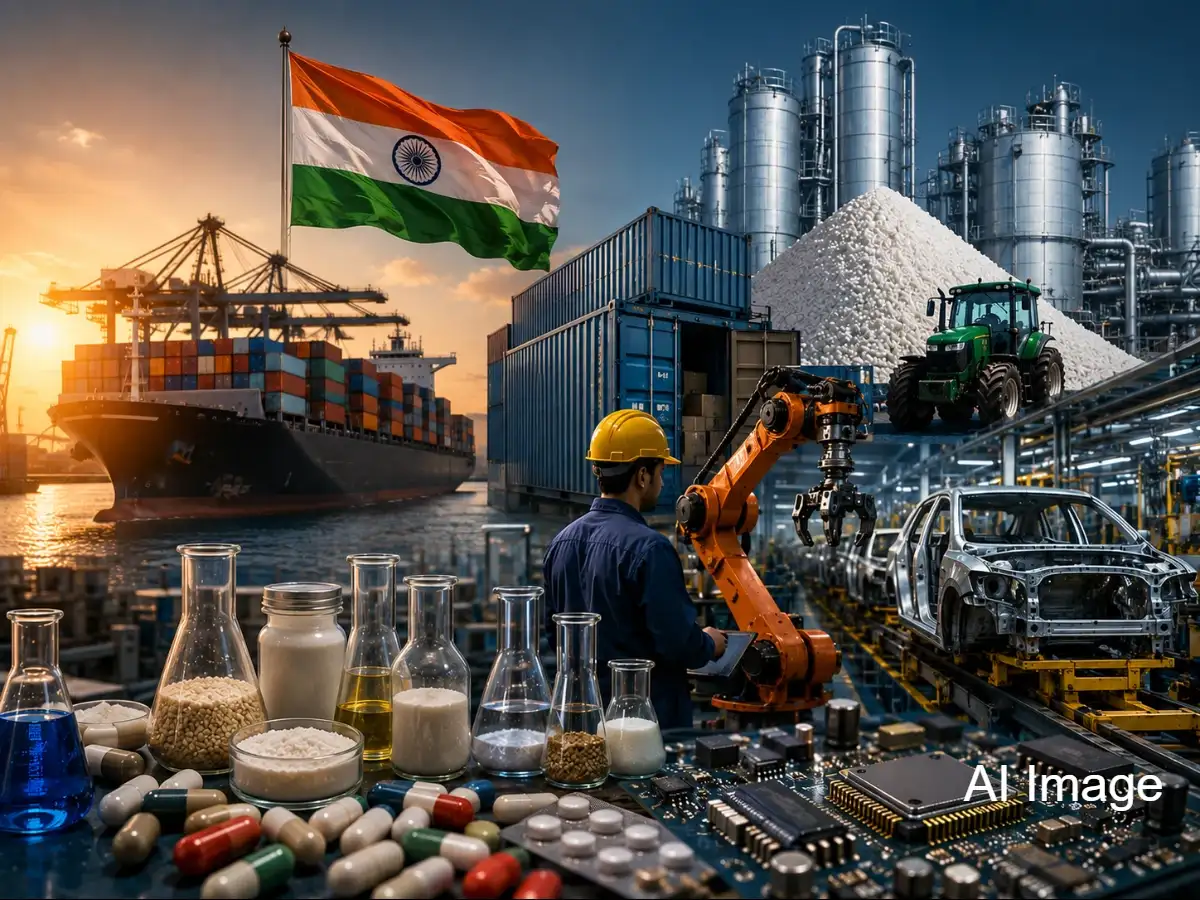
The Ministry of Commerce and Industry is preparing a list of more than 100 products, including electronics, chemicals, key drugs, fertilizers, semiconductors, automobiles and machinery, which could be scaled up, the people said. The discussions are taking place across several ministries and a decision hasn’t been finalized yet, the officials said.
The latest move to boost domestic manufacturing came on Wednesday, with Modi’s cabinet approving a plan to increase financial support for chip and smartphone production by another 1.9 trillion rupees ($19.7 billion). It also approved a policy to raise local fertilizer production following shortages linked to the closure of the Strait of Hormuz.
Also Read: India clears Rs 2.19 lakh crore mega push across chips, corridors and mobile manufacturing
India’s manufacturing is heavily reliant on imported inputs, especially from China, making the industry vulnerable if supplies are restricted, as India’s auto and tech industries have experienced over the past year. The Iran war has only exposed India’s dependency even further, with severe energy shortages and soaring import bills in recent months, which pushed the currency to record lows.
“Export controls are being used to deny critical components — from rare earths to semiconductors — to countries that need them. If this is the world we have to live in, where industrial policies are weaponized, self-reliance is the need of the hour,” said Gaurav Kapur, economist with IndusInd Bank.