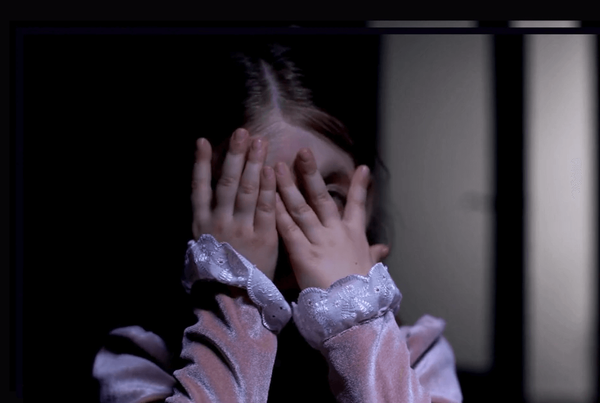
Beautiful music abounds in the film "Mitsubachi to Enrai" (Listen to the Universe), which depicts the struggles and progress of young pianists taking part in an international piano competition.
The film, an adaptation of Riku Onda's novel of the same title, will open on Oct. 4.
Four popular classical pianists played the main characters' piano parts, while Britain-based Japanese composer Dai Fujikura wrote "Haru to Shura" (Spring and Asura), the competition's commissioned piece performed during the film's climactic scene.
The film is already drawing attention for the performances by the professional pianists, as the sounds they create add a sense of reality and urgency to the screen.
The novel made headlines in 2017 as it earned the author two major literary awards -- the Naoki Prize and the Honya Taisho award.
While writing the novel, Onda thoroughly researched the Hamamatsu International Piano Competition and spent many pages in the novel detailing the competitors' performances at a fictitious piano competition. Some therefore said that it would be impossible to turn the novel into a movie, but talented film director Kei Ishikawa rose to the challenge.
In addition to the cast's acting, piano performances that represent the characters' personalities are key to having viewers appreciate the film. The four accomplished pianists -- Hisako Kawamura, Kotaro Fukuma, Miyuji Kaneko and Mao Fujita -- were chosen as the actors' stand-ins on the piano. Each pianist's performing style was the deciding factor for which character's piano parts he or she would play.
Kawamura performed for the lead character Aya Eiden (played by Mayu Matsuoka). Aya is a former child prodigy who vows to make a comeback. Kawamura made the most of her expressive power and refreshing interpretation of the works Aya plays to give life to the character's performance.
Fukuma tenderly expressed the feelings of Akashi Takashima (played by Tori Matsuzaka), who enters the competition despite being very close to the upper age limit.
Kaneko, reputed for his clean, stylish performances, took on the competition favorite, Masaru Carlos Levi Anatole (played by Win Morisaki).
Fujita, who won the second prize at this year's International Tchaikovsky Competition, played the role of Jin Kazama (Oji Suzuka), a natural talent.
4 characters, 4 pianists
The different personalities and playing styles of the four stand out most when they play "Spring and Asura" in a preliminary session. In the novel, a Japanese composer writes the piece, inspired by a Kenji Miyazawa poem. The work includes a cadenza, a technically demanding solo section that allows for improvisation by the soloist.
Fujikura, an internationally renowned composer, wrote the piece for the film after a request by Onda.
"I composed the work following closely the descriptions about it in the novel. I took out all the pages on which the descriptions are written and stuck them on the wall," Fujikura said.
As for the cadenza, he said: "Writing four different cadenzas for four pianists felt like writing an opera. The novel gave me the ideas that became the core of each cadenza. I just wrote them down as if I was led to do so."
Aya's cadenza starts with a chord powerfully struck. Akashi hums a melody to the Kenji Miyazawa poem and plays a variation on the theme of the melody. Masaru's cadenza includes melodies in octaves that require virtuoso techniques, and Jin's cadenza features fierce tremolos.
Fujikura said it was an amazing experience to listen to the four playing the work at a preview of the film.
"It's the same music apart from the cadenza, but they all played it differently. Kawamura gave an intellectual performance, Fukuma's playing was very refined, Kaneko was refreshing, and Fujita was genius-like. The casting was perfect. I was impressed."
The film's related events are taking place one after another. Sept. 4 saw the release of four CDs, each representing one of the four characters and featuring the pianist playing the particular character's piano parts. The CDs include works by Prokofiev, Bartok and other composers that are used in the final stage of the competition, and each disc includes "Spring and Asura" in the version by its character. Also on the disc are pieces assigned for the competition's preliminary stages in the novel, which were not used in the film.
On Sept. 28, pianist Mami Hagiwara played "Spring and Asura" at Tokyo Metropolitan Theater in Ikebukuro, Tokyo, as part of the Born Creative Festival, a music festival with Fujikura as the artistic director.
'Realistic depiction'
Kawamura said it was an honor to be involved in the film.
"I think this film realistically depicts what happens backstage at a music competition and the mind-set of competitors," Kawamura said.
The Germany-based pianist, who played the piano for the character Aya Eiden in the film, is an accomplished artist with an illustrious career. The winner of the Concours International de Piano Clara Haskil is marking the 15th anniversary of her debut in Japan.
She said Ishikawa, the film's director, told her that her appearance was close to Aya's.
"Maybe I'm like her in that we both have many passionate works in our repertoires," Kawamura said. "I heard that the director saw me bring in a water flask and made an additional scene with Aya carrying a water flask."
Due to her busy schedule, Kawamura had only one week to master "Spring and Asura."
"This piece is difficult to play but the melodies have a natural flow that comes straight into one's ears. The cadenza for Aya is grandiose. It also has jazz harmonies and dance-like rhythms. I can freely express my feelings when I play it," she said.
In the novel, Aya plays Prokofiev's Piano Concerto No. 2 in the finals, but it was changed to No. 3 to suit Kawamura's repertoire. A dramatic melody from the concerto is heard in the film's climactic scene.
"It's a very exciting scene, isn't it. I'd be glad if the film provides more opportunity for this work to be performed at concerts. I would also be happy if it gets people interested in music."
Read more from The Japan News at https://japannews.yomiuri.co.jp/