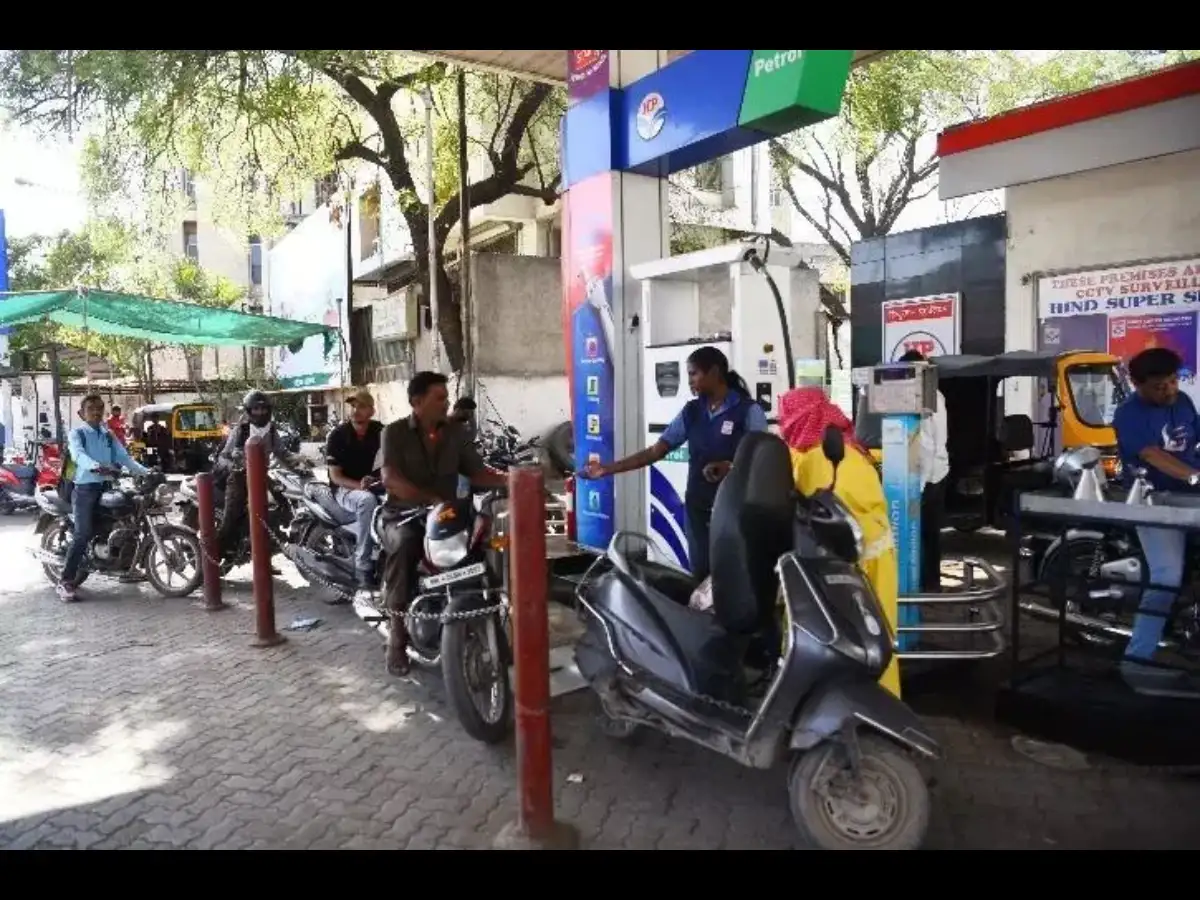
Fuel prices remained largely unchanged across major Indian cities on June 9, following four rounds of price hikes since mid-May. Petrol and diesel rates have risen by around ₹7.5-₹8 per litre during this period as oil marketing companies passed on the impact of higher global crude oil prices triggered by the ongoing conflict in West Asia. While prices on Tuesday saw only minor changes of a few paise in some locations, fuel costs continue to remain at their highest levels since May 2022.
The latest increase came on May 25, when oil marketing companies raised petrol prices by ₹2.61 per litre and diesel prices by ₹2.71 per litre. In Delhi, petrol is currently priced at ₹102.12 per litre and diesel at ₹95.20 per litre.
Fuel prices remain elevated after four hikes
Fuel prices have increased four times since May as global crude oil prices surged following disruptions to energy supplies caused by the conflict in West Asia. According to available data, cumulative increases since May 15 have pushed petrol and diesel prices up by nearly ₹7.5 per litre. The latest revisions have taken fuel prices to their highest levels in more than four years.
State-owned oil marketing companies have been under pressure from rising crude costs. Reports indicate that the firms are incurring losses of around ₹1,600-1,700 crore per day amid elevated global oil prices.
Petrol prices in major cities on June 9
| City | Petrol Price (₹/litre) |
|---|---|
| New Delhi | 102.12 |
| Kolkata | 113.51 |
| Mumbai | 111.21 |
| Chennai | 107.87 |
| Gurugram | 102.62 |
| Noida | 101.96 |
| Bengaluru | 110.89 |
| Bhubaneswar | 108.97 |
| Chandigarh | 101.51 |
| Hyderabad | 115.69 |
| Jaipur | 112.66 |
| Lucknow | 101.89 |
| Patna | 114.24 |
| Thiruvananthapuram | 115.49 |
Diesel prices in major cities on June 9
| City | Diesel Price (₹/litre) |
|---|---|
| New Delhi | 95.20 |
| Kolkata | 99.82 |
| Mumbai | 97.83 |
| Chennai | 99.65 |
| Gurugram | 95.30 |
| Noida | 95.44 |
| Bengaluru | 98.80 |
| Bhubaneswar | 100.68 |
| Chandigarh | 89.47 |
| Hyderabad | 103.82 |
| Jaipur | 97.78 |
| Lucknow | 95.36 |
| Patna | 100.20 |
| Thiruvananthapuram | 104.40 |
Global oil prices steady after ceasefire signals
Global oil prices stabilised after Israel and Iran signalled a willingness to halt further attacks, easing concerns about a wider regional conflict that could disrupt energy supplies.
Brent crude traded near $94 per barrel, while US benchmark West Texas Intermediate remained above $91 per barrel.
The market reaction followed statements indicating that both sides were prepared to maintain the ceasefire unless fresh attacks occurred, providing some relief after days of heightened tensions.
West Asia conflict impacts India's fuel market
The conflict in West Asia has affected energy supplies globally and has had a direct impact on India, which relies heavily on imported crude oil.
A significant portion of India's crude oil, natural gas and LPG imports comes from Gulf countries. Disruptions caused by the conflict contributed to higher global crude prices and increased pressure on domestic fuel pricing.
Globally, oil prices have surged around 40% to nearly $100 per barrel since the conflict affected access to the Strait of Hormuz, a key route through which roughly one-fifth of the world's oil and gas supplies are transported.
Minister expects fuel prices to ease
Union Oil Minister Hardeep Singh Puri has indicated that fuel prices may moderate in the coming months as supply conditions improve.
"Oil prices cannot remain at their current height for "a very long time" and are expected to fall in the months ahead," according to the minister.
He said additional supplies from Canada and the United States could help ease shortages and added that India has oil and gas reserves sufficient for 76-80 days.
What determines petrol and diesel prices?
Petrol and diesel prices in India are influenced by several factors.
Global crude oil prices remain the biggest driver because crude is the primary raw material used to produce fuels. The rupee-dollar exchange rate also affects costs as India imports a large share of its crude requirements.
In addition, central excise duty and state-level value-added tax (VAT) contribute significantly to retail fuel prices. Variations in state taxes are one of the main reasons fuel rates differ from one city to another.