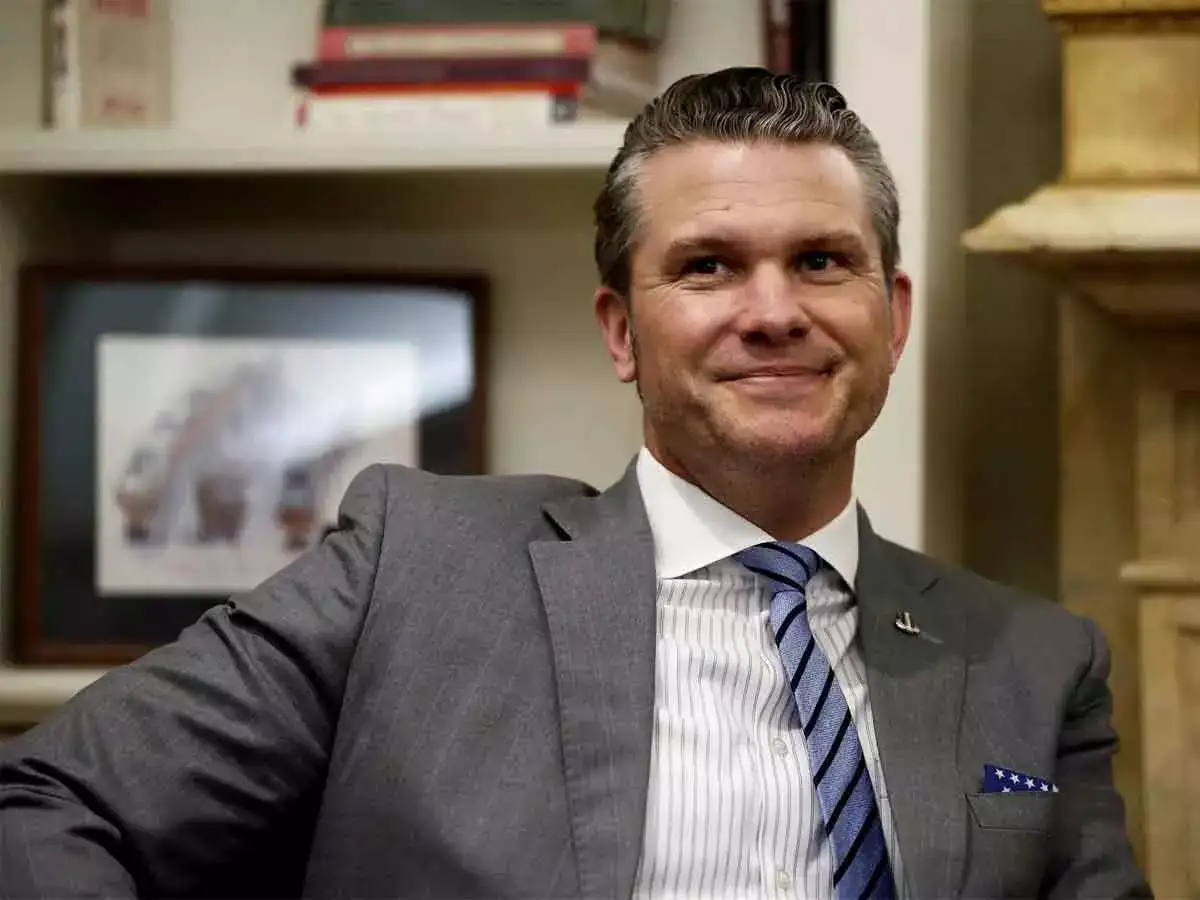
At a security forum in Singapore, Defense Secretary Pete Hegseth sought to convince US allies that staying quiet on Taiwan is the best way to project American strength. While time will tell if that’s the case, for the moment it’s a win for Chinese President Xi Jinping.
Hegseth over the weekend became the first Pentagon chief in more than a decade to avoid mentioning Taiwan during a speech that lasted about 30 minutes at the annual Shangri-La Dialogue. He declared “the era of performative outrage is over” while outlining a “strong, quiet and clear” policy toward the region, and hailing ties with Beijing as “better than they’ve been in many years.”
Also Read: US-China conflict over Taiwan risks a nuclear escalation, study finds
The softer language, a sharp contrast from Hegseth’s address a year ago, came just weeks after Xi cautioned Donald Trump in Beijing that mishandling the Taiwan situation could lead to “clashes” between the superpowers. While Hegseth also noted “rightful alarm” at China’s military buildup and showered nearly every Asian country with praise for boosting defense spending, the overall tone showed an eagerness to sidestep tensions with Beijing.
“On China, something had clearly changed: this was perhaps the least confronting speech from a US administration in the 23-year history of the Shangri-la Dialogue,” said Rory Medcalf, head of the National Security College at the Australian National University. “The great uncertainty is whether this all reflects strength or vulnerability in the US negotiating position.”
Speaking to reporters as he left Singapore on Saturday night, Hegseth said US policy toward Taiwan remained the same — with an important caveat.
“The only change you might see is how we talk,” he said, adding that the US should speak “softly, while carrying a big stick.” That phrase is widely associated with former President Theodore Roosevelt, who initiated the construction of the Panama Canal, sought to keep European powers out of Latin America and flexed American military and diplomatic muscle in both Europe and Asia.
One major test of whether US policy toward Taiwan remains unchanged in practice will be a stalled $14 billion arms package, which Trump called a “bargaining chip” following his meeting with Xi — a comment that broke decades of diplomatic norms. Hegseth wasn’t asked about Trump’s remark in public over the weekend, and sidestepped a question on whether the weapons deal would be finalized.
“On China, something had clearly changed: this was perhaps the least confronting speech from a US administration in the 23-year history of the Shangri-la Dialogue,” said Rory Medcalf, head of the National Security College at the Australian National University. “The great uncertainty is whether this all reflects strength or vulnerability in the US negotiating position.”
Speaking to reporters as he left Singapore on Saturday night, Hegseth said US policy toward Taiwan remained the same — with an important caveat.
“The only change you might see is how we talk,” he said, adding that the US should speak “softly, while carrying a big stick.” That phrase is widely associated with former President Theodore Roosevelt, who initiated the construction of the Panama Canal, sought to keep European powers out of Latin America and flexed American military and diplomatic muscle in both Europe and Asia.
Also Read: Why is Taiwan the elephant in every room between US and China?
One major test of whether US policy toward Taiwan remains unchanged in practice will be a stalled $14 billion arms package, which Trump called a “bargaining chip” following his meeting with Xi — a comment that broke decades of diplomatic norms. Hegseth wasn’t asked about Trump’s remark in public over the weekend, and sidestepped a question on whether the weapons deal would be finalized.