Once regarded as household companions, pets are increasingly being treated as family members and that emotional bond is transforming into a major economic force.
From premium pet food and health supplements to insurance, luxury boarding services and even pet strollers, owners around the world are spending more than ever on their four-legged companions. The trend, known as the pet economy, is creating new business opportunities globally while positioning Thailand to become one of the world's leading producers of premium pet food.
According to Bnomics, a digital analysis platform under Bangkok Bank, Thailand is well-placed to capitalise on the industry's rapid expansion and strengthen its position as the "Kitchen of the World for Pet Food".
Family members
Changing lifestyles have fundamentally reshaped the relationship between people and their pets. Rather than simply owning animals, many people now consider themselves pet parents, treating their dogs and cats as integral members of the family.
This shift, often referred to as pet humanisation, has changed consumer spending patterns. Instead of purchasing only basic necessities, pet owners are increasingly investing in premium nutrition, dietary supplements, preventive healthcare, pet insurance and smart devices that monitor their pets' health.

"What begins as love and companionship has evolved into a rapidly expanding economic force known as the pet economy," said Kusuma Thanavong, an economist at Bnomics.
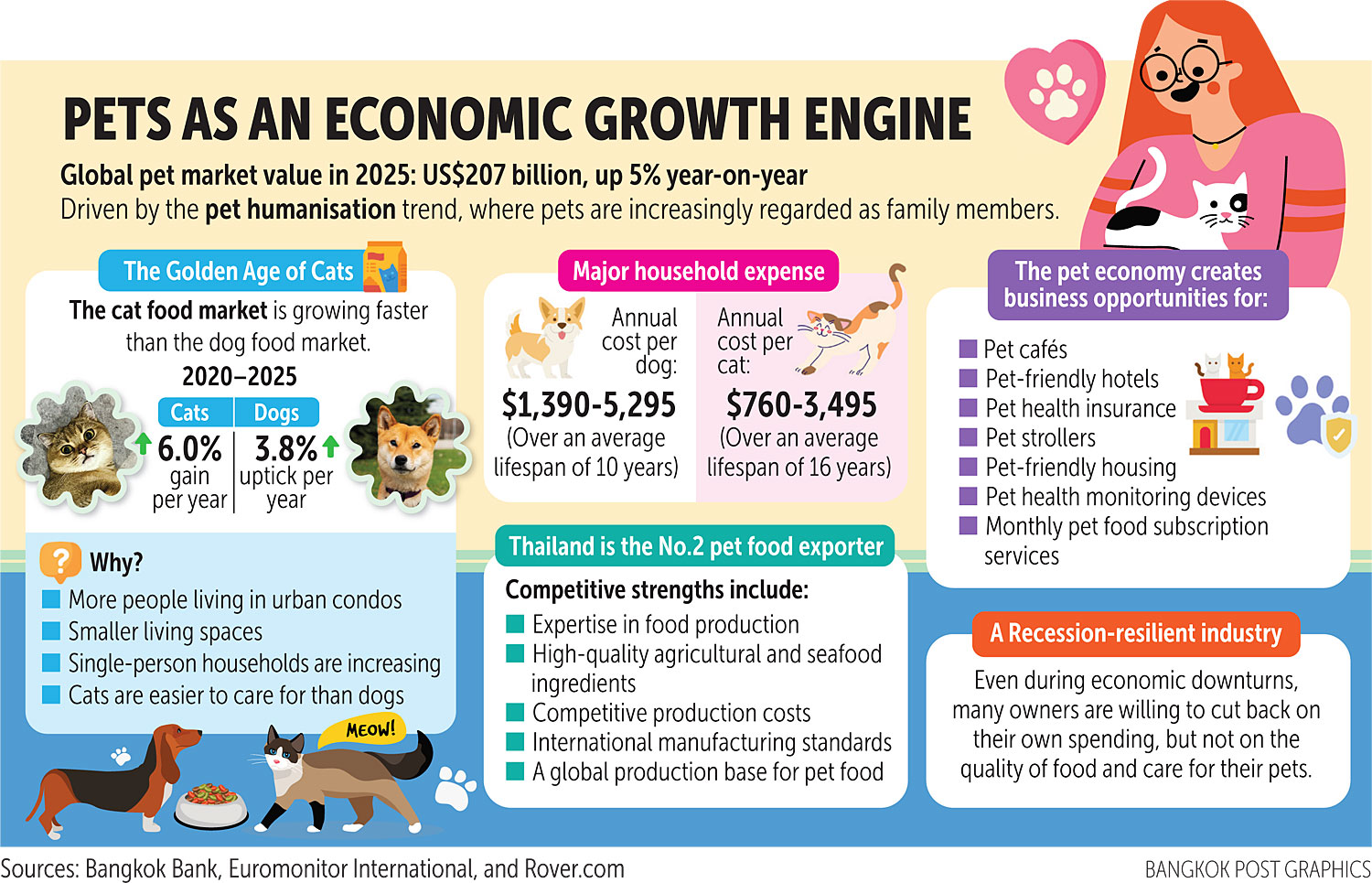
According to Euromonitor International, the global pet care market is estimated at US$207 billion in 2025, with annual growth of roughly 5%. The industry's expansion is being driven not only by a growing pet population, but also by rising expenditure per animal -- a trend known as premiumisation.
In many countries, the number of pets is now increasing faster than the number of newborns, reflecting broader demographic changes, including ageing populations, smaller families, urbanisation and more people living alone.
Rising Costs
As pets become part of the family, caring for them has become a significant household expense.
According to Rover's 2025 True Cost of Pet Parenthood report, owning a dog costs between $1,390 and $5,295 per year, with lifetime expenses averaging $34,550. Annual costs for cats range from $760 to $3,495, while their average lifetime cost is estimated at $32,170.
Cats are emerging as one of the fastest-growing segments of the pet economy. Between 2020 and 2025, the global cat food market was estimated to expand by an average of 6% annually, significantly outpacing the expected 3.8% growth for dog food.
The trend reflects changing lifestyles, as more people live in cities, occupy smaller homes or condos, and choose pets that require less space and are relatively easier to care for.
"Pets generate far greater economic value than many people realise. The pet economy now extends far beyond food production to include veterinary hospitals, pet insurance, pet cafés, pet-friendly hotels, pet-friendly housing, wearable health-monitoring devices and subscription-based pet food delivery services," noted Bnomics.
Research suggests Thailand has an opportunity to expand into higher-value industries, including veterinary healthcare, pet-friendly tourism and integrated pet care services, creating new engines of economic growth.
Pet food opportunity
According to Ms Kusuma, Thailand has established itself as one of the world's leading pet food exporters.
The country is the second-largest pet food exporter globally behind Germany, accounting for around 10% of the market.
As worldwide demand continues to rise, Thailand can build on its established strengths in agriculture and food manufacturing by producing higher-value pet products, she said.
The country's abundant agricultural and seafood resources, internationally recognised manufacturing standards and competitive production costs have made it a major production hub for premium pet food.
Another factor supporting long-term growth is the industry's resilience. Even during periods of economic uncertainty, many pet owners continue to prioritise spending on their animals.
"The pet industry is expected to be recession-resistant, demonstrating greater resilience during economic downturns than many other sectors," noted Bnomics.
Priorities
For many pet owners, the willingness to spend on their pets is deeply personal.
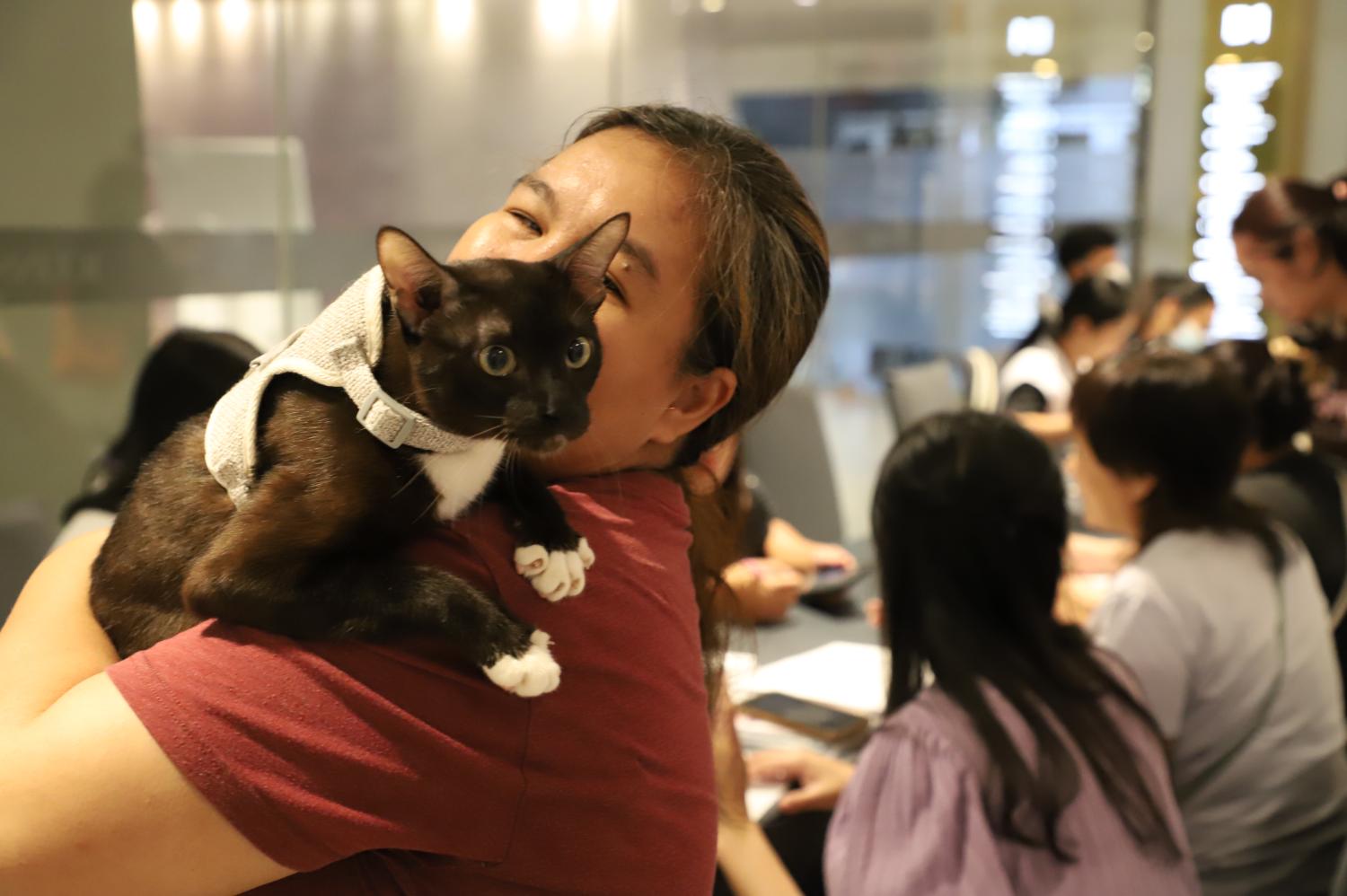
Nartnaree Siripaiboon, a 22-year-old university student, owns two cats and carefully manages her finances to ensure they receive proper care. She keeps separate budgets -- one for herself and another for her cats.
"I receive a monthly allowance of 10,000 baht from my parents, while my cats' expenses are around 5,000 baht a month," she said. "To ensure I have enough money for both myself and my cats, I work part-time to earn additional income."
Every summer, Ms Nartnaree joins a work-and-travel programme overseas during her university break. The income she earns helps build her savings while also providing financial security for her cats' future expenses.
Her story reflects a growing trend among younger generations, whose willingness to invest in their pets is helping fuel one of the world's fastest-growing consumer industries, which could offer Thailand significant economic opportunities in the years ahead.