English Touring Opera’s new production of Pelléas et Mélisande fulfils a long-standing ambition on the part of artistic director James Conway to bring Debussy’s only opera into the company’s repertory. Adapting this most elusive of works for small venues, however, brings challenges of its own, and Conway uses a chamber version by Belgian composer Annelies Van Parys that both darkens the orchestral palette and cuts two complete scenes, along with several sections elsewhere. Though sanctioned by Debussy’s publishers, it feels at times as if too much has been trimmed away: Conway at one point restores a passage of dialogue from Maeterlinck’s original play for the purposes of clarification.
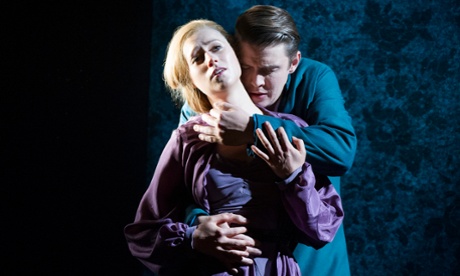
It is, however, quite wonderfully done. Conway is having none of the current fad for redefining the opera in terms of psychopathology or absurdist theatre, and returns it to a symbolist dramaturgy of muted understatement. Costumes suggest the time of composition. The set shows the interior of a dilapidated house, the walls of which are covered with oppressive art nouveau wallpaper. You can feel the emotional stagnation.
The ambivalent relationships between the protagonists are beautifully delineated and observed. Susanna Hurrell’s fragile Mélisande first reacts to Stephan Loges’s handsome, stiff-backed Golaud with a mixture of attraction and fear. Later, we watch her gradually relax into her relationship with Jonathan McGovern’s Pelléas, a gawky dreamer, similarly adrift in the claustrophobic world of Allemonde. The lovers are chaste and naive here, which makes Golaud’s terrible attack on his wife all the more horrific when it happens. All three sing superbly, and Loges’s racking sobs after Mélisande’s death will haunt you long after the curtain falls. Jonathan Berman conducts with great care and elegance. It’s a brave, deeply affecting achievement.
•At Britten theatre, London, until 3 October, then touring. Box office: 020-3761 7069.