OSAKA -- Voters in Osaka City narrowly rejected the Osaka metropolis plan Sunday in a second referendum in five years on whether the city should be replaced by four special wards.
The plan to turn the city into a metropolis akin to Tokyo was favored by 675,829 voters with 692,996 against, according to the city's official election figures. The result leaves Osaka City as is.
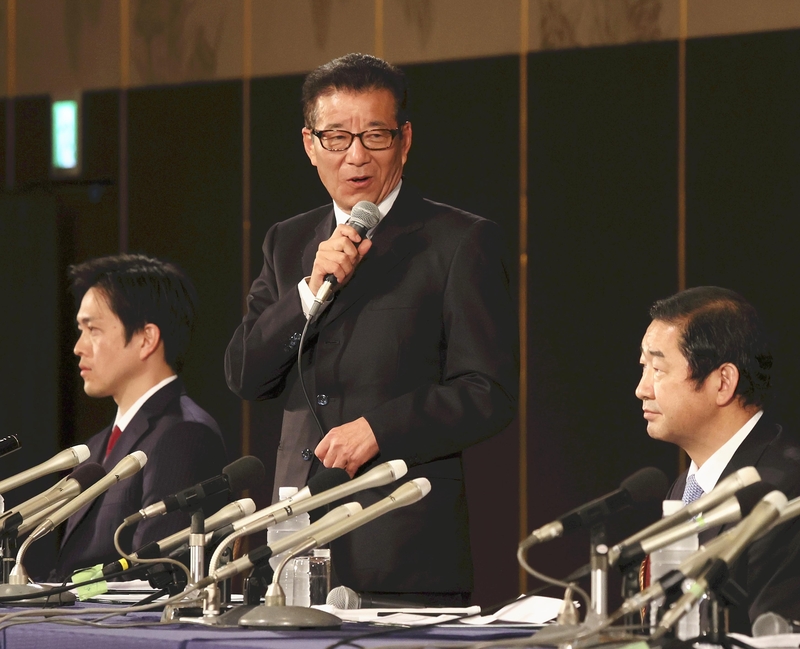
Osaka Mayor Ichiro Matsui, who is the leader of the Nippon Ishin no Kai (Japan Innovation Party) and the regional political party Osaka Ishin no Kai that promoted the metropolis plan, announced after the referendum was defeated that he will retire from politics when his term as mayor ends in April 2023.
The referendum was held for eligible voters living in Osaka City based on the law on the establishment of special wards in major cities, which sets procedures to create such a metropolis. Voters were asked whether the city of about 2.7 million should be reorganized into four special wards called Yodogawa, Kita, Chuo and Tennoji in 2025. Each created ward would have a population of about 600,000 to 750,000.
The number of eligible voters was 2,205,730. Voter turnout was 62.35%, down from the previous referendum's 66.83%.
The metropolis plan was first proposed in 2010 by then Osaka Gov. Toru Hashimoto, who launched the Osaka Ishin no Kai, in a bid to eliminate the overlapping administrative functions of the Osaka prefectural and city governments. In a referendum held in May 2015, a plan to revamp the city into five special wards was also narrowly rejected, with 694,844 voters in favor and 705,585 against. The result led Hashimoto to retire from politics.
Ishin no Kai again aimed to get the metropolis plan approved after both Matsui and Hirofumi Yoshimura, who is now Osaka governor and acting president of Osaka Ishin no Kai, were elected in a double election for governor and mayor in April last year in which they ran for each other's posts.
In the 2015 referendum, all parties except for Ishin no Kai opposed the plan. This time, however, Komeito joined forces with Ishin no Kai to support the plan, with the Liberal Democratic Party, the Constitutional Democratic Party of Japan and the Japanese Communist Party among the major parties against the plan.
This second metropolis plan sought to integrate some similar administrative functions in the prefectural and city governments and cited cost reductions stemming from this consolidation. Proponents also stressed that the way the prefectural and city governments implemented measures against the spread of the novel coronavirus in a coordinated manner is a shining example of what they want to achieve, vowing to speed up the policy-making process by unifying the command posts in Osaka.
Opponents stressed that if the city is rearranged into special wards, it would cost more and undermine services for residents. By making such claims, they garnered support from residents deeply concerned about a "dissolution of Osaka City."
Read more from The Japan News at https://japannews.yomiuri.co.jp/