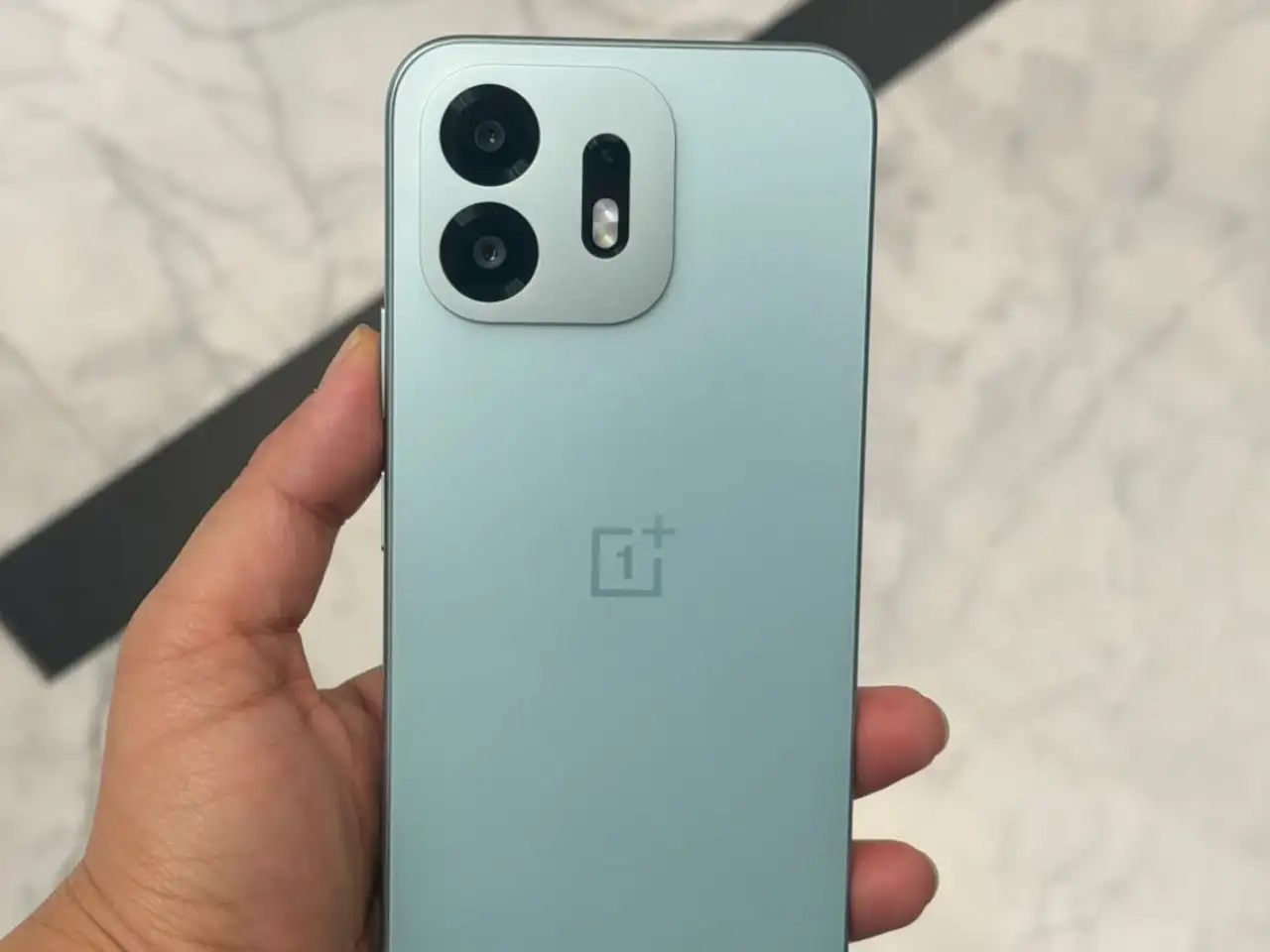
For much of the last decade, OnePlus occupied a unique place in the global smartphone industry.
It never matched Samsung's scale or Apple's ecosystem. Yet for a generation of Android users, it became the default recommendation for anyone looking for flagship performance without paying flagship prices.
That journey has now entered a new chapter.
On Thursday, OnePlus announced that it will stop launching new products in Europe and North America as part of what it described as a "proactive global strategy adjustment." The announcement comes hours after Bloomberg reported that parent company Oppo was restructuring its smartphone business and planning to wind down OnePlus operations across several international markets.
Also Read: OnePlus, once popular with tech fans, to pull out of US and Europe
While the company has now confirmed its withdrawal from Europe and North America, it has not announced any such plans for India. Responding to ET's queries earlier, OnePlus India said: "OnePlus India continues to operate its business as usual, with all local operations on track. We urge the media to exercise restraint before amplifying unverified speculation."
The confirmation ends weeks of speculation around OnePlus' international strategy, although questions remain about what it ultimately means for other key markets such as India. The move has once again put the spotlight on a company that, despite never becoming one of the world's largest smartphone brands, played an outsized role in shaping the premium Android market.
The "flagship killer" era
Founded in 2013 by Pete Lau and Carl Pei, OnePlus entered a premium smartphone market largely dominated by Apple and Samsung.
Its strategy was relatively simple. Offer flagship specifications at significantly lower prices, pair them with a clean Android experience and build a community instead of relying on expensive advertising.
The original OnePlus One launched in 2014 with Cyanogen OS before the company later introduced OxygenOS, which became one of its biggest differentiators. The invite-only sales model generated considerable buzz, while subsequent launches such as the OnePlus 3, 5 and 6 established the company's reputation as the original "flagship killer."
The strategy translated into rapid growth.
According to Counterpoint Research, OnePlus' global smartphone shipments grew 270% year-on-year in 2018, making it one of the fastest-growing premium smartphone brands globally. That year, it entered the world's top five premium smartphone brands despite accounting for only around 2% of the global premium smartphone segment — an indication that its influence extended well beyond its shipment volumes.
Europe helped establish the brand's credibility, but India became its biggest success story.
India became the growth engine
OnePlus entered India in late 2014 through an exclusive partnership with Amazon, at a time when the country's premium smartphone market was still relatively small.
The company found an opportunity between expensive flagship devices from Apple and Samsung and the rapidly growing budget Android segment. The strategy worked.
According to Counterpoint Research, OnePlus became India's largest premium smartphone brand in the second quarter of 2018, capturing 40% of the premium smartphone segment. It retained the lead through the year, ending the fourth quarter with 36% market share.
Its strongest year came in 2019.
Counterpoint estimated that OnePlus became the first premium smartphone brand to ship more than 2 million smartphones in India in a calendar year. At the time, India contributed nearly one-third of the company's global revenue, highlighting just how central the country had become to OnePlus' business.
"OnePlus entered India in 2014 as a premium Android challenger with its 'flagship killer' positioning, offering strong hardware at prices below Apple and Samsung," Prachir Singh, Senior Research Analyst at Counterpoint Research, told ET Online.
"India soon became its largest overseas market, with the brand maintaining a 3%-5% shipment share and peaking at 7% in 2023, driven by a strong portfolio including the OnePlus 11 series, Nord and Nord CE series. Its success came from addressing both affordable premium and flagship segments."
The company's true impact extended far beyond shipping boxes. Before OnePlus, the market for ₹35,000–50,000 Android smartphones was incredibly restricted. By delivering premium-tier performance at significantly lower costs, OnePlus proved there was a massive consumer base willing to pay for premium Android devices if they perceived genuine value.
In many ways, OnePlus helped expand India's premium Android smartphone market. Not just for itself, but for the industry.
The company began to change
By 2020, OnePlus had reached a critical inflection point. Co-founder Carl Pei departed the enthusiast startup he helped build into a household name, launching Nothing shortly after. The strategy behind his new venture felt intimately familiar to long-time tech fans, with focus on clean software, distinctive design and community-led marketing rather than simply competing on specifications.
Once again, India became central to the story.
Pei has repeatedly described India as Nothing's largest smartphone market. Counterpoint Research said Nothing's smartphone shipments in India grew 510% year-on-year in the third quarter of 2024, helping it enter the country's top 10 smartphone brands for the first time. The momentum continued into 2025, with the company reporting 146% year-on-year shipment growth in the second quarter, marking its sixth consecutive quarter as India's fastest-growing smartphone brand.
Meanwhile, OnePlus was moving in the exact opposite direction. Seeking massive scale over niche enthusiast appeal, the brand launched the mid-range Nord series to drive volume beyond flagship devices. In June 2021, OnePlus also announced deeper integration with Oppo, including combining research and development teams.