A spectre is haunting the most ambitious politicians in Labour – the question of timing. If you hope one day to become prime minister, you could blink and miss your moment.
Andy Burnham clearly believed he did not have much time. But now he might have longer than he thought.
Labour’s powerful soft left caucus currently has no candidate who is ready to challenge the prime minister. Until they do, it seems unlikely they would be part of facilitating a leadership challenge en masse.
It is why the survival of Keir Starmer as prime minister for far longer than many predict is underpriced as an option in Westminster. None of his rivals really know whether there is an advantage in being first mover. Go too soon and you end up yesterday’s story, quickly consigned to the backbenches. Move too slowly and your rivals have sewn up all the support.
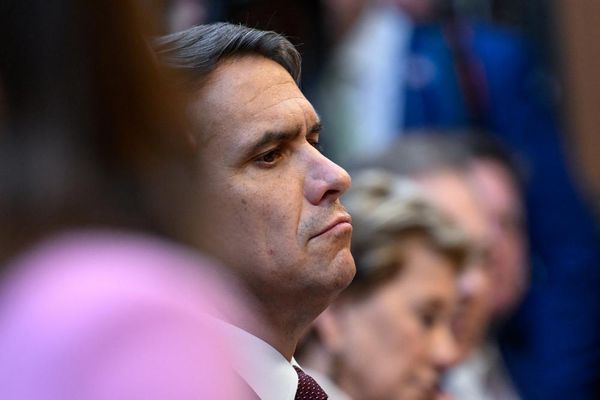
Wes Streeting, the health secretary, looks like he benefits most from the NEC’s decision to keep Burnham from returning to parliament. He is the only potential candidate who would be ready to move in May – especially if Labour also lose the Gorton and Denton byelection.
But the near unanimity in blocking Burnham is also a sign that the institutional support for Starmer is perhaps stronger than might have been imagined – and there are clues about how an average member of the parliamentary Labour party (PLP) might react to a forced leadership challenge.
In public, some outspoken MPs denounced the blocking, but in private far more were voicing concerns about what a Burnham byelection candidacy might unleash. Some MPs have proved themselves all mouth and no trousers when it comes to whether they are serious about regime change.
One option that comes up in late-night chats with disgruntled MPs on the Commons terrace is the possibility of a non-binding confidence vote in the prime minister held at the weekly meeting of the PLP.
A similar vote was held against Jeremy Corbyn in 2016. He lost, but stayed on as leader nevertheless. Starmer’s critics believe he would not do the same should he lose – or if a substantial number of MPs voted against him.
But with only one candidate realistically ready to run at that point, those MPs who do not want Streeting may then decide to back Starmer.
Those on the soft left’s preferred candidates – Burnham and the former deputy prime minister Angela Rayner – could benefit from going more slowly. Burnham is said by some to have been offered the possibility of a return in 2027.
Though many MPs have flinched at the Manchester mayor’s strategy, they agree with his diagnosis – that Labour is floundering without a guiding vision and must return to its core values in order to succeed in government.
Rayner’s allies say she is certain to run in the event of a leadership contest and will not do a deal, but she needs to hear from HMRC about her failure to pay stamp duty on a flat before she can make real preparations for a challenge.
But could they both run out of time? There is a minority on the soft left that thinks time is short and waiting only makes a Reform UK victory inevitable.
The majority still will not countenance backing Streeting. But others, mindful of the need to beat Nigel Farage and hold together the party’s progressive coalition, have begun to warm to the health secretary as a possibility. They cite how confident he is on anti-racism and Labour values, and his talents as a communicator and attack dog.
And there are a few more – female ministers in particular – who say their preferred candidate is Shabana Mahmood, despite her hardline immigration reforms.
The conversation always begins with the concern that those reforms have made it impossible for the home secretary to win the support of Labour members. But many MPs frustrated with the constant U-turns from No 10 think there is merit in a decisive cabinet minister who makes tough decisions. They also have long-held admiration for her political skills from when she was the party’s campaign coordinator.
As Conservative prime minister, Theresa May lost dozens of parliamentary votes, shed cabinet ministers and even survived a confidence vote before she was forced to resign. And, in Boris Johnson, she had an obvious rival ready to replace her. Starmer’s position is nowhere near as dire yet, with his rivals hopelessly divided, even if few think he can ultimately prevail.