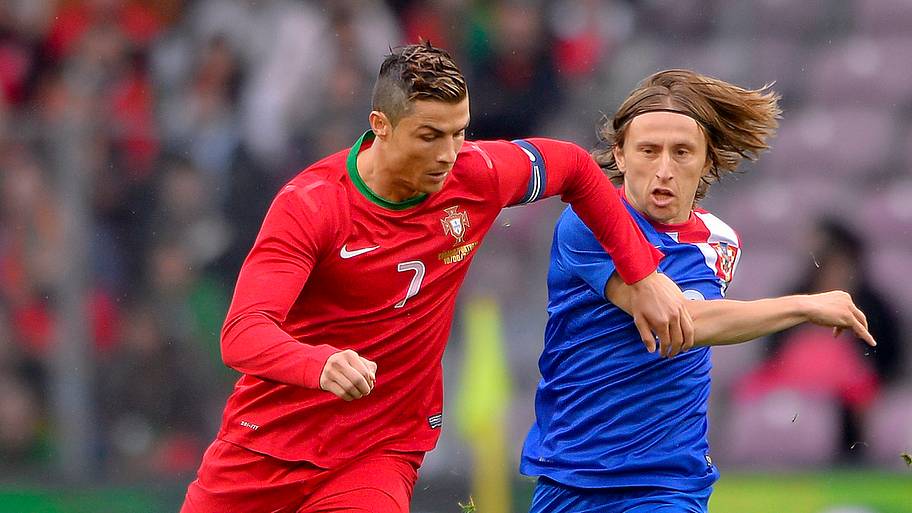
In 2016, Cristiano Ronaldo set a goal that felt mad even for him.
“I’m at the best club in the world and I want to retire here … ” he said, referring to Real Madrid.
So far so good.
“ … at 41.”
You what?
Almost no soccer players stay at the top past 40, unless you’re a goalkeeper, or Paolo Maldini, or your water bottle has been sourced from the actual Fountain of Youth. Strikers like Ronaldo tend to hit the wall by 35. Their legs sour. Their hearts beat slower. Each training session feels a little more painful than the last.
Yet at this World Cup, Ronaldo will be there. Portugal captain and lead striker … at 41. Last year Ronaldo did a test claiming his biological age was just below 29. You’d laugh, had you not suspected it was true.
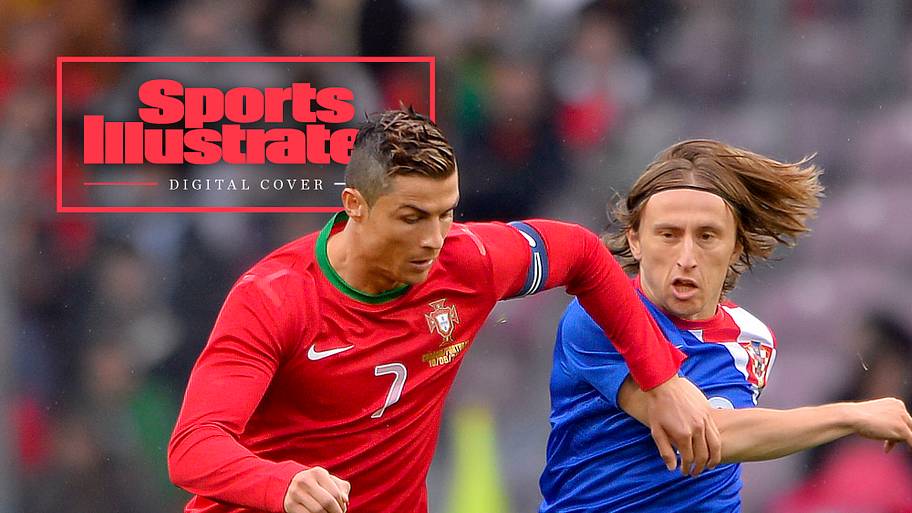
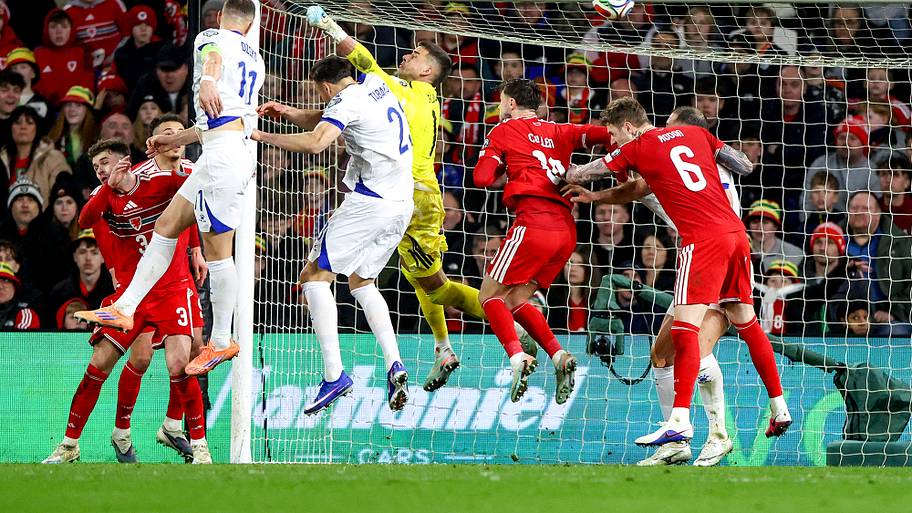
While Ronaldo is an ascetic freak locked into a Rocky Balboa montage on repeat, he’s not entirely alone. Since the first edition in 1930, only one male outfield player over 40 has appeared in a World Cup game: Roger Milla in 1994. Now, the Cameroon striker might be followed not just by Ronaldo, but also Croatia playmaker Luka Modrić (40) and Bosnia forward Edin Džeko (40).
We’re not talking about the reserve left back for Curaçao here, all due respect. The oldest names at this World Cup are also some of the biggest.
Two decades ago these guys might have been sipping Negronis on a beach in the Caribbean right now, 20 pounds heavier, grappling with the post-career existential crisis. But many soccer stars are playing for longer. Two years ago, the Portuguese defender Pepe became the oldest player at the Euros, at 41. In the qualifiers for that tournament, the record for oldest player was broken three times. A University of Vigo study found that, from 1992 to 2018, the average player age in the Champions League rose by 1.6 years.
Lionel Messi turns 39 in June. Over in Spain, Robert Lewandowski, who missed out on his third World Cup when Poland lost in a playoff to Sweden, has been scoring for Barcelona at 37.
There is a saying that soccer players die twice, the first time when they stop playing. At a time when tech CEO turned longevity lab rat Bryan Johnson spends millions a year on supplements and blood transfusions in a bid to live longer, these veterans are trying to stave off their own mortality. “Don’t die,” Johnson likes to say. You can imagine players writing something similar on their bathroom mirrors, staring at it every morning, saying it out loud: “Don’t retire.”
The question is: How ... and why?
Drink to Your Health
(Disclaimer: The methods you will read about here are carried out by professionals and might not all work for you. In fact, some of them might not even work for the professionals.)
“The Cigarette for me,” says football genius Stanley Matthews.
The year is 1952. The headline is from a magazine ad. And Matthews is one of the biggest stars in England.
“Stan takes his training very seriously and soon discovered the cigarette which suited him best,” says the copy. Next to the text, a smiling Matthews is holding a cigarette in his right hand, like Popeye raising a can of spinach.
Matthews never actually smoked, and he preferred carrot juice to alcohol. But in the 1970s and ’80s Johan Cruyff and Michel Platini lit up in the locker room. Some British players geared up for games with steak or a slurp of whisky. At the 2006 World Cup, Zinedine Zidane was seen with a cigarette days before the semifinal against Portugal, in which he scored the winner (of course he did), even though he had fronted an EU campaign against smoking.
In 2000, Leicester City prepared for the League Cup final with a drunken training camp in La Manga, Spain, where the players were kicked out of their hotel after setting off a fire extinguisher in a piano bar. They won the game. Two years later, hard-running midfielder Ray Parlour scored for Arsenal in the FA Cup final, and on the plane home he was about to swill down a beer, only to hear a voice say, “No drinking.” It was the coach, Arsène Wenger, who reminded him that they had a league title to clinch in five days. This was Saturday.
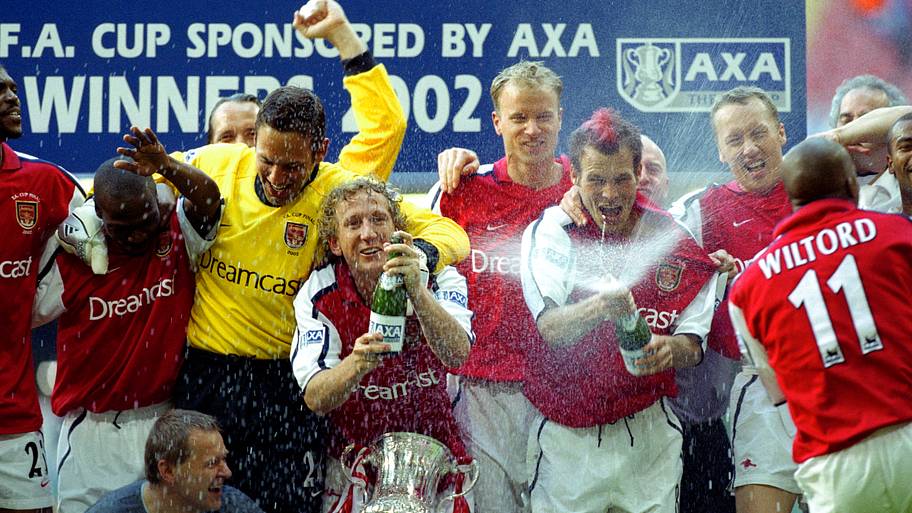
Saturday night: On a date, Parlour gets so drunk on champagne and tequila slammers that he stumbles across three tables.
Sunday: Parlour stops by a social club to greet his brothers and ends up downing 10 pints of Guinness.
Wednesday: Arsenal wins the league and Parlour is named Man of the Match. As he walks into the locker room, Wenger taps him on the shoulder.
“You were superb, Ray. Do you know what it was that made the difference?”
Parlour says, “No boss, what was it?”
“I stopped you drinking that beer on the plane.”
This Is 40
But in the last decade, the game has changed.
“The game is almost unrecognizable in terms of speed and pace and power,” says Danny Donachie, who has worked as head of medicine at Everton and Aston Villa. The players are sprinting more. They’re also playing more games, as the global calendar is packed with new tournaments and expanding old ones, such as this very World Cup.
“There’s no hiding place,” says Paul Balsom, head of UEFA’s Fitness Advisory Group, who has worked as a performance manager for Sweden at three World Cups and seven Euros, and at Leicester when the club won the Premier League 10 years ago. “It’s 24/7 for these top players. They have to take care of themselves both on and off the field. Most players are fitter and healthier than they’ve ever been.”
What’s the secret of those who hit 40?
“I don’t think there’s a magic potion that’s going to add 10 years to a career,” says Balsom, who stresses that players such as Ronaldo and Modrić are outliers. “But it’s probably that they’re genetically blessed, highly motivated and a little bit better at everything. And more focused when it comes to taking care of their bodies.”
In the last decade, the soccer diet has transformed. Not long ago top teams in England would eat eggs, bacon and sausages, says nutritionist Laurent Bannock, who advises a series of elite soccer players and has worked with the national teams of Egypt and Belgium. “To a certain extent it would be about giving the players food they fancied.”
Then clubs hired Michelin-star chefs, but even that is over. “We’ve got a new era of performance chefs,” says Bannock. “They’re more focused on actual sports nutrition requirements, things like fuel timing and protein needs as opposed to, ‘Let’s just throw some more cream in there and make it look amazing.’ ”
Yet even the clubs can’t control what the players do at home. And the veterans count every calorie. Messi has long since cut down on soda and milanesas, thin breaded veal filets popular in Argentina. Ronaldo is said to eat six small meals a day. At Man United, his teammate Patrice Evra once came over for lunch, hoping for red meat and bubbles, only to be served salad, chicken and mineral water. “When Cristiano invites you for lunch at his house, just say no,” said Evra.
Lewandowski starts with dessert.
Then he eats carbs, then fish or meat. He ends the meal with a starter, like salad or soup. The idea came from his wife Anna, a nutritionist and three-time medalist at the Karate World Championships, based on the theory that sweet foods digest faster. Lewa avoids decadent indulgences such as lactose, wheat flour and whole milk. Obviously. A sleep coach has told him to rest on his left side to protect his stronger right leg.
“I don’t know what’s in his DNA,” Barcelona coach Hansi Flick said recently. “But he recovers in three weeks from injuries that should last five.”
For team staff, these habits can create trouble.
“The older player has a lot of power in a team,” says Bannock. “I remember an awful lot of these big players would be having tantrums because certain foods weren’t being made available. There are many players who grew up watching these guys on TV and now all of a sudden they’re on the same team. They have far more influence than even the coach can have.”
And if the coach kicks them out? Good luck.
“They’re amazingly experienced,” says Bannock. “And particularly in tournaments like the World Cup, experience is a huge factor.”
The Case for Prehab
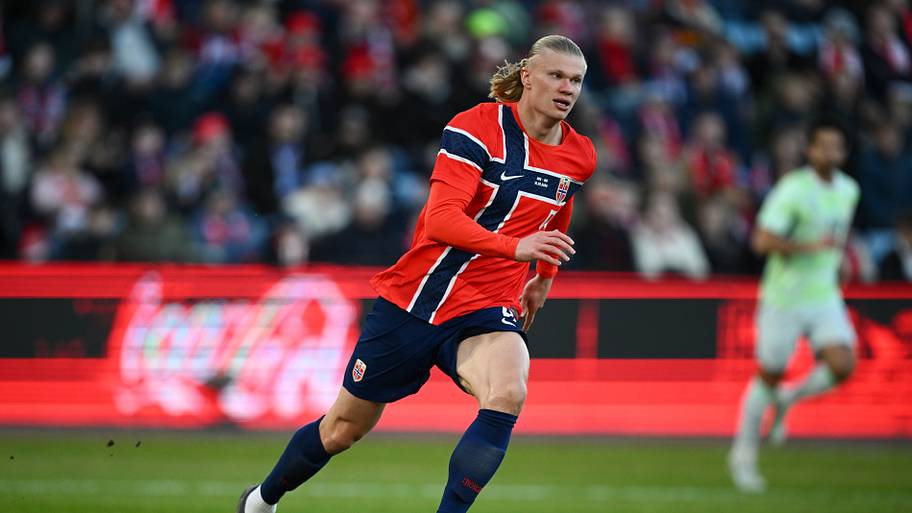
Erling Haaland takes off his shirt and walks into the hypoxic chamber.
He could have had time off at home, eating snacks and watching Netflix, but Haaland is at the Manchester City training ground filming for his YouTube channel. The topic is how he prepares his body for the next game. The answer is a series of mind-numbingly boring stretches and then a high-altitude chamber dialed up to 104°. Haaland climbs onto an elliptical bike.
“I struggle more in here,” he says. “Go out on the pitch, I can run even more.”
He’ll do several short sessions. His heart rate should hit 150.
“This helps me recover faster between sprints. And that’s a good thing, because I sprint a lot,” he gasps. “Now I can’t speak anymore.”
He’s working hard now. His heart rate is 141.
“Do I want to do this? No, I don’t. Will I do it? Yeah.”
He hits 150. Job done. Let’s go home, Erling.
“Let’s get 160,” he says. “Because why not?!”
He hits 160. “Now I’m happy,” he says. “Everything now is a bonus.”
After another bucket of sweat, Haaland finally picks up the phone and shows it to the camera.
170.
“It’s insane what he does,” says Donachie.
“Working with personal trainers and recovery between games are probably the biggest differences,” says Balsom. He used to work with the eternal Zlatan Ibrahimović and has since been advising French striker André-Pierre Gignac, who played for Tigres in Liga MX this season at 40.
“All of these players, they have their own specialists, and it’s becoming more common,” says Balsom. “And it may not be just one person, it might be a team of practitioners, a nutritionist, a chef, a fitness coach, a physiotherapist and maybe also a psychologist. You can’t really compare it to what it was like 10 years ago, maybe not even five years ago.”
The players do it not just to play more, but to avoid what experts agree is the No. 1 killer for longevity: bad injuries.
“One hundred percent,” says Balsom. “Zlatan was never really the same after his serious knee injury at Manchester United.”
The website Transfermarkt keeps a record of injuries. Looking at the careers of Ronaldo, Modrić, Džeko, Messi and Lewandowski, spanning 20 years, thousands of top-level games and tens of thousands of training sessions, there are no serious setbacks. No ACL ruptures. No leg breaks. The worst case occurred in 2014, when Modrić was out for four months with a muscle tear in his left thigh.
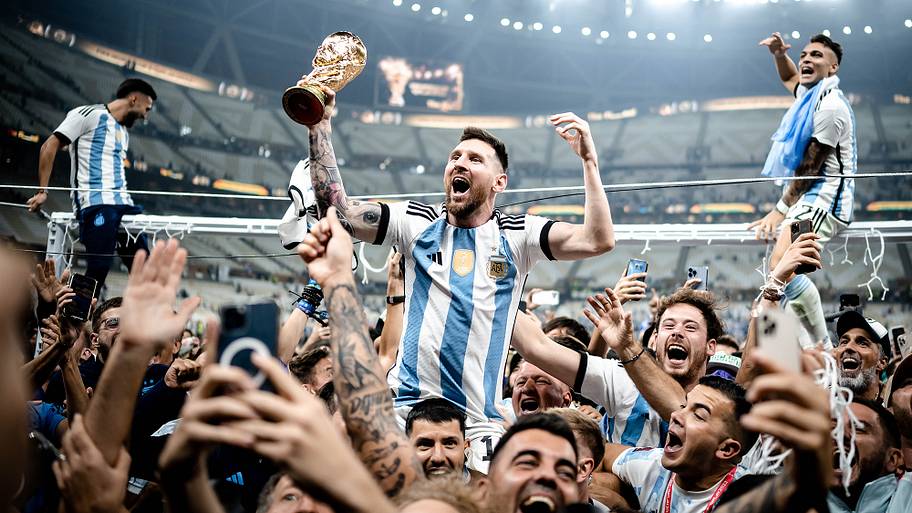
The clubs have upped their recovery game, aware that if you pay your stars half a million dollars a week, you may as well spend a few more cents to make sure they can actually play. They have long used GPS to track workload. If the coach of your favorite team took off the best player for no apparent reason, perhaps the analysts felt that, with 10 minutes more on the field, his right hamstring might snap.
Players are also using compression pants, high-pressure hyperbaric chambers, and cryo chambers that go down to –240°.
“You’ve got terms that you’ll be familiar with,” says Bannock, “like prehab …”
Prehab?
“Instead of rehab work, you’re doing work in advance to prehabilitate, to prevent. If we mix that with recovery, pre- and post-exercise training and tournament match recovery, from ice baths, cold tubs to gadgets that you strap on, blood restriction devices ... I mean, there’s no end of issues.”
It’s hard to know what actually works. Bannock feels people exploit the players’ desperation to play longer. “There’s a lot of pseudo-science rubbish out there,” he says. “And there’s lots of influencers and lots of experts, but they don’t really know.”
Some private fitness coaches don’t even have any qualifications, according to Balsom, who adds that some are merely keeping the players company. “It’s a bit of a jungle out there,” he says.
The culinary world is no exception.
“There’s too many approaches to food, there’s too many supplements out there,” says Bannock. “The evidence is maybe down here.” He lowers his hand. “The hype is up here.” He raises it. “The marketing, the influences on the players, on the staff, on the nutritionist, it’s just a minefield.”
Is it better to start dinner with dessert?
“No, no, no. No truth to that whatsoever,” says Bannock. “But that doesn’t matter as long as you believe it will.”
Donachie agrees: “The power of placebo is huge.”
For the Love of the Game
There is another major factor with real effects. Early this year, the Italian newspaper Corriere Della Sera asked Modrić about the secret to his longevity.
“Love,” he replied.
“Loving soccer, thinking about soccer, living for soccer. Next to my family, soccer is the most important thing I have. The secret is passion. Diet and training are secondary ... I’m as happy training today as when I was a kid.”
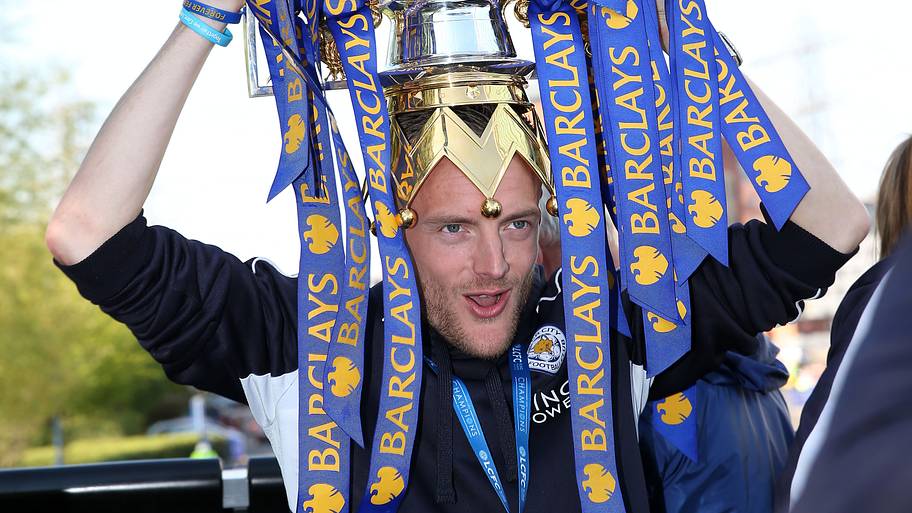
At Leicester, Jamie Vardy was said to prepare for games by downing Red Bull and espresso. True?
“Yes!” says Balsom. “Jamie is an outlier among the outliers. At Leicester, he was so motivated, and he never had a serious injury. The key for the staff working with him was to work with him rather than against him.”
Donachie says: “It’s not easy being a footballer. It’s a grind, training every day, playing all the games, living like a monk. It’s the ones who can still enjoy it that have the desire to keep going.”
Some players are driven not just by a love of the game but by a fear of what lies ahead. “That transition away from playing is often very difficult,” says Donachie. “There’s a high divorce rate.”
Really?
“Yeah, very high.”
In 2015, the charity Xpro estimated that 33% of soccer players divorce within a year of retirement.
“In most cases they can never ever replicate the feeling of scoring a goal at Old Trafford or wherever it might be,” says Donachie. “It’s a huge period of readjustment.”
Donachie has felt this. His dad, Willie, played for Scotland and Manchester City in the ’70s. One day when Danny was 13, his dad took him out for a walk with the dog, and told him he was considering stopping playing to become a coach.
“I burst into tears,” says Donachie. “The whole identity of the family was tied into this thing of him being a footballer.” He says his father ended up playing for five more years.
And so the World Cup stars entering middle age are not solely powered by contraptions, superfoods and fitness gurus. “They know that life as a footballer is going to end soon, and most of them can’t handle that,” says Bannock.
“Being a player is all they know and it’s all they want to be.”