State enterprise National Telecom (NT) should return the 126°E geostationary (GEO) satellite slot to the National Broadcasting and Telecommunications Commission (NBTC) for re-allocation before the filing for the slot expires in December 2026, according to a consultancy.
Because of financial and operational headwinds, the planned offering of internet satellite service using the slot is not a prudent investment for either NT or the Thai government, said Rewin Pataibunlue, managing partner at PrimeStreet Advisory, a management consulting and financial advisory firm.
He said bypassing both the construction and launch of a proprietary GEO satellite in the slot does not exclude NT from the space economy.
"NT can position itself as a high-margin operational and resale partner," Mr Rewin said.
NT's original business plan relied on two key assumptions to guarantee financial returns and avoid direct financial support from the government.
In 2023, the state enterprise acquired the 126°E slot from an NBTC auction by bidding 9.07 million baht.
The project was initiated under the National Space Policy Commission, driven primarily by national security interests.
NT president Col Sanpachai Huvanandana previously told the Bangkok Post the slot was going through coordination for a filing that expires in December 2026.
The company requires extensive and complex technical frequency coordination with neighbouring satellite operators before commercial deployment can be authorised.
Col Sanpachai said the slot is classified as an "incomplete reservation" due to potential signal interference with neighbouring satellites at 125.5°E and 126.5°E, which are operated by China and South Korea, respectively.
If NT opts to use the slot, it must notify the International Telecommunication Union to initiate negotiations with both countries to mitigate technical interference.
He said the NT board expects to seek further guidance from the National Space Policy Commission or a designated representative to confirm if the national security requirement still holds.

TWO ASSUMPTIONS
Mr Rewin said the NT project development is based on demand assumptions. The first assumption was that all Thai government agencies would be mandated to use NT's satellite internet services exclusively.
The second assumption concerns the NBTC's universal service obligation (USO) projects, assuming USO services in rural areas (Zone C+) would use NT satellite services exclusively.
While these mechanisms are designed to help NT capture the public market, government demand must grow substantially before this strategy can generate meaningful commercial revenue for NT, he said.
Under the 2023 NBTC auction conditions, Thaicom is already required to allocate 400 megabits per second (Mbps) of bandwidth per slot for government use.
Across its 78.5°E and 119.5°E/120°E slots, Thaicom plans to supply 800 Mbps of "free" bandwidth under these NBTC conditions.
As current projections estimate total government demand at roughly 1.3 gigabits per second, the existing Thaicom allocation covers the majority of the state's needs.
If NT launches its own internet satellite, its mandatory free 400 Mbps public allocation would bring total free government bandwidth up to 1.2 Gbps.
"This leaves an initial addressable revenue gap of only 100 Mbps for NT to monetise," Mr Rewin said.
"Without a substantial surge in demand, NT cannot generate sufficient revenue and will require heavy government funding to fulfill the National Space Policy Commission's mandate."
Regarding the USO projects, forcing them to use only NT services requires aggressive state intervention, which risks legal and political complications, he noted.
FUTURE ROADMAP
If the 126°E slot is returned to NBTC, NT and the government can pivot their strategies to safeguard national security and capture value in the space economy through more viable avenues, said Mr Rewin.
In terms of strategic realignment for national security, he said modern defence and intelligence operations require highly detailed, precise, and low-latency data.
GEO satellites are restricted primarily to strategic, long-distance communications due to their high altitude.
Mr Rewin said intelligence, surveillance and reconnaissance are better served by low Earth orbit (LEO) frameworks.
Instead of investing in a proprietary GEO satellite, the government can optimise capital by leveraging the Geo-Informatics and Space Technology Development Agency's existing LEO assets and aerospace know-how, he noted.
NT can position itself as a high-margin operational and resale partner of a satellite service, said Mr Rewin.
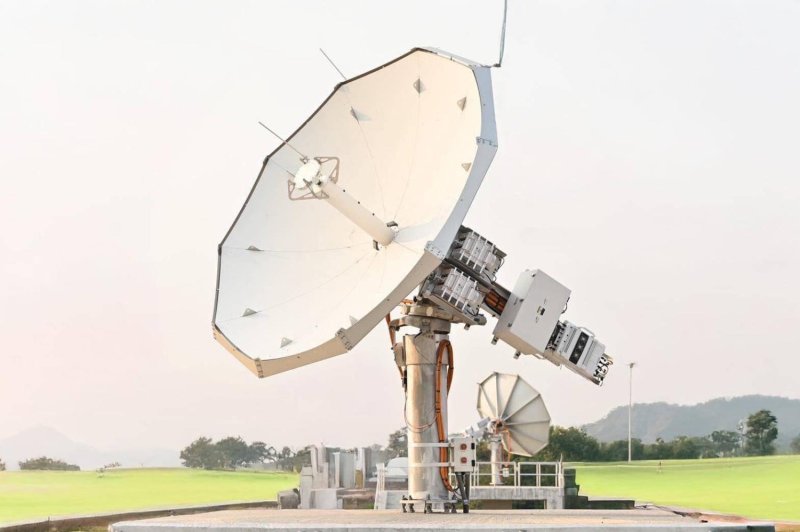
The company can fully leverage its established ground station infrastructure to provide tracking, telemetry, and command services for international operators, he noted.
NT can also leverage a downstream partnership model by acting as the primary gateway and commercial reseller for high-speed internet services -- both GEO and next-generation LEO constellations -- capitalising on its strategic partnerships with global operators.
"This asset-light strategy eliminates massive capital expenditure risks while securing a profitable, scalable position in the market," noted Mr Rewin.
NT is pursuing partnerships with leading international satellite operators to expand service offerings while reducing capital expenditure and technological risks.
The company's current partnerships include Spacesail, a Chinese LEO satellite constellation project, as well as China Satcom and Eutelsat OneWeb.
NT's partnership with Spacesail is aimed at building a large satellite internet network capable of competing with Starlink, the satellite broadband service operated by SpaceX.
The partnership with China Satcom is expected to introduce broadband services through ChinaSat-26, a high-throughput GEO satellite designed to provide nationwide connectivity across Thailand.
Commercial services from both Chinese partners are expected to start in the first quarter of 2027.