Voters in New South Wales go to the polls on Saturday facing the likelihood of a minority state government.
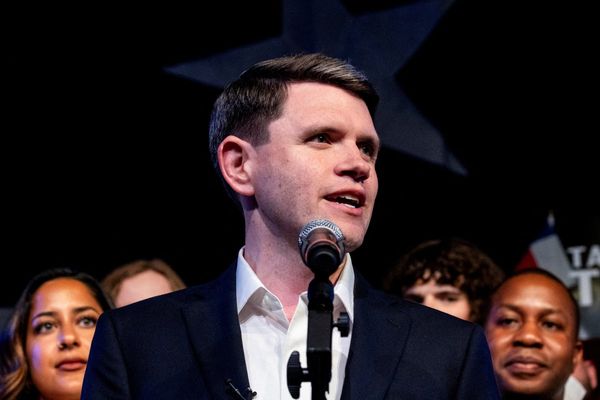
Dominated in its final stages by the Coalition government’s controversial stadium spend and racially charged remarks made by the opposition leader, Michael Daley, at a public forum last year, an often stultifying campaign came to a close on Friday with both parties forced to address concerns about gun laws after the Christchurch terrorist attack.
By Friday night a million people had voted early, 187,559 of them online. But voting was again plagued with technical problems as the online voting portal went down on the final day of the campaign. The NSW electoral commission confirmed it had fielded 34,000 calls on Friday from people unable to register. The problems continued on Saturday morning too, frustrating voters. Many then turned to the telephone registration system, but some were told to call back later.
Hundreds of voters had been turned away two weeks earlier, on only the second day of pre-polling, after a different computer issue affected the electronic roll system and took the iVote system offline.
“There have been some intermittent performance issues that have affected some electors,” an NSW Electoral Commissionspokeswoman said in a statement on Saturday afternoon. “We apologise for any inconvenience.”
The Coalition is seeking a third four-year term against a backdrop of frustration about congestion and infrastructure delays in Sydney and water management issues in the regions. It has sought to use preference deals between Labor and the Shooters, Fishers and Farmers party to stoke fears about the possibility of changes to the state’s firearms laws.
Labor is directing voters to preference the Shooters before the Coalition in 19 lower house seats, including the key regional battleground of Barwon, and the premier, Gladys Berejiklian, used the final day of the campaign to warn about the prospect of a minority Labor government.
“The Shooters not only will provide instability, but they will be dangerous, because they will advocate weakening of gun laws, they will advocate bringing in a number of measures which they have been public about before, and that is not good for the interests of New South Wales,” she said.
“We are not doing any deals with the Shooters because we do not want any weakening of the gun laws.”
Labor has campaigned relentlessly on its mantra of schools and hospitals before stadiums, but the wheels started to wobble this week following the release of footage from a public meeting in the Blue Mountains last year in which Daley warned of “young people from typically Asia with PhDs” taking jobs.
He backed that up with a poor performance in the final debate of the campaign in which he stumbled badly over Labor’s commitment to Tafe funding, and has since been forced to defend himself from the Coalition’s attacks on firearms policy.
On Friday he again said he would resign from parliament if the state’s gun laws were weakened under a government he led.
“I have said that if the Liberals and the Nationals, and any other minor party, combine after the election – if I’m the premier – to weaken gun laws in New South Wales, I will resign,” Daley said.
“The Labor party believes in the toughest gun laws possible. So do I. There will be no change, no weakening of gun laws in New South Wales if I’m the premier. And, further, I can tell you that we’ve not sought, nor gained, any deals, concessions or understandings with any minor parties.”
For all the campaign vaudeville, polls have shown the two major parties tied at 50-50 – with some minor fluctuation – since as far back as 2016.
Antony Green, the ABC’s election analyst, said on Friday it could take some time for the result to shake out.
“I’m not sure we’ll know the winner tomorrow night,” he said.
The Coalition needs to lose only six seats to be forced into minority, while Labor would need 13 to win outright or about 10 to form a coalition with the Greens, depending on whether they retain their three lower house seats.
Green said he could see either happening.
“The government is at risk in country New South Wales [and] Labor’s prospects on winning the government then require them to do better in Sydney,” he said.
“If the government holds the line in Sydney, then the prospects are a Coalition minority government. If Labor does reasonably well in Sydney, then there’s a chance of a Labor minority government.”
For that reason, Berejiklian spent the final day of the campaign in the western Sydney seats of Penrith and East Hills, key marginals held by Stuart Ayres, a government minister, and Wendy Lindsay.
Daley returned to the scene of most of his pre-election pitch – Allianz Stadium – repeating that Labor would not use taxpayer money to rebuild the Moore Park stadium, instead funding it through a loan.