
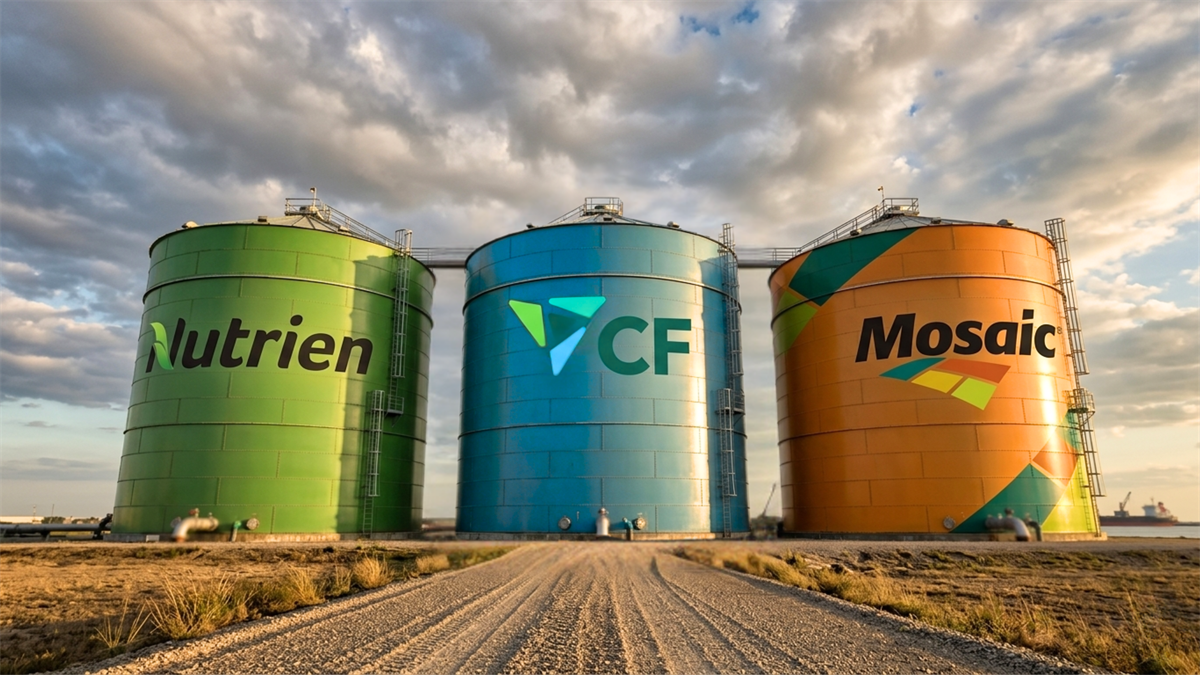
Soaring gas prices are the most blunt and visual reminder of the war in Iran, but crude oil isn’t the only commodity shipped out of the world’s crucial waterway. Fertilizer inputs such as urea, potash, ammonia, and sulfur are produced all over the Persian Gulf, and an estimated 30-35% of all plant nutrients rely on the contested Strait of Hormuz for transit. While fertilizer prices usually aren’t the top concern of American consumers, they could create issues for the 2026 spring planting season in the Northern hemisphere, which is just now getting started. It has also created a massive tailwind for domestic fertilizer producers, who can now capture huge margin gains thanks to the supply cut-off.
The Strait of Hormuz Crisis Is Reshaping Global Fertilizer Markets
On a normal day, you could sail across the Strait of Hormuz in less time than it takes to drive through downtown Manhattan, but its small size is also why it's become such a chokepoint. It’s a narrow 21-mile-long corridor between Iran, Oman, and the UAE that acts as the only shipping exit from the Persian Gulf to the open ocean.
Now that Iran has effectively made the Strait of Hormuz impassable, it is stranding about 20 million barrels of oil each day, 20% of the world’s liquefied natural gas (LNG) supply, and massive volumes of petrochemicals. But while the energy sector gets the headlines, the closure has also left stranded about a third of the global fertilizer supply, which includes the following chemicals:
- Nitrogen Fertilizers - Urea and ammonia are the two nitrogen-based fertilizers most affected, as 10% of the global urea supply comes from a single facility in Qatar. About 35% of traded urea and 30% of traded ammonia must traverse the Strait, all of which has now stalled. The supply shock is already being felt; New Orleans urea prices have reached as high as $680 per metric ton.
- Phosphate and Potash - Phosphate-based fertilizers require sulfur, another crucial input shipped through the Persian Gulf, whose prices have skyrocketed since the war began. Potash supplies have also been dwindling, with inventories down sharply year over year. The phosphorus shortage has caused the Trump administration to invoke the Defense Production Act to increase domestic supplies of the chemical, which is also used in military applications.
3 Stocks That Benefit From Higher Fertilizer Prices
With global supplies of these nutrients in chaos, companies that rely on production outside the Persian Gulf are set to benefit, especially those located in North America, where natural gas prices aren’t rising as quickly as fertilizer inputs. Three companies have already started to rally on this shortage, and the longer the Strait of Hormuz remains closed, the higher their stock prices will rise.
Nutrien Ltd.: The Safe and Diversified Fertilizer Investment
Canadian fertilizer producer Nutrien Ltd. (NYSE: NTR) is probably the safest way to play the price shock, as it has a massive $37 billion market cap and produces all three crucial plant nutrients in nitrogen, phosphate, and potash.
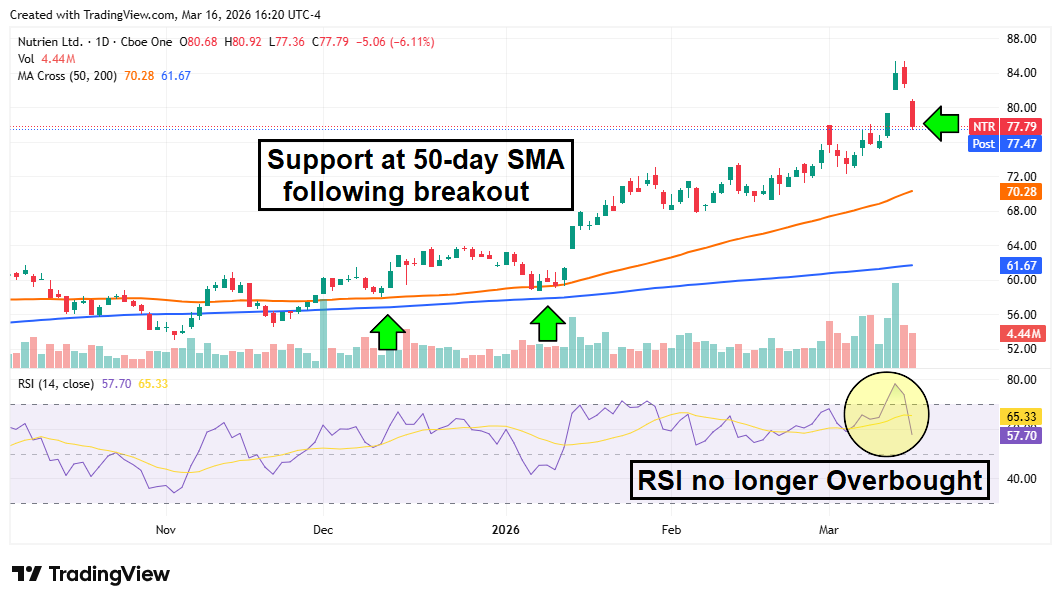
With control of 20% of the potash market and more than 1,500 locations across North America, Nutrien can capture margin regardless of which input price is spiking. Anticipating an extended supply shock, analysts at Wells Fargo and Jeffries upgraded NTR from Neutral to Buy last week, with price targets of $100 and $96, respectively.
NTR shares are up more than 25% year-to-date (YTD), but the recent pullback in this space might offer a new opportunity. The uptrend is strong, with support at the 50-day moving average, but the Relative Strength Index (RSI) has recently entered overbought territory, prompting some profit-taking. The momentum is still intact, though, and will likely remain so as long as shortages persist.
CF Industries: Margin Boost From Nitrogen/Natural Gas Spread
CF Industries Holdings Inc. (NYSE: CF) is a pure-play nitrogen producer, which includes urea, ammonia, and urea ammonium nitrate (UAN).
The company has a structural advantage stemming from its terminal locations, enabling it to use affordable U.S. natural gas to produce nitrogen-based products. It then sells this nitrogen into a far less competitive global market, where European and Asian suppliers need to charge high prices due to limited LNG stocks. CF Industries can offer competitive prices in these markets while expanding margins due to its own structural low input costs.
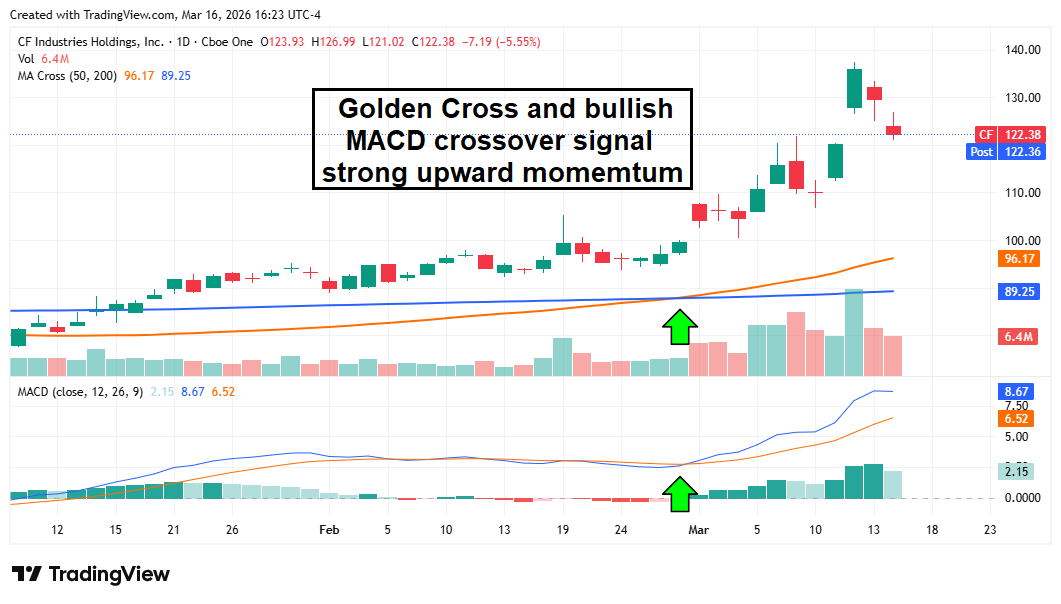
CF shares are up more than 60% YTD, making the stock one of the S&P 500’s top performers. The bullish technical momentum remains strong, and the nitrogen price catalyst isn’t subsiding anytime soon, so this recent 10% drop could be another profit-taking episode.
Mosaic Co.: Risky Value Play With High Upside
The Mosaic Company (NYSE: MOS) has one of the more risky profiles in the industry due to its dependence on sulfur, which is typically transported through the Strait of Hormuz at high volume.
Sulfur is a primary component in phosphorus-based nutrients, which limits some of Mosaic’s ability to expand margins on top of rising phosphate and potash prices. The company is also in a precarious position following a large EPS miss in its Q4 2025 earnings report, which sent the stock down 5% the next day.
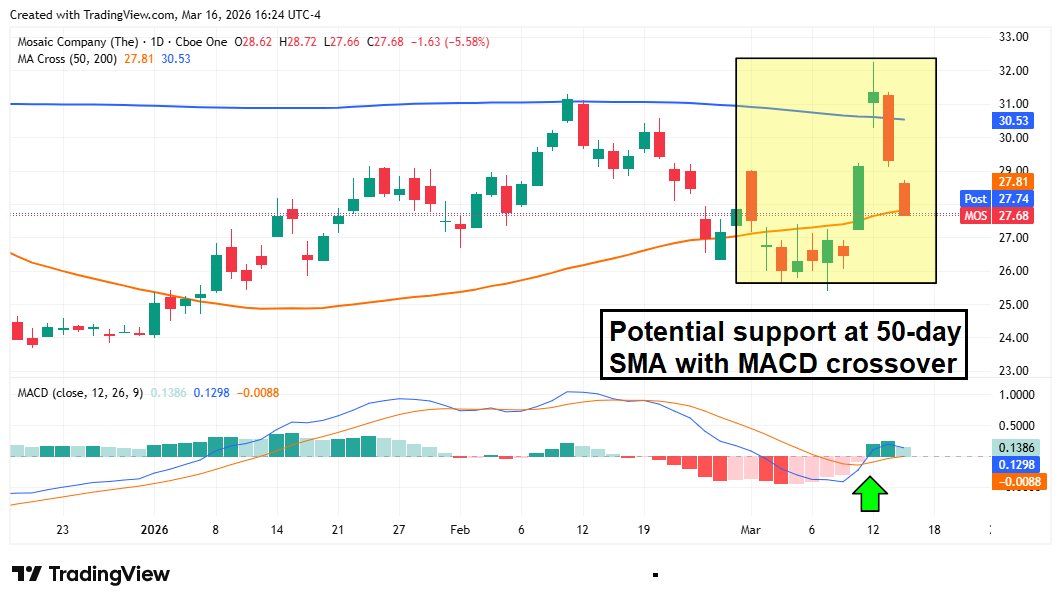
MOS shares are lagging the rest of the industry, with an approximately 18% YTD gain. But the stock still has plenty of time to catch up if the company can manage its operational hurdles. Some technical trends also point to a consolidation pattern, with the stock bouncing between the 50-day and 200-day moving averages. A bullish MACD crossover hints that the stock could once again be ready to bounce higher off the 50-day.
Where Should You Invest $1,000 Right Now?
Before you make your next trade, you'll want to hear this.
MarketBeat keeps track of Wall Street's top-rated and best performing research analysts and the stocks they recommend to their clients on a daily basis.
Our team has identified the five stocks that top analysts are quietly whispering to their clients to buy now before the broader market catches on... and none of the big name stocks were on the list.
They believe these five stocks are the five best companies for investors to buy now...
The article "Not Just Oil: 3 Fertilizer Stocks Boosted by Hormuz Closure" first appeared on MarketBeat.