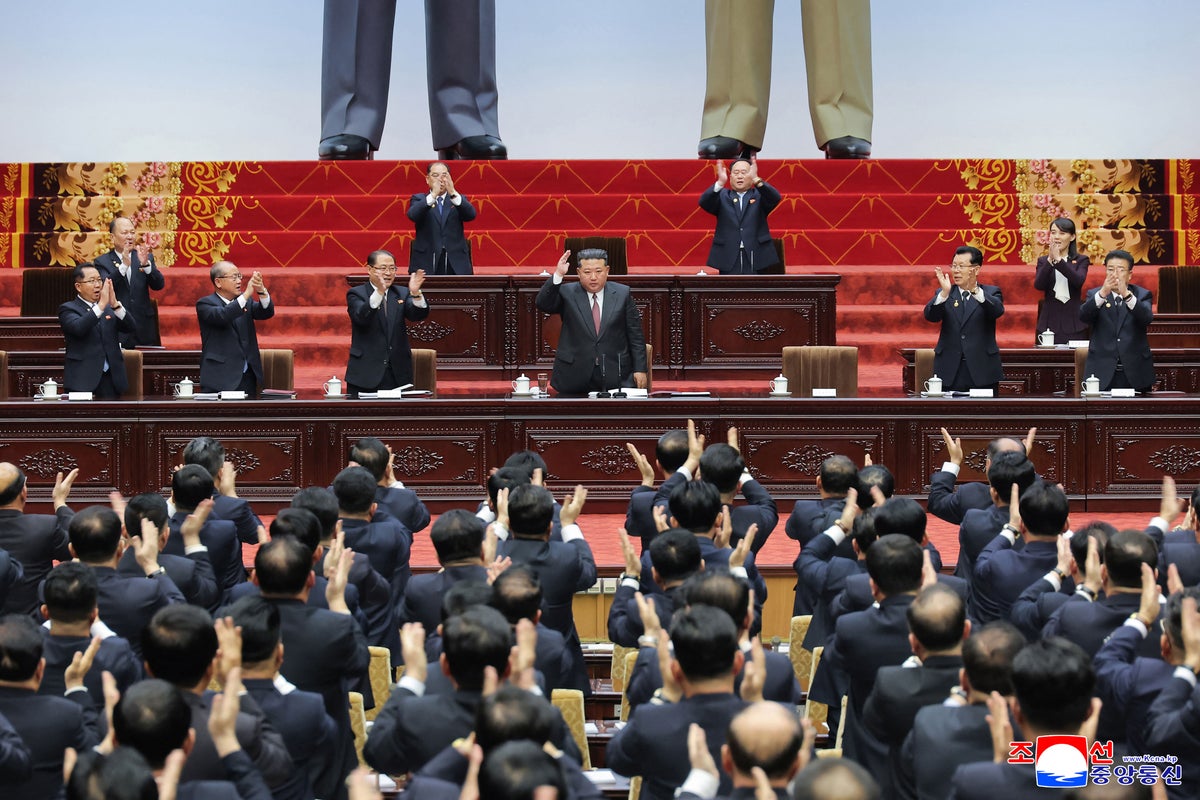
North Korea’s rubber-stamp legislature has re-elected Kim Jong Un as its leader following a highly choreographed vote.
Mr Kim’s election as the head of the country’s highest policymaking body for his third consecutive term reflects “the unanimous will and desire of all the Korean people”, according to the state news agency KCNA.
Analysts say elections in North Korea are designed to give the Kim regime a veneer of democratic legitimacy. The national legislature, the Supreme People’s Assembly, formally approves state policy crafted by the ruling Workers' Party.
Following his re-election, state media lauded Mr Kim, 40, as a “prominent thinker-theoretician” and “great strategist of state building” who would strengthen the nation as a “powerful political weapon”.
Photos of the event showed Mr Kim dressed in a formal western suit with a tie as top officials broke into applause in front of two giant statues of his father and grandfather at Mansudae Assembly Hall.
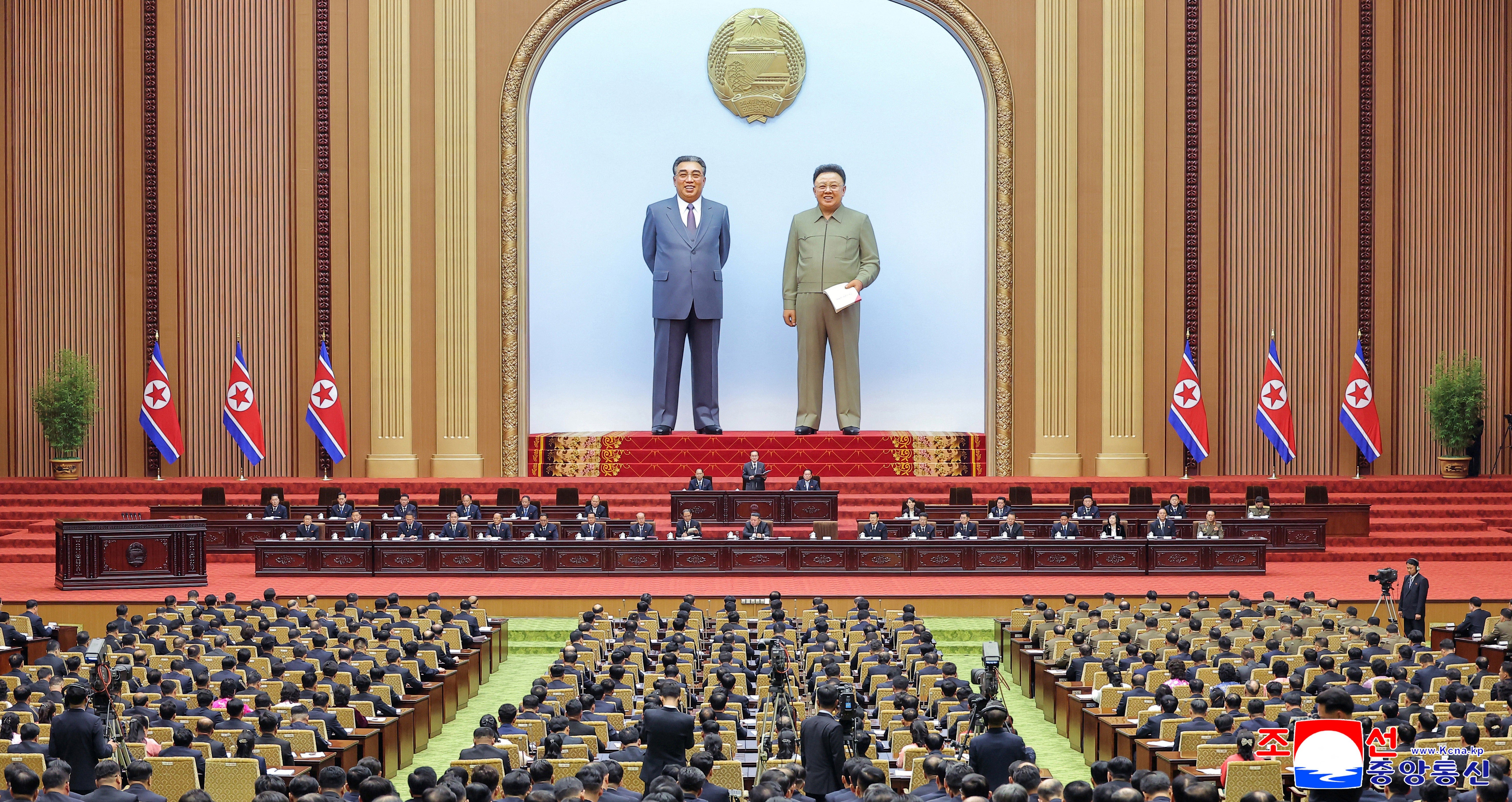
Mr Kim is the third-generation ruler of the country founded by his grandfather, Kim Il Sung, in 1948. He took power after the death of his father, Kim Jong Il, in 2011 and was recently re-elected as head of the Workers' Party, cementing his 15-year grip on the country’s sole ruling party.
The party won all 687 seats in the Supreme People’s Assembly in this year’s parliamentary election but its share of the vote was down from 99.99 per cent in 2019 to 99.93 per cent.
Observers argued that state media reported on the 0.07 per cent of the vote against the party this year to create the false perception of a limited or tolerated opposition.
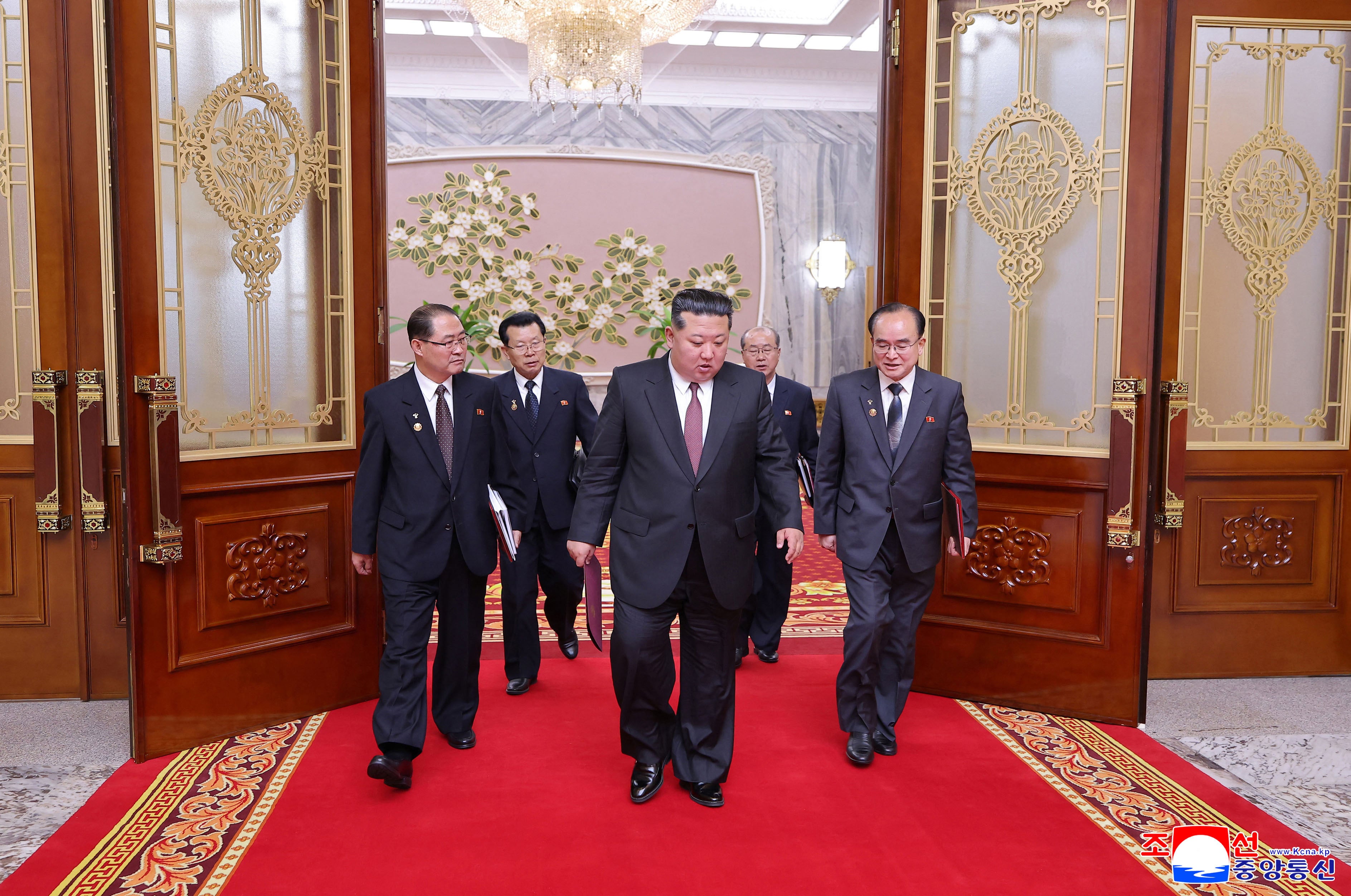
The weekend’s meeting of the legislature also covered proposed amendments to the constitution, steps to implement a five-year national development plan unveiled at the ruling party congress as well as the 2026 state budget, state media reported.
Although no details were released, it was understood that the meeting would revise the constitution to formalise Mr Kim’s "two hostile states" policy towards South Korea.
In recent years, Mr Kim has abandoned Pyongyang's long-standing goal of peaceful reunification and redefined the South as the nation’s enemy.
Mr Kim's powerful sister, Kim Yo Jong, was notably absent from the list of members of the State Affairs Commission, the country's highest leadership body, on which she had served since 2021.
South Korea's unification ministry said that it was looking into why she was no longer listed, but analysts said the move did not necessarily signal a loss of influence.
"Her absence suggests not a decline in status but a strategic division of roles," said Lim Eul Chul, a professor at Kyungnam University, adding that the younger Kim continued to wield real power as department director in the Workers' Party where she could play a higher-level, party-centred role coordinating policy.