On Aug. 17, North Carolina Gov. Josh Stein (D) vetoed House Bill 958, an omnibus elections bill that would have made a variety of changes to North Carolina's election laws, including shortening the early voting period for primary elections.
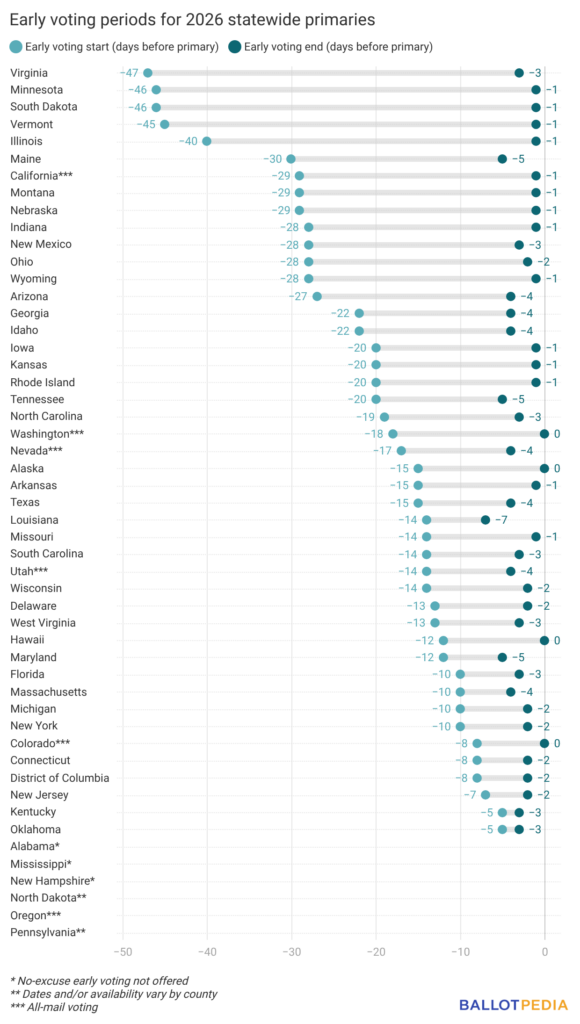
The bill would have required early voting for regular, non-municipal primary or runoff elections to take place in the 10-day period between the second Thursday before the election and the Saturday before the election, and set a 10-day limit on early voting for special and municipal elections. Currently, early voting for regular, non-municipal elections is held in the 17-day period beginning on the third Thursday before the election. Under H958, the early voting period for regular general elections would not change.
The bill also would have established a post-election audit of county election systems and controls, increased the reporting threshold for certain campaign contributions, and required election officials to receive more frequent reports on individuals who have died and must be removed from the voter registration list.
Stein said of his veto, "Instead of trying to undermine our democracy to cling to power, the legislature should focus on improving people’s lives and winning elections fair and square. I am vetoing this anti-voter legislation, and I urge North Carolinians to call their legislators to ask them to uphold my veto. In our democracy, political power rests with you – the people. I intend to keep it that way."
Rep. Hugh Blackwell (R), who chairs the House Election Law Committee, said, "House Bill 958 continues practical election reforms so we all can have greater confidence that every lawful vote in North Carolina is counted fairly and accurately. Gov. Stein’s veto of this legislation puts politics ahead of common sense and the peace of mind voters should have when they cast their ballots."
According to reporting from the Raleigh News & Observer, legislative leaders have said they will not attempt to override any vetoes until after the November midterm elections.
The North Carolina Senate passed the final version of the bill 28-13 on July 28, with 28 Republicans voting in favor and 13 Democrats voting against. The North Carolina House of Representatives approved the bill 62-47 on Aug. 4, with 62 Republicans voting in favor and 46 Democrats and one unaffiliated member voting against.
North Carolina is one of 26 states that require weekend early voting hours, as well as one of 14 states to require early voting to be available during evening hours. Five states — Colorado, Connecticut, Massachusetts, New Jersey, and Oklahoma — have statutes that set different early voting requirements for statewide primary and general elections.
Stein signed a different omnibus elections bill on Aug. 11. House Bill 834 extends the cure period for absentee ballots to 12 p.m. on the fifth business day following the election, rather than the third business day, among other changes to election laws. It was the first election-related bill enacted in North Carolina in 2026.
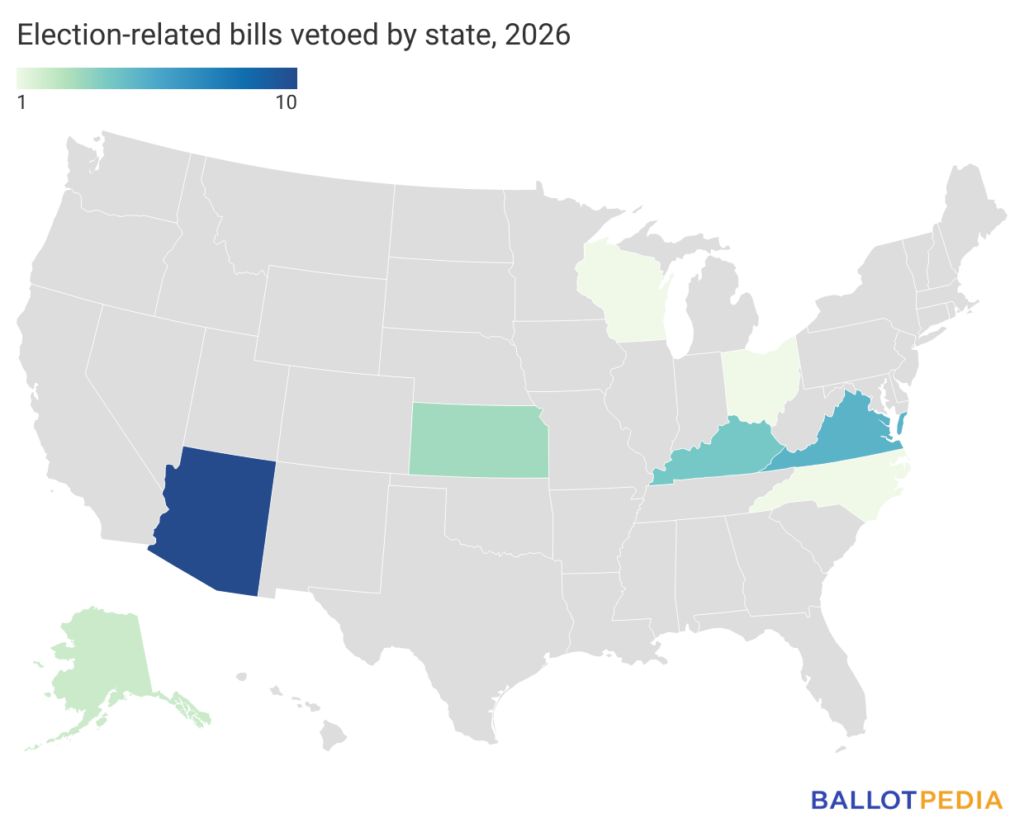
Stein’s veto of H958 was the 27th veto of an election-related bill in 2026. Of those vetoes, 19 came from a Democratic governor in a divided government state, including Stein’s. Two vetoes came from a Republican governor in a divided government state, five came from a Democratic governor in a Democratic trifecta state, and one came from a Republican governor in a Republican trifecta state.