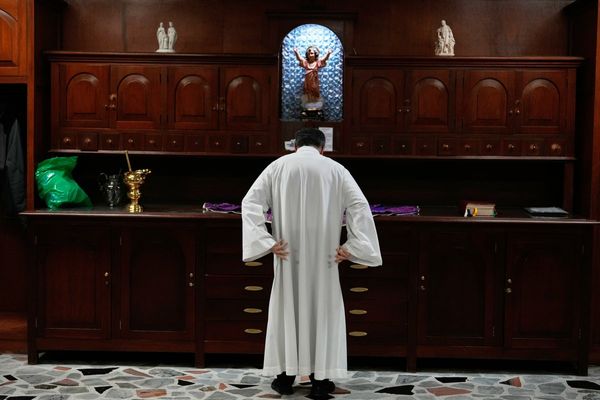
Would you watch the death of this lobster on stage? Photograph: Murdo MacLeod
Should you see or review a show if you have a fundamental moral objection to its content? This is the question that bloggers are mulling over this week. Wendy Rosenfeld kicked off the conversation by discussing a dilemma she has on the horizon. At the upcoming Philadelphia Live Arts Festival she may have to review a piece from Argentine playwright Rodrigo García that, she says "involves a duet between man and lobster, which as you might imagine, ends badly for the crustacean".
The problem for Rosenberg is that she is a vegan, and while she thinks she might agree with the general thrust of García's show, she "just can't abide a performance that intentionally causes the death of another living creature in order to make its point ... Still, it really, really pains me to recoil from a piece on principle, because dammit, I'm a theatre critic, and it's my job to divine meaning from the cultural winds, be they foul or fair." So, she asks, "Do a critic's personal morals or ethical code have any place in a review? And conversely, humans being the way they are, how can one possibly pretend they don't?"
Rosenfeld is no alone in facing this kind of dilemma. In response to her, the Mirror Up to Nature Blog draws attention to a number of other instances where critics have made explicit moral judgments on what they have seen: "There are those who would argue that a moral thesis in a review says more about the critic than it does the object of the review. I am not so sure. The fear, in taking such things into consideration, is that all of this smells of a kind of censorship. How are artists to push the envelope? How are they to truly examine and push the boundaries if critics have moral defences up? But if nobody is watching the watchmen, what can art become?"
Michael Billington however, is very clear about the critic's need to make moral judgments. In his monthly blog for What's On Stage he argues that a critic's own moral values should be at the heart of what they write. He lauds the fact that this year is the 40th anniversary of the abolishment of the Lord Chamberlain's power to censor theatre, but says that critics must still be prepared to make their own moral judgments. "I believe in the freedom of the artist to express his or her vision," he says. "But the critic and the paying customer have an equal right to register their dissent."
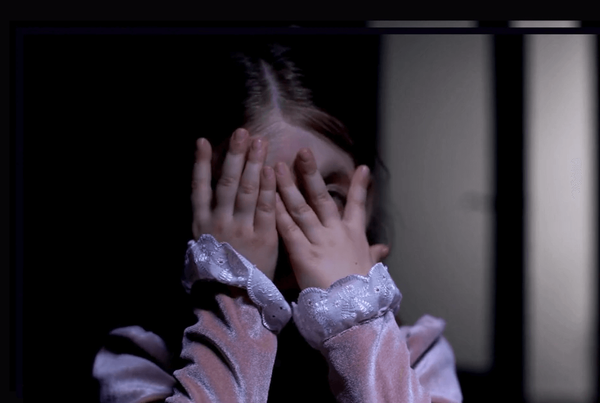
He goes on to compare two recent shows about child abuse: Anthony Weigh's 2,000 Feet Away at the Bush and Anthony Neilson's Relocated at the Royal Court. This latter play, he felt, had a tone that was "wildly inappropriate" for the subject matter that it was dealing with. He concludes that "critics should not be afraid to speak out if they find something offensive, or deposit their own moral values in the cloakroom. Nor should they be cowed by unfortunate examples in the past, such as Sarah Kane's Blasted, where everyone signally misjudged the author's intentions. The alternative to a sharp tongue, as Eric Bentley once pointed out, is a mealy mouth. And I see no contradiction between assailing an author's attitude and wholeheartedly rejoicing in the termination of censorship 40 years ago. Freedom is indivisible."
In a related debate, Don Hall has responded to a recent piece I wrote about how theatre tries to shock people. He asks "How, after almost all the sacred cows have been skewered, flayed and burned, can anything be shocking or subversive?" And he goes on to distinguish between two forms of shock: "negative shock (I get up onstage and take a shit on a flag or bite the head off of a live kitten) and positive shock (the kind that makes you really think about it and its implications after). Negative shock value is relatively easy to create but has a shallow effect... and leaves the audience pissed rather than provoked."
Now I'm a vegetarian, and I have no desire to see a lobster cooked on stage. But perhaps the real question is - if the show is genuinely thought-provoking, does it matter?