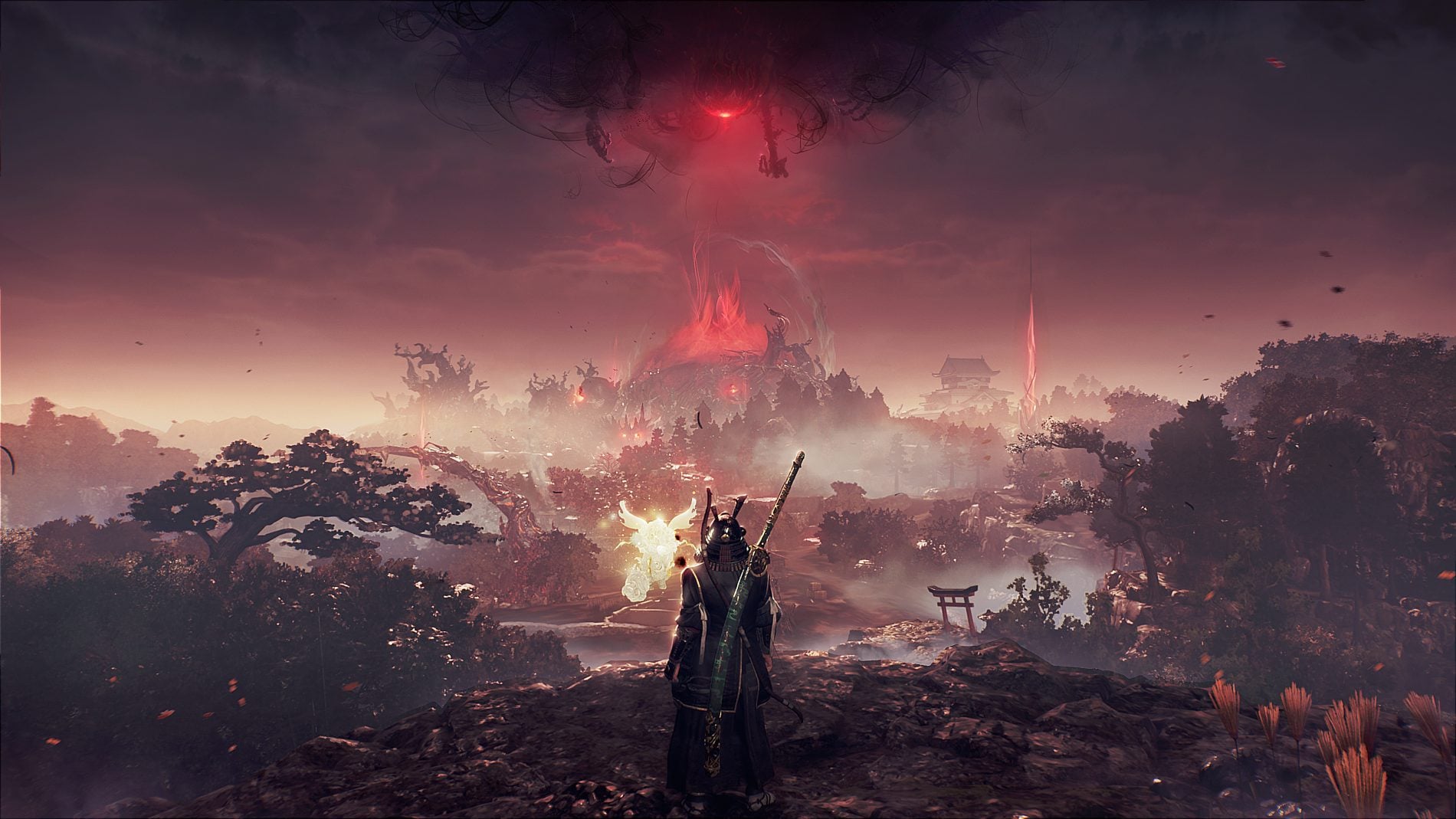
Note: This isn’t a full review of Nioh 3, but my final impressions after spending fifty hours with the game.
In my Rise of the Ronin review, I called it Team Ninja’s most important game to date. It was a pivotal and surprisingly unorthodox direction for the studio’s otherwise mostly linear hardcore action RPG roots.
Nioh 3 doesn’t take such drastic leaps. Instead, it looks backwards, at Team Ninja’s most recent successes and borrows the best bits of them to create a meaty sandwich that is juicy in some parts and dry in others.
From Nioh 1 and 2’s excellent adrenaline-inducing aggressive combat to Wo Long’s vibrant, slightly whimsical style of cutscenes, to Rise of the Ronin’s character customization and open-ended explorable regions full of optional activities and collectibles, Nioh 3 has them all.
But in its effort to be Team Ninja’s definitive action RPG title, it loses some of the charm of its predecessors. Between easy open world encounters and restrictive buildcrafting due to its dual combat style approach, I couldn’t help wondering what a traditional Nioh sequel would have looked like without the gleam and glamour of the studio’s other contemporary games in the genre.
Too many gameplay options, but not enough challenge
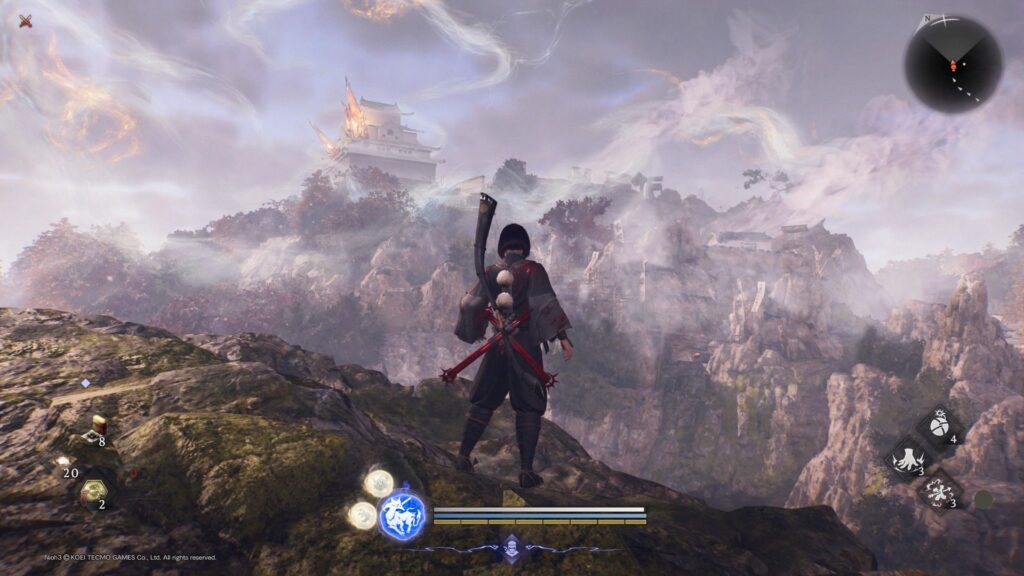
Nioh 3’s dual-build system lacks cohesivenss, and works counters to the game’s aggressive, almost button mashing combat approach.
Nioh 3 doesn’t waste a moment shoving you with an overwhelming number of gameplay options. From the get-go, you can start to carve two widely distinct builds that favour different playstyles, with each having access to a wide array of weapon types and skills.
In theory, having the option to switch between Samurai and Ninja styles in real time means having more freedom of gameplay at any given moment, something Nioh 3 doesn’t fail to remind you every 30 seconds.
Stumble upon a fierce, fast-paced boss that’s near-impossible to parry? Switch to your Ninja build and complement their aggressiveness with quick, successive dodges and a flurry of attacks. Facing a gigantic yokai general with hard-hitting attacks capable of decimating you in a single blow? Switch to your Samurai build for a defense-focused approach.
But in reality, this system lacks cohesiveness since it’s unrealistic to carve two builds simultaneously, especially in the first 50 hours, as both require you to spend XP in different sets of skills and grind different gear.
Nioh 3, however, constantly reminds and encourages you to switch between two styles with these flashy red burst attacks that can only be countered by Burst Break, which is a new maneuver that lets you parry and switch from one style to another in real time.
While Burst Break is immensely satisfying to pull off, they awkwardly break the flow of gameplay as build suddenly changes in real time. It works counter to Nioh’s aggressive, almost button-mashing combat approach.
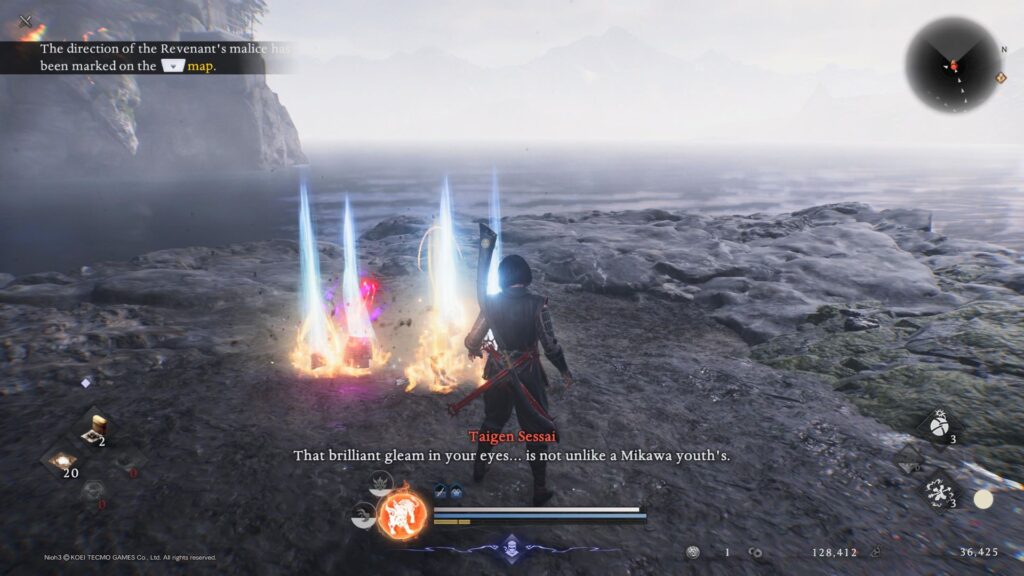
In Nioh 3, boss encounters are followed by prolonged stretches of mere sprinting and infiltrating simplified enemy encampments that you can clear in autopilot mode.
Bosses themselves feel less nuanced than previous entries, with more rehashed encounters than ever before. It’s always fun, even if not exciting, to fight a boss from the original game, such as Hino-enma, whose presence makes sense as you do travel back in time, but it also got me thinking how much content Team Ninja has reused to pad out an open-ended game map.
Speaking of which, I was initially excited by the idea of exploring vast open spaces in a Nioh game, but that excitement quickly faded. The best part about Team Ninja’s games is their combat, and the more encounters there are, the more opportunities you get to play. Rise of Ronin handled it well, tucking away tough, optional encounters between key story moments and gorgeous open world landscapes.
In Nioh 3, boss encounters are followed by prolonged stretches of mere sprinting and infiltrating simplified enemy encampments that you can clear in autopilot mode. Occasionally, you come across other characters or spirits of the deceased that have side quests for you.
Some of these encounters are neat, especially those that reveal more about Nioh’s world and its characters, or hide optional boss encounters at the tail end. However, most feel underdeveloped, which is disappointing as it’s easy to spot their lingering potential.
For instance, there’s one early side quest in Lake Hamana where you have to calm down Daidara Bocchi, a gigantic yokai who’s a boss in Nioh 2. I was excited to fight a different version of that boss, but unfortunately, this is a surprisingly ordinary fetch quest without any memorable combat encounters. Not every side quest has to end with a boss encounter, but this one in particular felt like a missed opportunity.
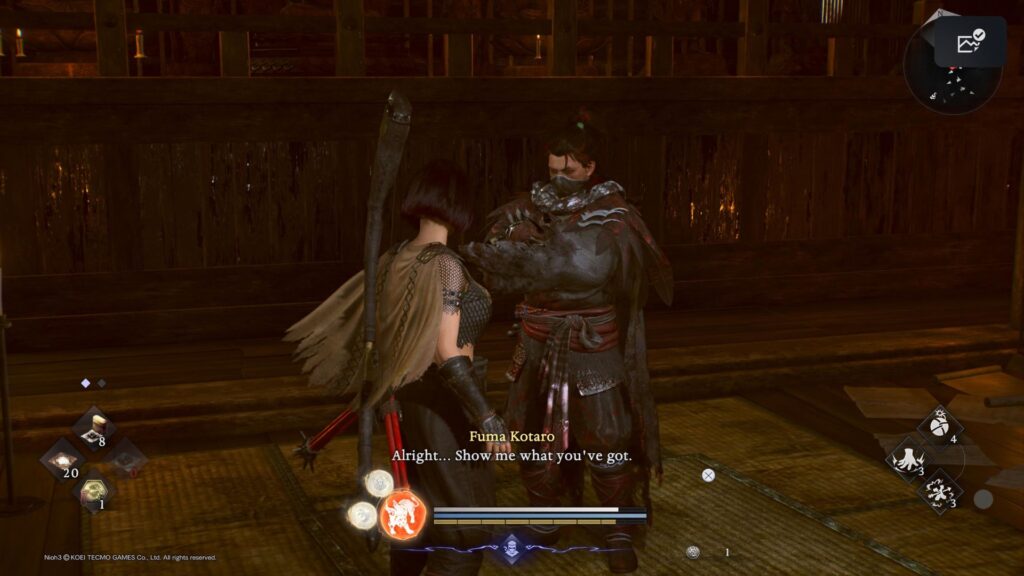
Nioh 3’s online co-op play is the most seamless in any souls-like game in recent memory.
What I appreciated and enjoyed, however, were these master quests that require you to fight notable side characters to obtain powerful skills. These are staples of Team Ninja’s games, and once again, they feel like thoughtfully designed encounters that offer tough but fair challenges for pristine rewards. However, these encounters are few and far between.
In every corner of Nioh 3’s world lies an opportunity to enhance your character’s build(s). There are endearing-looking Kodamas to find that provide passive buffs, such as increased drop rate for elixirs. There are locked chests full of secret skill texts, which give access to even more powerful skills. Defeating certain yokai also grants soul cores, which grant passive buffs in the form of talismans, as well as flashy, yokai-summoning active abilities.
All of this is an addition to the overwhelming amount of loot you can obtain. Simply put, there’s no shortage of ways to craft your Ninja and Samurai builds in this game.
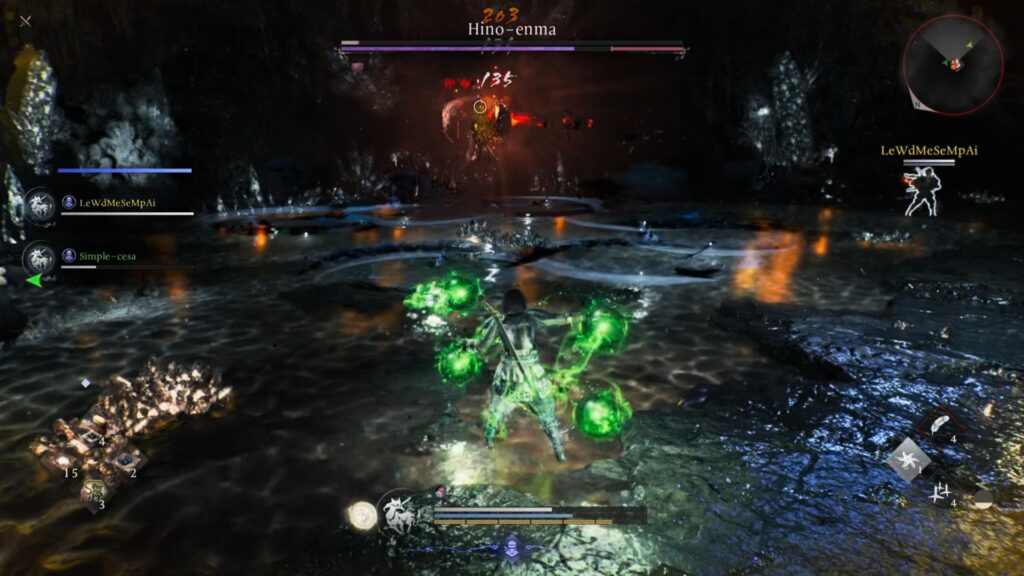
That said, I never found the need to diligently refine my builds because there aren’t enough challenging encounters that demand such precision, at least in the first playthrough. Outside of the master boss fights, the only areas where I genuinely felt the need to analyze enemies’ attack patterns and pay attention to my build were some of the main bosses, as well as the new crucible encounters (more on this later).
Nioh 3’s main bosses are a unique species altogether. These fights are just as brutal and unforgiving as in past Nioh games, to the extent that a single, miscalculated dodge or attack could end your life. This time around, however, they feel slightly more cheap than fair encounters.
This is primarily because most of them have flashy moves that shroud their movement and make it quite difficult to identify their attacks. I died more than a few times, not because I hadn’t memorized the boss’s attack patterns, but because I couldn’t identify which one of its attacks it was using in the first place.
Where Nioh 3 excels, and brings back the invigorating feeling of exploration from its past titles, is in its crucible areas.
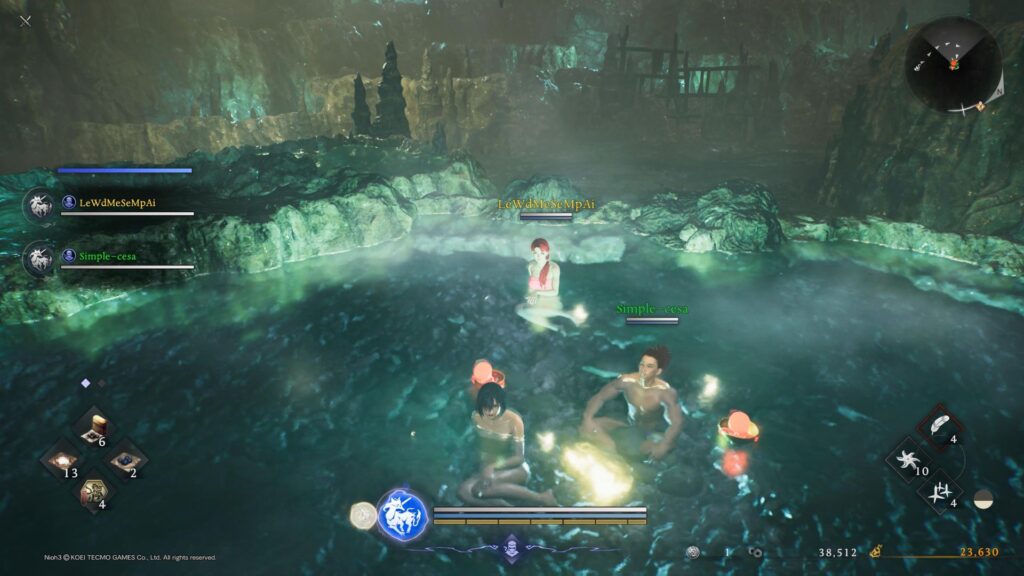
Fortunately, you can avoid such frustrations by summoning other NPCs or players in those encounters, both of which are readily available. Nioh 3’s online co-op play is the most seamless in any souls-like game in recent memory.
Not once have I had trouble inviting a friend to my game, and sessions usually run without any hiccups. This seems like a bare minimum feature, but it’s something most FromSoftware titles, including Elden Ring, still struggle to get right.
Where Nioh 3 excels, and brings back the invigorating feeling of exploration from its past titles, is in its crucible areas. These flaming yokai-filled regions are small, end-game-style areas with the hardest-hitting enemies and top-tier loot.
Crucible’s level design and difficulty scaling are also quite reminiscent of the relatively linear missions of the original game. It’s the place where you can farm the most XP and obtain some of the best weapon arts in the game.
Sadly, like everything exciting Nioh 3 has to offer, there just aren’t enough of these. Every open field zone has only one Crucible area, and the wait time between these Crucibles might be too much, at least it was for me.
Additionally, there are several Crucible Spikes scattered throughout every region, smaller, wave-like encounters that reward materials to unlock new Guardian Spirit skills. Unfortunately, they don’t require unique approaches and can be completed in autopilot mode, much like most open world activities in Nioh 3.
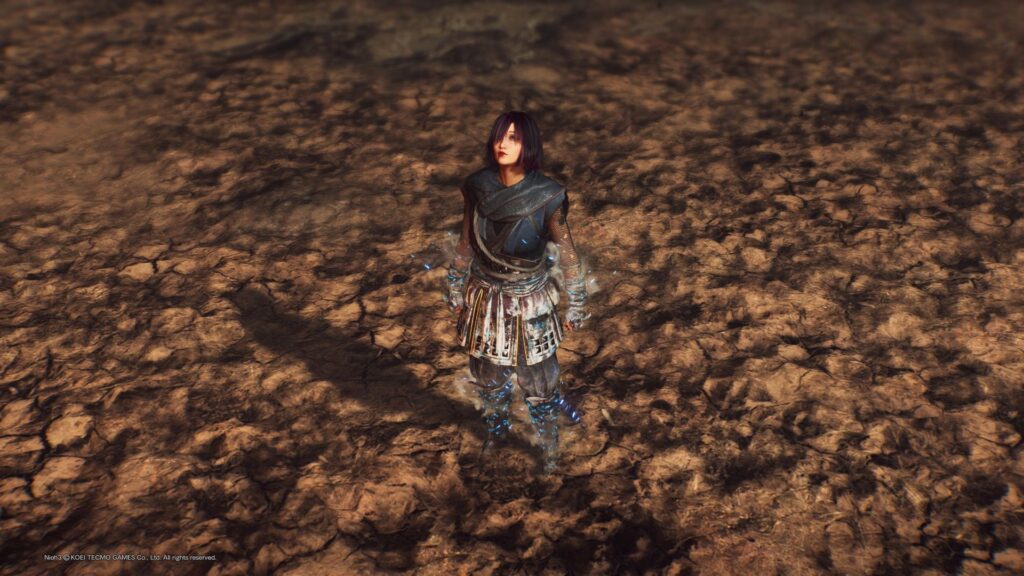
It’s jarring how determined Nioh 3 is towards looking backwards. It adds some of the best elements of Team Ninja’s recent successes to make it more expansive, but at the same time, fails to acknowledge and act on some of the biggest criticisms of the past Nioh titles.
Inventory management remains cumbersome, more so because there are two different builds to manage. The input lag that occurs when attempting to heal or using a talisman mid-battle can still cost encounters. The soundtrack still lacks the orchestral heaviness that makes boss encounters in other Soulsborne games feel like a ballad. These are glaring issues that Team Ninja continuously fails to address in every subsequent entry.
Past Nioh games offered immense replayability, and I’m hopeful that Nioh 3’s full potential will unravel in new game plus playthroughs when I have invested more time into honing both my Ninja and Samurai builds. When Divine loot starts to drop, and there’s more set bonuses to gain, and even standard enemies feel like a threat enough to justify spending time on these intricate builds.
But for now, despite more combat opportunities waiting at every turn, I feel like there is a lack of incentive to push forward, something I don’t recall ever feeling in any of Team Ninja’s previous action RPGs.