Nigel Farage’s approval rating has hit its lowest level since the 2024 general election, according to a new poll, in the latest evidence that Reform UK is on the verge of seeing its support collapse.
According to More in Common’s latest approval rating for party leaders, Mr Farage has plummeted to -32 per cent, a drop of around 10 points in just two weeks.
Meanwhile, new prime minister Andy Burnham has hit +19 per cent as he continues to benefit from the momentum built during his first few days in office.
His approval rating outranks the high of +11 achieved by Sir Keir Starmer shortly after taking office in summer 2024.
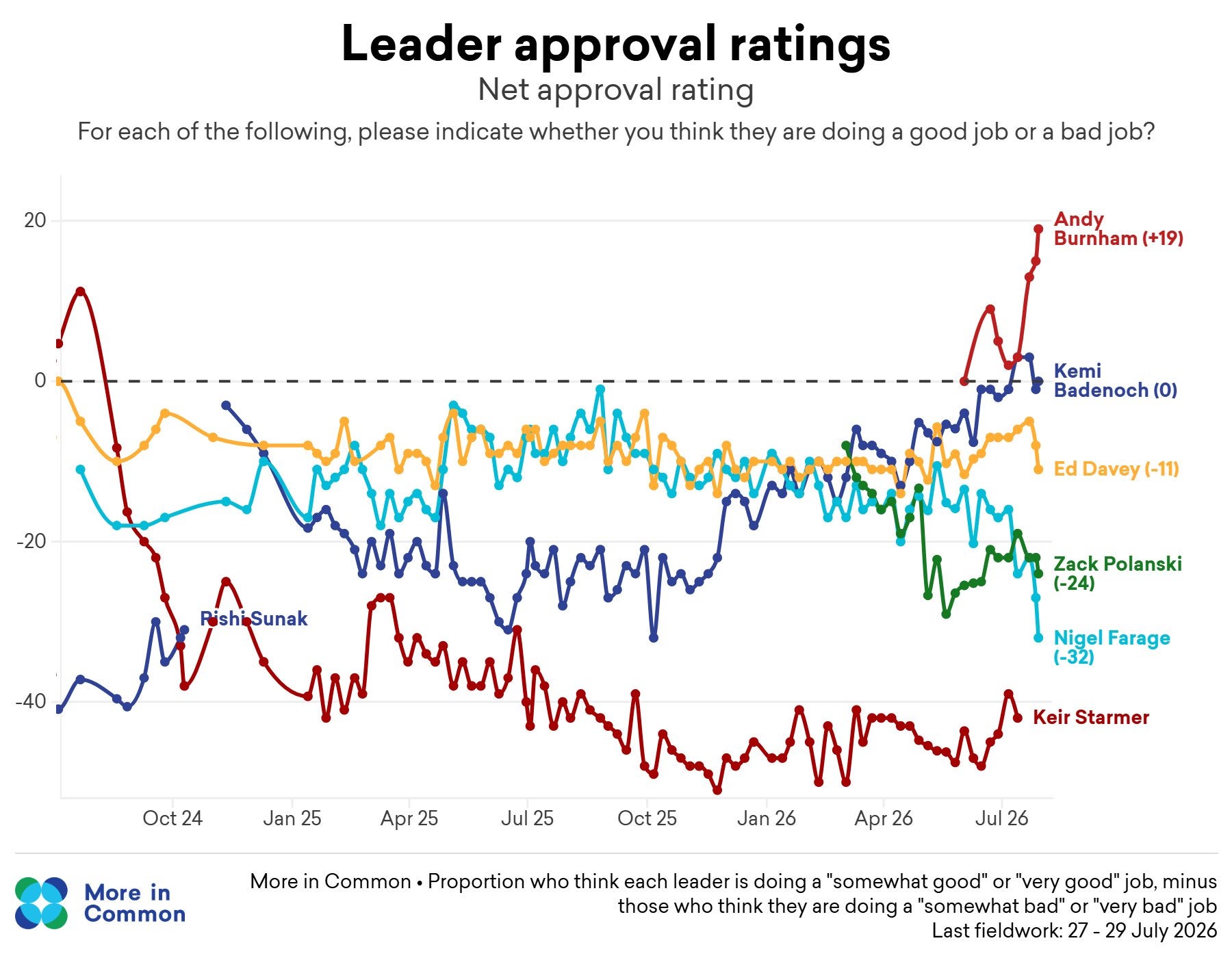
Tory leader Kemi Badenoch is on 0, and Lib Dem leader Sir Ed Davey rates at -11 while Green Party leader Zack Polanski, who has also seen a dramatic downturn in his fortunes, is on -24.
While Mr Farage is still above the -49 per cent that Sir Keir hit at one point in his premiership, the More in Common findings are the worst for at least two years for the Reform UK leader.
Luke Tryl, the UK director of More in Common, said: “What may worry Farage is less the rise in disapproval, he’s always been polarising, and more the decline in raw approval, suggesting some previous fans wavering.”
The findings are matched by exclusive polling for The Independent from Ipsos which shows Mr Farage’s has a net rating of -32 down from -14 12 months ago. In the same period Ms Badenoch’s net rating of -11 has improved from her score of -30 last July.
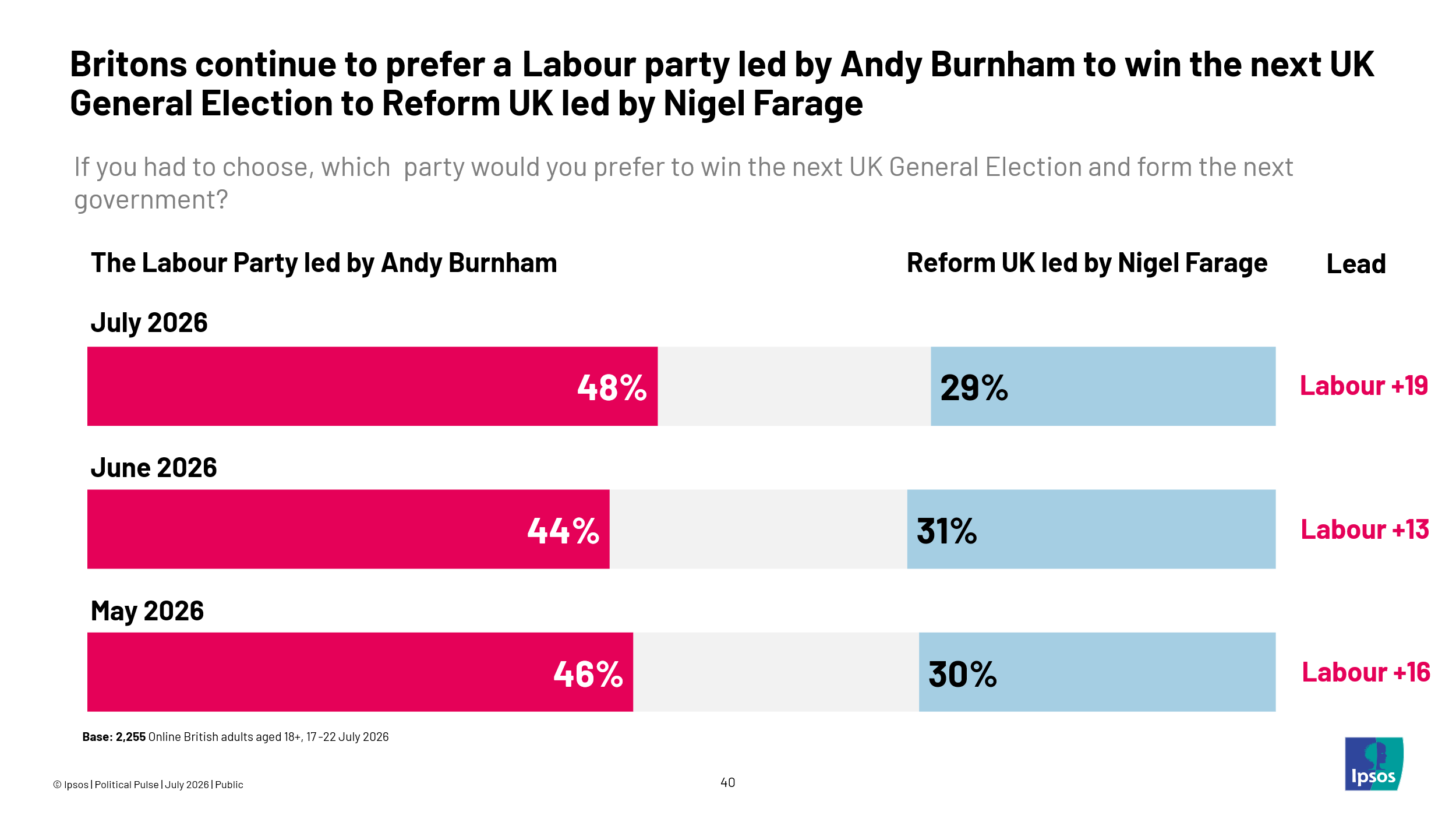
Ipsos has Mr Burnham with a net rating of +1 much lower than MiC but 48 per cent would rather see a Burnham led Labour win an election compared to 29 per cent a Farage led Reform.
Meanwhile, Ipsos has identified the top three areas the election will be fought on with migration dropping to third. The findings show 59 per cent say healthcare and the NHS will shape their vote, ahead of inflation and the cost of living (57 per cent) and immigration (50 per cent).
The latest findings come days after another poll by More in Common saw Labour overtake Reform UK in the polls for the first time in more than a year, leading the way with 28 per cent (up four points), while Mr Farage’s party is down two points on 24 per cent.
It is the first time since March 2025 that Labour has led the way, with Reform in second place and the Tories just behind in third on 22 per cent.
YouGov had Reform and Labour joint top on 22 per cent and even Find Out Now, the polling company most favourable to Reform, put them joint top with Labour on 23 points each on Thursday.
The rapid decline in Mr Farage’s popularity comes after weeks of negative headlines, with questions still unanswered over undeclared gifts and donations, as well as benefits he received from adviser George Cottrell, a convicted fraudster.
Meanwhile, polling guru Professor Sir John Curtice noted that Reform UK itself has suffered a three-point dip in its popularity since Mr Farage quit as an MP to call a by-election in Clacton, in an attempt to preempt a parliamentary standards inquiry into him potentially triggering a vote in his constituency.
While there are 34 candidates contesting the by-election, Mr Farage is expected to win by a landslide after the major parties refused to contest the vote. His leading challenger is the comedian Count Binface.
However, leading polling expert Lord Robert Hayward has warned that the decline in popularity for Mr Farage is a much bigger problem for Reform than for other parties.
He told The Independent: “Nigel Farage is tied to the Reform brand more than any other party leader is to theirs.
“That means that if his support drops then it shows that Reform are in real trouble and this could be the beginning of a real decline.”
But he added: “It is hard to put your finger specifically on what has caused Farage’s rapid decline. It is not just the issues about donations. I think there is something to be said about the way Andy Burnham has dominated the news; it has all been about Burnham.”
Since taking over, Mr Burnham has taken on Mr Farage on social media platforms with a series of TikTok-style videos including blind pub snack tasting. He has also announced consumer-friendly policies such as a £2 bus fare cap, 20 per cent off pub business rates and VAT off energy bills.
While there are still question marks over how Mr Burnham will pay for his pledges, he has also made it clear he plans to solve the social care crisis, end rough sleeping and bring defence spending up to 3 per cent of GDP.
Prof Curtice noted that Mr Farage’s decision to call a by-election meant that under Ofcom rules it made it difficult to interview him without referring to the other 33 candidates.
“It means he has been off the TV screens because the by-election makes broadcasters nervous,” he said.
Prof Curtice added: “There is no doubt though that Andy Burnham and Labour are using the summer recess to control the news agenda like Nigel Farage and Reform used it last year.”
But he noted that it would be wrong to say Mr Farage is not an asset any more.
He said: “It is too strong to say he isn’t an asset. He is still very positive ratings among Reform supporters, albeit down on what it was.”
He added: “YouGov also have Farage at his least favourable since becoming Reform leader. They unlike MiC have some earlier readings and the latest equals the previous record low in November 2020 just before he resigned as Reform leader, although the party of course was much less popular then. “