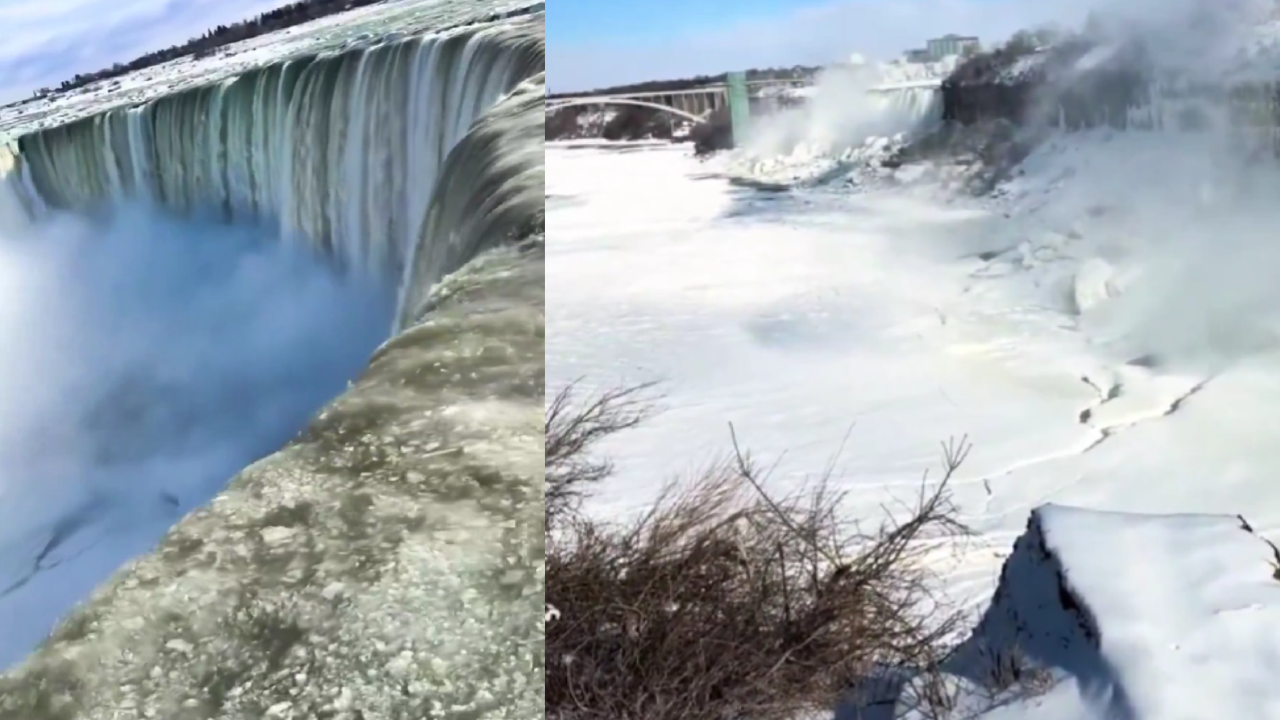
A strong polar vortex moved across North America not long ago. Temperatures around Niagara Falls plunged below −20°C, far colder than usual. The mist from the waterfalls met the freezing air, and suddenly, ice began to coat everything. Cliffs, riverbanks, trees, rocks, and even sections of the Niagara River were layered with thick, glistening frozen sheets. Water still flowed, but the mist froze quickly in midair. Videos from locals show strange formations, icy spray patterns, rainbows catching the light, and a quiet, otherworldly feeling over the whole scene. The falls didn’t stop, but the world around them seemed paused.
How the polar vortex affected Niagara Falls
The vortex pushed Arctic air down. Mist from the falls, normally liquid for a short time even in winter, froze almost instantly. Ice built slowly on rocks and railings. The river itself started to harden in slow-moving areas along the shore. Water flowing and water frozen, side by side. Some patterns look like glass, reflecting the low sun. It is hard to tell if it is moving or still, and sometimes the edges glint with fleeting colours in the icy mist.
The mist and spray from the waterfalls consist of small water droplets suspended in the air. In normal winter conditions, some of the water droplets in the mist and spray may freeze slowly on the rocks and other surfaces nearby. But when the temperature is below −20°C, the freezing process is very rapid. The water droplets in the mist and spray freeze instantly as soon as they come into contact with the cold surfaces. A frozen “shell” forms slowly around the edges of the waterfalls and the surrounding landscape. Pictures and videos show the beautiful ice formations, frozen sheets of spray, and ice sculptures formed as a result of the constant freezing process.
Partial freezing of the Niagara River
Large sheets of ice formed where the river moves more slowly. Faster sections stayed liquid, giving a strange, uneven contrast. The river and the falls together seemed alive but muted, restrained. Ice thickened where it could, leaving gaps for flowing water. The interplay of frozen and moving water is not regular, not neat. It feels chaotic and quiet at the same time, like nature rehearsing, pausing, then moving on again.
Niagara Falls: A natural wonder in winter and of cultural significance
Niagara Falls, sitting on the US-Canada border, consists of Horseshoe Falls, American Falls, and Bridal Veil Falls. Millions of litres of water pour over the cliffs every second, sending up mist that usually hovers and drifts. In winter, that mist hardens. The falls are not silent, not still, but the icy surroundings transform the place into something uncanny. Visitors each year see a different face: green summers with boats, winters with frozen cliffs. Weather extremes like this vortex remind us that even the strongest, most familiar landscapes can change dramatically, showing a quieter, frozen side of a place that never truly sleeps.