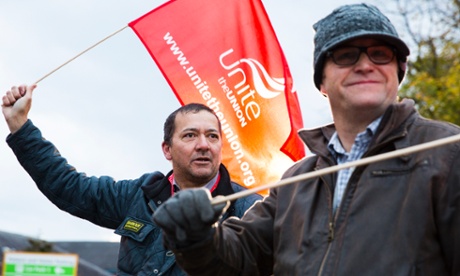
Growing pay inequality is at the heart of the NHS pay dispute, in a health service that speaks of universalism and fairness.
Recurrent pay freezes for the majority of NHS staff has led to pay in real terms falling by up to 15% against the cost of living since the general election. Pension increases for smaller pensions and cuts to other terms has doubled the size of this cut to some. In fact, staff have only had a 1% increase since 2010 with those at the top of their pay band being offered from 7p per hour pocket money this year, running roughshod over the independent NHS Pay Review Body. The health secretary, Jeremy Hunt, has said he will stop the pocket money if further cuts are not achieved.
About 40,000 staff in the NHS are paid less than the living wage, and many now revert to in-work benefits and food banks for bare essentials, and many low-paid jobs have now been outsourced, so the NHS can deny its responsibility to those staff.
People who keep our hospitals clean, keep us safe from infection and are often the ones who pass those encouraging words on to the sick are left floundering at the bottom of the scale, while repeated reports of pay increases at the other end of the scale continue to be the norm. Only last week, Yorkshire ambulance trust executives received a 30% uplift, a real kick in the teeth for those who drive their ambulances on salaries of £16,271. The former NHS England chief executive, David Nicholson, even justified the 11% increase for senior managers since 2009 in one of his parting interviews. He had a seven-figure pension pot to retire with. NHS England has been advertising PR jobs for over £100k; hardly contributing to patient care.
We need to also remind ourselves of the £3bn wasted on the NHS reorganisation, that has plunged our NHS into financial meltdown and the £4bn (2010-12) handed back to the Treasury.
Despite repeated calls by Unite to meet the health secretary – reported to be the richest person in the cabinet with a personal wealth of £18.65m – to resolve the dispute, he has continued to refuse a meeting, abdicating his responsibility to try and settle this dispute.
His counterpart in Wales has sat round the table to thrash out a deal in even tighter fiscal circumstances, and an offer for local government workers is to go out to consultation following talks. Hunt, with the responsibility for England’s largest workforce of 1.4m people, is acting irresponsibly in not trying to settle this dispute. It is time he was sacked for his politicking and failing management of NHS staff.
There is a big conversation to be had across the NHS on pay. Percentage increases over the years have resulted in those at the top doing even better, and those trying to get by, getting little more than peanuts. Unite made the case to the NHS Pay Review Body last year that percentage increases only increase pay inequality.
Agenda for Change, the largest equality-proofed pay system in the world, was introduced in 2004 to end pay inequality in the NHS. Doctors and dentists withdrew from the talks and now sit on their own pay spine. Senior managers also excluded themselves. The highest paid groups of staff did their own deal. This has to end – one pay system, judged against one set of criteria has to be used for everyone.
Due to growing inequality in pay, those at the top of the scale must make their contribution to those at the bottom. It has to also be questioned why an increment point, even within Agenda for Change is worth just £359 for the lowest paid and yet £4,509 for the highest on the scale. This gap has grown by 10% since 2006. This government has also introduced performance pay which is not only divisive, but will lead to greater pay discrimination as has been experienced in all other sectors of the economy.
Unite’s message to the health secretary, expecting to increase his wealth with a 10% salary uplift in May, is that there are means to resolve this dispute and create fairer equal pay.
When 7,800 staff earn above £100k, a third of whom more than the prime minister, and many enjoying more than £250,000 a year, it is not hard to see why NHS staff are so angry over the government’s contempt for them.
We believe the government made a decision, because NHS staff are nearly 80% women, caring and professional, that they could continue to cut their pay without a comeback. He called it wrong. David Cameron has a national strike on his hands, pressure is now building for him to find a solution.
Are you a member of our online community? Join the Healthcare Professionals Network to receive regular emails and exclusive offers.