
Summary
Here’s a summary of today’s key events.
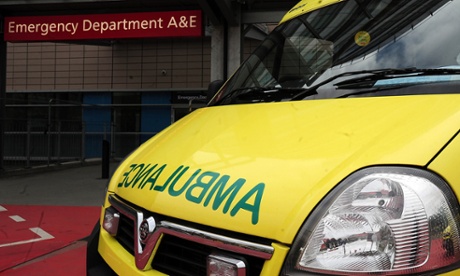
- David Cameron has admitted the NHS is under “pressure” after waiting times in A&E departments in England plummeted to their worst levels in more than a decade. The prime minister said a lot of the pressure on emergency departments came from frail, elderly people but he insisted that around 2,500 more patients were being seen within four hours every day than four years ago. “We’ve got a short term pressure issue which we need to meet with resources and management,” Cameron told the BBC. “We’ve got a longer term issue which is making sure that there are named GPs in your local area which are responsible for every single frail, elderly person. A lot of the pressure on A&E is coming from frail, elderly people, often with many different health conditions and the best place for them, frankly, is not A&E. They should be being looked after by the family doctor or in other health settings and I think the long term challenge is to make sure those sorts of settings are more available.”
- Emergency departments based at hospitals in England treated and either admitted or discharged just 83.1% of arrivals within the politically important four-hour target in the week ending Sunday 21 December, the new figures released today revealed. The NHS Constitution says that 95% of patients should be dealt with within that four-hour timeframe, a deadline ministers have promised to meet. The 83.1% is the lowest performance against the target since records began in 2004. The Guardian has identified 12 hospitals declaring “major “or “significant” incidents.
- Jeremy Hunt, the health secretary, said the figures were disappointing but the NHS had a plan to address the problems. He also said that England’s waiting times were among the lowest in the world.
- Andy Burnham, Labour’s health spokesman, said the A&E waiting figures were “extremely serious” and showed the NHS was under “extreme pressure”. He said that “in parts of the country there is a crisis in emergency services and in accident and emergency departments”.
- Simon Stevens, the NHS England chief executive, said A&E departments were dealing with “far and away” the highest level of demand in the health service’s history.
- Dave Prentis, the general secretary of health and public service union Unison, said the NHS was on the “brink of disaster”. Cameron said that was not “remotely true”.
- A new YouGov poll for the Sun showed Labour with a three-point lead, which would allow it to form a majority government.
- Jim Murphy, the Scottish Labour leader, has triggered a row with his London colleague Diane Abbott over his plan to use Scotland’s share of revenue from Labour’s planned mansion tax to fund 1,000 nurses north of the border. Abbott said there were problems with the mansion tax because “there’s all sorts of people that bought houses 30 years ago in what were unfashionable parts of London which are worth at least £1m and Jim Murphy isn’t helping matters by firing off without consulting.” And she got Murphy’s name wrong.
- Tory MP Mark Pritchard is to face no further action over a rape allegation, the Metropolitan police have confirmed. He called for a review of the fact that alleged rape victims are given anonymity. The prime minister’s spokesman said: “The government doesn’t take that view. The government’s position is unchanged.”
- Boris Johnson, the mayor of London, backed a call from Ukip leader Nigel Farage for NHS workers to speak English.
- The Lib Dems have claimed the Tories would cut education spending by £13bn a year after the Daily Telegraph published a photograph of one of William Hague’s briefing papers.
- The Lib Dems have still to select their parliamentary candidates in more than half the seats up for grabs in the general election in four months’ time, leading Labour to claim that Nick Clegg’s party is in danger of forfeiting its right to present itself as a national party.
- Home Office minister James Brokenshire has indicated that the government will make some kind of concession on controversial legislation on temporary exclusion orders currently going through the Commons. David Anderson, the government’s independent reviewer of terrorism legislation, has repeatedly said that the courts should play a role in the new measures. Shadow home secretary Yvette Cooper said Labour had “argued from the start that there should be judicial oversight of these new powers to prevent abuse”.
- Former foreign secretary Lord Hurd of Westwell has hit out at delays in publishing the official report into the Iraq war - warning it was becoming a scandal.
That’s it from us for today. Thanks for all the comments and see you tomorrow. PO
Updated
Here’s a short afternoon reading list.
It’s depressing to hear Labour candidates (today Abbott, Lammy and Jowell in the Standard and then Abbott again on Radio 4) for Mayor of London wading into the “debate” and playing the Tory tune about the Mansion Tax being a “tax on London”. That’s, frankly, cobblers. If there’s a “tax” on Londoners it’s the high rents, high house prices and spiralling travel costs that come with being a resident of Europe’s biggest city ...
This kind of consistent and noisy attack from Labour politicians on a flagship Labour policy (one which is popular both with party members and the electorate) is exactly the kind of damage that can cost seats in an election year. It’s part of the reason why I said time and time again that candidates running for Mayor during an election year was a dreadful idea.
Public legitimacy is vital, and in May 2015 that will hang on the intersection of England’s two unions: the UK and the EU. A minority Labour government, lacking a majority in England and supported by the SNP, that turns its face against an EU referendum will struggle for legitimacy, as would a Conservative minority government lacking the support of Liberal Democrats and meaningful representation outside the Midlands and southern England. Each faces the challenge of configuring a new set of broad and durable political alliances that can gather and sustain public support. Structured by this complex interplay of interests, Britain’s political future will be determined by which parties can turn the crisis of the established party system into an opportunity for realignment, just as they did 100 years ago.
Former foreign secretary Lord Hurd of Westwell has hit out at delays in publishing the official report into the Iraq war - warning it was becoming a scandal, the Press Association reports.
The Tory peer said publication of the long-delayed Chilcot inquiry report had “dragged on” beyond “forgivable delay” and urged ministers to ensure people were given the truth.
But Cabinet Office spokesman Lord Wallace of Saltaire said the inquiry was completely independent of government and it was up to Sir John Chilcot to decide when to submit the report to the prime minister.
“I continue to hope that its conclusions will shortly be available for all to see,” he told peers at question time, amid growing concern about whether the report will be published before the election.
Lord Wallace indicated that if it was not published before the end of February, it could be held back until after the general election to allow full debate on its findings.
To cheers of support, Liberal Democrat Lord Dykes branded the continuing delay an “utter and total disgrace”.
He said: “More and more people think it is some kind of attempt to prolong the agony for Mr Blair facing possible war crimes charges.”
Lord Wallace told him: “We all regret the delay. But this is not unusual for inquiries of this sort.”
Last week my colleague Denis Campbell reported that, although Labour maintains its lead over the Tories when it comes to the NHS, voters actually trust David Cameron more than Ed Miliband on the issue.
Some 22% in a ComRes survey said the prime minister was the party leader they most trusted to manage the NHS, while 20% named the Labour leader. Read more here.
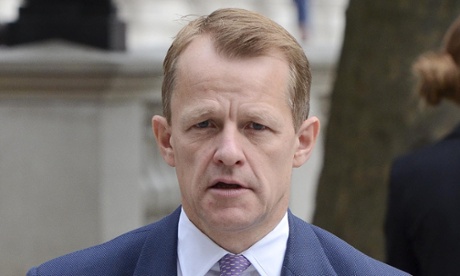
Tories would cut education spending by £13bn, Lib Dems say
The Telegraph had a good scoop today. They managed to photograph one of the briefing papers that William Hague was holding at yesterday’s press conference about Labour spending plans, and it suggests the Tories would cut the schools budget after the election.
Here’s an extract from the story.
Detailing how to respond to the question “Will you cut the schools budget in the next Parliament”, it read: “Of course there will be difficult decisions in the next Education budget in the next Parliament.
“In this Parliament, we’ve shown that we can protect the front line by making the Education budget more efficient and effective.
“We can only have strong schools by staying on the road to a stronger economy. But putting the economy at risk because Ed Miliband doesn’t have an economic plan, Labour would put our schools at risk.
However it added: “If pressed: There will be decisions for future spending reviews.”
David Laws, the Lib Dem education minister, has put out a news release saying this means the schools budget could be cut by £13.3bn by the end of the next parliament.
Here’s the note from the Lib Dems explaining how they got this figure. (Their bolding.)
These figures are based on estimates produced by the House of Commons library. Using the OBR’s projections, they have compared education spending in 2015/16 with projected spending in 2019/20 if it is not ring-fenced and found that, applied evenly to unprotected departments, it means education would be cut by £14.6bn by 2020 (a cut of 28%). This does not take into account Conservative proposals to cut the welfare budget by £12bn or to make £7bn of as yet unfunded tax cuts. Despite not setting out how they will reach £12bn in welfare savings, for this research we have assumed – generously to the Conservatives – that they can and will achieve them. We have therefore reduced the overall size of their departmental cuts by £5bn (£12bn welfare cuts minus £7bn tax cuts) and applied this to the House of Commons library figures. This gives a figure of £13.3bn to be cut from the education budget by 2020, which is a cut of more than a quarter (25.3%). This means cuts of around 3.3bn per year after 2015/16.
The Lib Dems are committed to ring-fencing spending on education, including nursery provision. Laws said:
The Tories have now revealed their true colours for all to see. They want to slash spending on education that’s desperately needed to provide children a fair and equal opportunity to succeed.
A Tory-shaped £13.3bn black hole in education spending will jeopardise future job prospects for our country’s children, and jeopardise our long term economic stability.
Unlike the Conservatives and Labour, the Liberal Democrats are committed to protecting cradle to college spending in the Department for Education.
Updated
The Liberal Democrats have still to select their parliamentary candidates in more than half the seats up for grabs in the general election in four months’ time, leading Labour to claim that Nick Clegg’s party is in danger of forfeiting its right to present itself as a national party, Patrick Wintour reports.
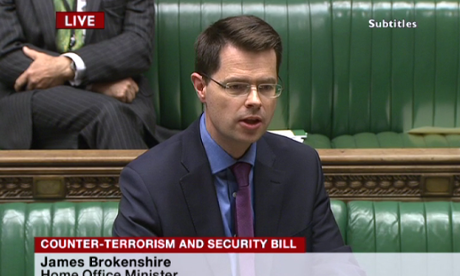
James Brokenshire, a Home Office minister, wound up the Commons debate on temporary exclusion orders. He told MPs that the government would consider amending the counter-terrorism and security bill when it went to the Lords to take account of David Anderson’s calls for judicial oversight to be introduced. Anderson, the government’s independent reviewer of terrorism legislation, has repeatedly said that the courts should play a role.
Brokenshire told MPs:
I can assure the House that the government will look very carefully at the constructive points from David Anderson and return to this issue in the other place [the Lords].
So Brokenshire has signalled that there will be some kind of concession. But he would not say what they would be, or how far they would go. Before he got to Anderson in his speech, Brokenshire also said that the home secretary was best placed to make a judgment about whether a temporary exclusion order should be imposed. He also said the home secretary could remove a passport from a British citizen without having to go to the courts.
Updated
Ministers intend to offer concessions over terror bill, MPs told
Ministers are planning to offer a concession to opponents of the counter-terrorism bill, MPs have been told. Mark Field, a Conservative MP, said during the report stage debate that some of his colleagues were being told in private there was no need for MPs to vote with Labour on an amendment being debated now because the government would amend the bill in the Lords.
The bill will, among other measures, allow the government to introduce temporary exclusion orders to stop people suspected of fighting with terrorist groups abroad from returning to the UK for up to two years. Labour has tabled an amendment saying the home secretary should only be allowed to impose these TEOs with court approval, not just on her own initiative.
As Nicholas Watt reports in the Guardian today, Nick Clegg has signalled that he also supports introducing judicial oversight and that he wants the government to amend the bill in the Lords.
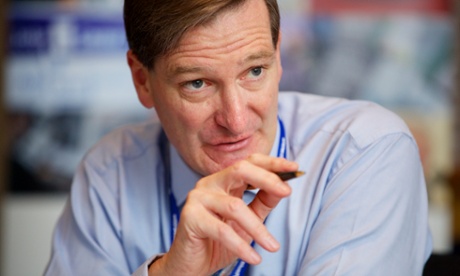
Earlier in his afternoon’s debate several MPs spoke in favour of the Labour proposal. This is what Dominic Grieve, the Conservative former attorney general, told the Commons. AS
The power here is so exceptional that judicial oversight is by far the most prudent course. It is not just helpful for the individual concerned but ultimately for the home secretary in terms of giving it the validity it needs to be effective. Without which I rather fear we will end up in rather more lengthy and complex litigation and above all with a sense of grievance... of people who consider they have been treated unfairly.
It is right there are essential principles of our common law that individuals enjoy the benefit of the presumption of innocence and that free born British subjects in this country are able to come and go without let or hinderance.
If, indeed, they have committed serious offences including treason when they are abroad then they should be brought to justice here on their return. We do not have the principle of excluding people from their own land.
Updated
NHS Consultant David Kirby has told the Guardian about the pressures hospitals up and down the country face:
Currently we are seeing 14% increase year-to-date from our attendance last year, so yes we’ve seen a big increase.
It’s at about the limit what the emergency departments can take. I mean we’re quite lucky here in Luton; we are actually managing to achieve the four-hour target on a regular basis but there are some quite hairy days when it’s close - but I know my colleagues up and down the country are having a really hard time; it’s at breaking point.
We’re living in a culture where we want the here and now – patients who are ill now want to be seen now. They don’t want to wait until the next day or the day after to be seen.
There are people who attend emergency departments up and down the country with conditions that you and I would’ve taken paracetamol for and just not even bother a regular GP. But patients are coming because of that. The problem for us is we don’t know that until we’ve actually seen the patient, and worked through with them what the problem is.
I think that the system is at about its limit. I think within the United Kingdom the NHS is a fantastic institution but it needs to be treated by the patients that use it with respect – and only patients with emergencies should go to emergency departments. Patients with conditions that can be seen by a GP should use the GP service. It’s out there and it’s very, very good.
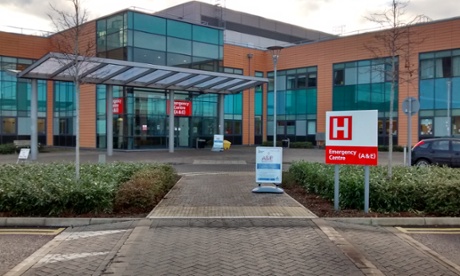
Peterborough City hospital, which declared an “internal major incident” on Monday, is not allowing journalists into its A&E area because it says staff are under too much pressure, reports Mark Tran.
A quick peek inside, however, showed only a handful of people waiting. It certainly not a crush. Interviews have to be done in the car park. I managed to talk to someone who had come in at 11.30am. S Hamblyn, who was on crutches, was waiting to be picked up just after 2pm. He had no complaints.
‘I twisted my knee and heard it pop,’ he said. ‘I saw a nice guy ... I haven’t got any complaints against them. They’re doing a grand job.’
Updated
Jeremy Hunt, the health secretary, has taken to Twitter to make his case about the NHS waiting times.
English A&Es remain best in world on waiting times - thanks to brilliant work by NHS staff in challenging circs
— Jeremy Hunt (@Jeremy_Hunt) January 6, 2015
Targets matter but unlike before we won't force hospitals to meet them at any cost: safe&compassionate care must always come first.
— Jeremy Hunt (@Jeremy_Hunt) January 6, 2015
A few A&E facts: pic.twitter.com/KWVM9lGFYY
— Jeremy Hunt (@Jeremy_Hunt) January 6, 2015
A&Es facing unprecedented increase in demand: pic.twitter.com/hHBLD1Hl1N
— Jeremy Hunt (@Jeremy_Hunt) January 6, 2015
A&E staff are busting a gut to give patients timely, safe care. Whole country should be proud&grateful for all their efforts.
— Jeremy Hunt (@Jeremy_Hunt) January 6, 2015
He has also spoken to ITN:
Updated
The Guardian has reporters calling round every hospital trust in England to discover how many have declared “major” or “significant incidents”. So far four more have joined the list – taking the total number of hospitals that currently have the status to at least 11. Read more here.
Peterborough City hospital trust said it had cancelled eight operations on Tuesday, after cancelling nine on Monday, in order to prioritise emergency care. Brighton and Sussex University Hospitals trust, which termed its incident “significant”, said that the Princess Royal Brighton and the Royal Sussex had also cancelled some appointments, clinics and operations but did not provide further details. Norwich and Norfolk hospital revealed that it had reinstated an “internal major incident” and was discharging patients able to go home immediately to increase capacity to meet demand.
The others known to be affected are the Royal Stoke University Hospital, Stafford Hospital, Gloucestershire Royal Hospital, Cheltenham General Hospital, Scarborough Hospital, Ashford and St Peter’s hospitals.
The Queen Elizabeth Hospital in King’s Lynn, has been on “black alert”, the step below a “major incident”, since the weekend.
Updated
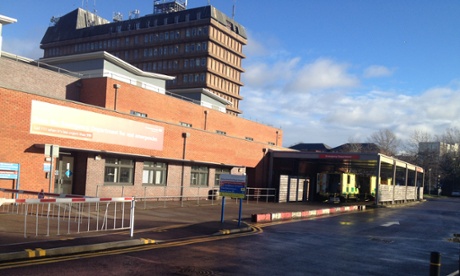
The Guardian’s Steven Morris has spent the day at Gloucestershire Royal hospital, from where he sends this dispatch:
Some hopped or limped in; the more seriously injured were ferried in by ambulance. Most arrived fearing a long and tiresome wait but the majority were pleased with the service they had received. Eleri Davies, 17, arrived at the Gloucestershire Royal hospital on crutches having tripped over a teammate’s leg during netball training. She was back out within about an hour, having been told she had sprained her ankle.
‘My mum warned be that I’d be in there for ages but it wasn’t too bad at all. The atmosphere was a bit tense in there – a bit quiet and awkward – but it was fine.’
Gloucestershire Hospitals NHS Foundation trust, which runs the Royal in Gloucester and the Cheltenham General, declared a major internal critical incident as their accident and emergency departments struggled to cope with an influx of patients. On Tuesday morning the number of people waiting to be seen climbed steadily. At 10.30am 19 people were queuing to see a doctor at the Royal, with the longest waiting time 128 minutes. By 1pm the number waiting was up to 28.
Hospital bosses warned people to ‘think very carefully’ before attending emergency departments. Paul McKenzie, 46, did fall into that category. He arrived in the early hours of Tuesday suffering with an infected hip. By mid morning he was still in a cubicle in A&E waiting for an in-patient bed. ‘But he’s being looked after, he’s in the right place,’ said his father, Nick.
It was painful watching council worker Harry Mann, 27, hop and hobble in. Still, he was hopping and hobbling back out within about 20 minutes having been reassured that he had suffered no lasting damage to his knee. ‘They were very good – professional and sympathetic,’ he said.
Tree surgeon Laurence Harrington, 36, needed five or six stitches in his sliced hand. ‘I was only in there an hour. No problems. They told me to take a couple of days off work but I’m going straight back. I’m fine.’
But the Gloucestershire hospitals may not be out of the woods yet. The number of patients waiting at the Royal was expected to edge up as the chilly day wore on. Other sites were also busy by early afternoon patients at the Cirencester minor injuries unit were waiting up to 136 minutes.
Dr Helen Miller, clinical chair of NHS Gloucestershire clinical commissioning group, said: ‘It is really important to remember that hospital emergency departments are designed to treat serious injuries and emergencies.’
CP
Abbott accuses Murphy of ‘unscrupulous’ conduct over mansion tax
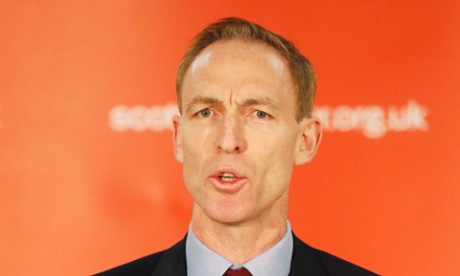
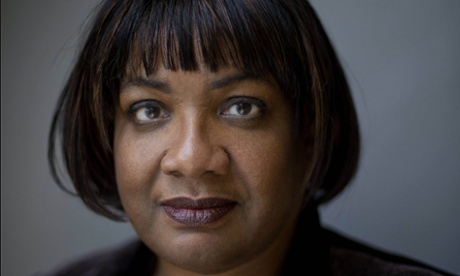
Jim Murphy, Labour’s new leader in Scotland, has triggered a lively row with his declaration that he’s going to use the proceeds of the mansion tax to hire 1,000 extra nurses in Scotland. (See 9.50am.) Diane Abbott, Dame Tessa Jowell, and David Lammy, who are all in the running to become Labour’s candidate for London mayor, have all expressed reservations about this. But, on the World at One, Abbott went further, accusing Murphy (whom she initially called John) of expropriating money from London to win elections in Scotland.
She was in favour of the tax “in principle”, she said. But there were problems with it, and Murphy should not be announcing plans now about how he would spend it.
There were are two big problems about the mansion tax, which is effectively a tax on London; 80% of it will come from London. And there are problems. The super-wealthy, who we all think should pay the mansion tax, probably, using lawyers and accountants, will evade it .... But there’s all sorts of people that bought houses 30 years ago in what were unfashionable parts of London which are worth at least £1m and Jim Murphy isn’t helping matters by firing off without consulting ...
There’s a lot of discussion and debate that needs to go on about how we can implement a mansion tax fairly. Thank goodness Ed Balls is showing an open mind on this. Jim Murphy is jumping the gun in a highly unscrupulous way.
Murphy was interviewed on the programme immediately after her. He said curtly she should back Labour party policy.
It is established British Labour party policy, the mansion tax, and what I’ve done is said we’ll use the money from a UK tax on houses worth over £2m and what I set out yesterday is the first plan about how we spend that money ... Diane Abbott, in my view, should maybe concentrate on supporting the Labour party’s policy rather than either forgetting my name or attacking my approach to what I do in Scotland.
You can listen to Murphy’s interview here.
The Labour MP Ben Bradshaw has used Twitter to back Murphy.
This row about mansion tax helping fund extra nurses in Scotland is nonsense. Still have UK tax system. #NHS in *all* regions will gain
— Ben Bradshaw (@BenPBradshaw) January 6, 2015
Updated
The prime minister’s spokesman has responded to Tory MP Mark Pritchard’s call for a review of the rules on anonymity in sexual offence cases. The spokesman said: “The government doesn’t take that view. The government’s position is unchanged.”
When the Conservative MP Mark Pritchard was arrested in relation to a rape allegation, the fact that he had been arrested was reported in Votes and Proceedings, a Commons document recording the day’s events. After it was announced today that Pritchard will not be charged, Andrew Bridgen, a Conservative MP, used a point of order to ask John Bercow if the fact that Pritchard had been cleared would also be recorded. Bridgen said:
Today Mr Pritchard was released from police bail with no further action and indeed was never charged with anything. Given that unfortunately he had to be named on the order paper with regard to his arrest does the Speaker think that this news today should also be noted on the order paper?
In his response, Bercow said the whole practice would be reviewed.
What I can say to you which I hope will be of interest to you and to the House is that I am today writing - the letter has been drafted and awaits signature - to the chairman of the procedure committee, Charles Walker, requesting that the committee look into the ancient practice whereby in such situations a member’s arrest is reported to the House to see whether in modern circumstances such a practice is no longer required or at any rate, at the very least, requires to be amended.
Young people tend not to vote very much. But what would happen if they did? My colleague Frances Perraudin has sent me this on some new research on this.
The Intergenerational Foundation - a thinktank dedicated to promoting equality between generations - has released research suggesting that a small increase in the voting levels of 18 to 34 year olds in May’s election could see 20 incumbent MPs lose their seats.
The research, which was based on turnout levels at the 2010 general election, suggests that a small rise in the number of young people voting for the party in second place in various constituencies could change the result. The thinktank’s most conservative calculations found that nine incumbent MPs could be ousted with a 2% increase in the youth vote, 20 MPs with a 5% increase and 28 MPs if 10% more young people voted.
The 10 constituencies most vulnerable to a rise in the youth turnout were Fermanagh and South Tyrone, Hampstead and Kilburn, North Warwickshire, Thurrock, Hendon, Sheffield Central, Camborne and Redruth, Oldham East and Saddleworth, Bolton West, and Southampton Itchen.
Voter turnout among young people is usually lower than among other demographics. Ipsos-MORI research from 2010 identified that while average voter turnout was 65% across the UK, only 55% of 25-34 year olds and 44% of 18-24 year olds turned out.
Angus Hanton, co-founder of the Intergenerational Foundation, said of the research: “Our report dispels the myth that younger people’s votes hold no power. However, since the under-35s have been systematically let down by all three major parties on major issues that affect their generation such as increases in tuition fees, the removal of housing benefit for under-25s, lack of new home building, high rents, the removal of Educational Maintenance Allowance (EMA), poor job prospects and inadequate employment protection against zero hours and short-term contacts together with declining pay, who should they vote for?”
Updated
Boris Johnson has been defending Prince Andrew. Here’s the Guardian video.
The Guardian’s Steven Morris is still at Gloucestershire Royal hospital, which – along with Cheltenham General hospital – remains on major incident status. These A&E patients, however, report being seen swiftly and efficiently. CP
Andy Burnham, the shadow health secretary, has put out a press notice about the A&E waiting times. In it, he repeats some of the points he made in his earlier interview. (See 10.18am.) But he also picks up on a story in the Daily Mirror saying Jeremy Hunt wrote to hospitals yesterday giving them just four hours to suggest ideas for tackling the A&E crisis. Burnham says:
It beggars belief that, only yesterday, on the day when hospitals were declaring major incidents, Jeremy Hunt was asking officials to email hospitals asking for ideas in four bullet-points on how to solve the winter crisis. There could be no clearer illustration of the government’s failure to plan and get ahead of the very serious situation in which the NHS now finds itself. It smacks of panic when what is needed is planning and leadership.
MPs are divided on fixed-term parliaments, according to a YouGov poll of what the organisation called a representative group of 100 MPs.
Some 41% of MPs polled said they would vote to repeal the act – introduced by the Tory-Lib Dem coalition after taking power in 2010 – and return things to how they were before, when the government could choose when to call an election, writes Aisha Gani.
But 42% said they would keep things as they are, and 15% said they wanted to keep parliaments fixed-term, but make them four years rather than five years long.
Our latest MPs Omnibus poll shows most MPs oppose 5-year fixed-term parliaments - http://t.co/MKvrommhyQ pic.twitter.com/Ihjt5dMxKc
— YouGov (@YouGov) January 6, 2015
Fixed terms were more unpopular with Conservatives (59% opposed) than Labour (33%). All Lib Dems wanted to keep the status quo.
The fixed-term parliament is one of the few enduring elements of the coalition’s ambitious programme of constitutional reform. Under the act parliamentary elections must be held every five years, beginning in 2015, taking away the right of prime ministers to call general elections whenever they wanted.
Nick Clegg, the deputy prime minister, said after the bill passed in 2011: “For the first time, governments won’t be able to decide on the timing of elections to suit their own political ends.”
However, there were some critics at the time. Tory MP Jacob Rees-Mogg said:
The right to an election is the fundamental right of the British people, with their democratic ability to decide who forms the government, so can it possibly be right for one government to come in and say of a parliament, ‘It’ll be five years,’ the next to come in and say, ‘Oh, actually, four years would be better,’ and the one after that to say ‘Six,’ which would still be covered by the exemption from the Parliament Acts, and to play around with the constitution – with the democratic rights of the British people – in a way that involves no checks on them and no ability to say that that is now the settled will of Parliament and of the British people?
Since then MPs have debated repealing the Fixed-Term Parliaments Act, something led by Tory MPs including Richard Drax, the Conservative MP for South Dorset.
Updated
Summary
Here’s a summary of today’s key events so far.
- Hospital A&E units recorded their worst ever performance in the week before Christmas as NHS emergency care services struggled to deal with an unprecedented number of patients arriving, new figures released today show. Emergency departments based at hospitals in England treated and either admitted or discharged just 83.1% of arrivals within the politically important four-hour target in the week ending Sunday 21 December. The NHS Constitution says that 95% of patients should be dealt with within that four-hour timeframe, a deadline ministers have promised to meet. The 83.1% is the lowest performance against the target since records began in 2004.
- Jeremy Hunt, the health secretary, said the figures were disappointing but the NHS had a plan to address the problems. He also said that England’s waiting times were among the lowest in the world.
- Andy Burnham, Labour’s health spokesman, said the A&E waiting figures were “extremely serious” and showed the NHS was under “extreme pressure”. He said that “in parts of the country there is a crisis in emergency services and in accident and emergency departments”.
- Simon Stevens, the NHS England chief executive, said A&E departments were dealing with “far and away” the highest level of demand in the health service’s history.
- Dave Prentis, the general secretary of health and public service union Unison, said the NHS was on the “brink of disaster”.
- A new YouGov poll for the Sun showed Labour with a three-point lead, which would allow it to form a majority government.
- Tory MP Mark Pritchard is to face no further action over a rape allegation, the Metropolitan police have confirmed. He called for a review of the fact that alleged rape victims are given anonymity.
- Boris Johnson backed a call from Ukip leader Nigel Farage for NHS workers to speak English, and accused Labour of stoking tensions between Scotland and England with its “fiscally vindictive” plan to pay for an extra 1,000 nurses north of the border through a mansion tax that will be levied mainly on properties in the south-east of England.
PO
Updated
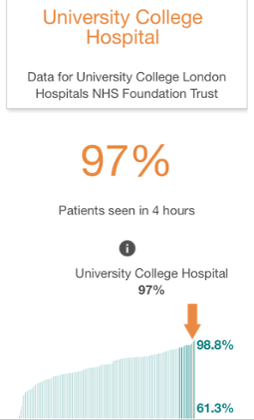
The BBC website has a handy widget where you can check your local hospital A&E statistics. It’s good news for anyone at Guardian HQ who has an accident, in any case … CP
Updated
Dr Louise Irvine, the National Health Action party candidate who is standing against Jeremy Hunt in his South West Surrey seat at the election, has put out a statement about the A&E waiting time figures. She says that it’s not simply the higher numbers attending causing the problems.
If you look closely at the figures, the number of people attending A&E in December was actually lower than in the summer. In the weeks ending Dec 21 and 28th, there were 289,530 and 262,879 people attending A&E. Both of these are LESS than the number of people attending A&E throughout the months of June and July (week ending 22 June there 298,955 attendances and in the week ending 20 July there were 298,711 attendances.) And yet the four-hour target was maintained in the summer but was breached in December with the lowest ever since records began in 2004 in the week before Christmas.
The real issue is the lack of capacity of hospitals to treat, admit and care for patients, causing back pressure in A&E. This is seen in the stupendously high figure for 4-12 hour “trolley waits” - over 12,000 people left languishing on trolleys in the week ending December 21st.
Sick patients are stuck in A&E as there are insufficient doctors to treat them and cuts in the number of hospital beds mean they can’t be admitted onto wards. Ambulances are then unable to offload their own patients as A&E units are full.
Today’s A&E target figures relate only to the NHS in England. But there are problems elsewhere too, as these tweets from NHS Grampian about pressures at Aberdeen Royal Infirmary show:
@NHSGrampian Please check http://t.co/lg6eij3ott and consider whether a trip to Emergency Dept is the right course of action. 2/6
— NHS Grampian (@NHSGrampian) January 6, 2015
@NHSGrampian Due to demand on services some elective procedures postponed. Decision not taken lightly. 3/6
— NHS Grampian (@NHSGrampian) January 6, 2015
CP
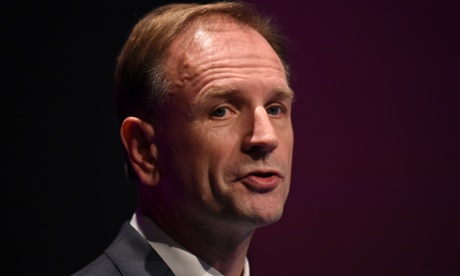
Simon Stevens, the NHS England chief executive, has issued a statement saying A&E departments have been dealing with “far-and-away” the highest level of demand in the NHS’s history. He also says the situation also shows the need for a “fundamental redesign” of acute care services.
This winter our local health services are responding to far-and-away the highest ever number of ambulance calls, A&E attendances and emergency admissions in the NHS’ history. At a time of year when most families across the country were enjoying a well-earned holiday, frontline NHS nurses, paramedics, doctors and other staff have been going the extra mile – we owe them a huge debt of gratitude.
That’s why the NHS, the Department of Health and local clinicians have done everything that could reasonably be expected to plan carefully and expand services over the winter. But for the future it’s clear we also need a fundamental redesign of the NHS urgent care ‘front door’ – A&E, GPs, 999, 111, Out of Hours, community and social care services – as part of the broader programme of care transformation set out in the NHS Five Year Forward View.
Updated
As the BBC reports, Ukip’s website has crashed this morning.
On Sky News Jeremy Hunt, the health secretary, said today’s A&E waiting figures were “disappointing”. But he also said the NHS had a plan to address its problems.
One very big thing has changed over the last few months which is that the NHS has lifted up the bonnet of this problem and it’s looked at what the heart of the problem is. It’s come up with a plan. The plan costs money and the government has said it’s going to back that plan.
Readers have sent more tales of their experiences in A&E – you can share your own story here, via GuardianWitness.
This contribution comes from a reader who says they work in an emergency department:
'Chasing Targets'
What the latest figures are showing are that the system is under pressure- no beds in the community hence less number of patients can move out of hospital beds subsequently we see overcrowding in the A&E department.
We have to be very careful of 'chasing the target' for the sake of reaching 95% and this should not be at the cost of safety. Keeping everything in context seeing 9 out of 10 patients within four hour is still a fantastic achievement.
I lead a team of very motivated, hard working and tiring A&E staff who work within the constrains of the system. It is about time all political parties worked collaboratively to plan for the future of the NHS. Throwing money at a problem is wasting the money because of the lack of planning. Knee jerk reactions are made by all trust because of the unnecessary pressure put on them by Monitor and other governing organisation.
Do we need more beds? Of course we need more beds (community & hospitals) and along with it the staff to look after the patients going into them.
My personal view is that NHS this winter will become a political football and the staff morale will be at an all time low due to the consistent battering in the press. I love and believe in the NHS and sad to see in the state we are in!
And this from another reader who says they are writing from hospital:
I'm Hospital at the moment
Dear All
I went to A&E on Sunday evening, was seen by a nurse within 20 minutes, a doctor by the next 40 minutes and a surgeon after one and a half hours from arriving.I have since been in hospital and had an operation on Monday. The service has been excellent, the doctors and nurses both friendly and efficient, and the overall service has been second to none.
I have lived in Australia (a country where I had health insurance rather than a free service) and the payment for health service there affected my view on whether I needed treatment. The NHS is a precious egalitarian system that needs to be celebrated rather than castigated.
I understand that cuts need to be made to areas of the NHS. Our fiscal spending as a country needs to be conscientious and well administered. However, from my short experience of the NHS and in particular A&E these last few days, the system is not falling apart. I saw one patient walk out due to a longer wait time than I had, but the patient in his own admission to his friend said he couldn't be bothered to wait and his friend correctly pointed out that if he was in that much pain he wouldn't have been able to stand outside for about 30 minutes in the freezing cold on his own volition.
I find that the NHS and A&E have a negative persona painted by people who look at facts and figures rather than speak from their own experiences. Daily mail journalism at its best (coming from a daily reader of MailOnline). Sound bites and rhetoric are utilised to their best (or worst depending on your view point). Nevertheless, I hope my small input has helped give an insight into the help, joy and peace that A&E and the NHS have brought me in the last couple of days.
Thanks
Matt
Find out how to share your A&E experiences with us here. CP
Updated
After Jeremy Hunt’s interview this morning, I phoned the Department for Health to find out what evidence there was to support Hunt’s claim that A&E waiting times in England are amongst the best in the world. (See 8.48am.) A press officer referred me to this Commonwealth Fund report published last year, and in particular to the chart on page 21.
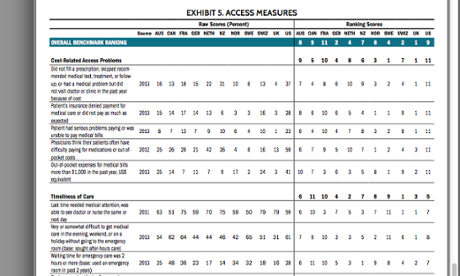
You need to look at the line at the bottom (if you can read it). It shows the UK second out of 11 on waiting time for emergency care. AS
Updated
Unison says NHS is ‘on the brink of disaster’
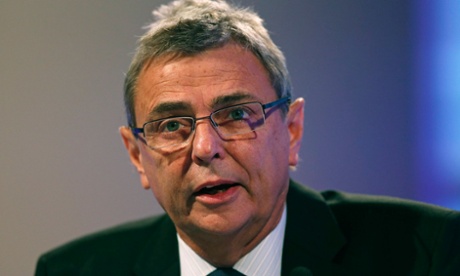
After some prompting by the BBC earlier (see 10.18am), Andy Burnham used the word “crisis” to describe the situation in the NHS. Now Dave Prentis, general secretary of Unison, the health and public service union, has gone much further. He says the NHS is “on the brink of disaster”. Here’s the statement he has just sent out.
The NHS is now on the brink of disaster.
It is outrageous that vulnerable patients are not being seen within the recommended timescale. Waiting longer in A&Es causes a huge amount of pain and distress to patients and their families.
We warned months ago that the NHS was hugely stretched – those working in A&Es have spent much of the past four years living under the constant threat of services being cut, closed or reorganised.
Staff morale is at all time low and despite this they are working every hour caring for patients during the most challenging winter in years.
The government must do everything it can to sort out all the underlying issues in the NHS - this includes the major dispute with trade unions over pay.
We are only weeks away from NHS staff walking out for 12 and 24 hours and this dispute will not go awayunless the Government engages in meaningful talks.
Updated
The Guardian’s Steven Morris is in Gloucestershire, where two hospitals have announced a major incident, due to very high demand for A&E services. He reports:
Major incident status is still in place at Gloucestershire Royal and Cheltenham General Hospitals. The control room is to review the status at lunchtime.
As of 10.30am there were 19 patients waiting to see a doctor at the Gloucestershire Royal, with the longest wait 128 minutes. Ten patients were waiting to see a doctor in Cheltenham – the longest wait there was 54 minutes. Staff say that’s higher than normal and they expect the waiting times to increase later.
Hospital bosses continue to ask patients to ‘think carefully’ before attending emergency departments. Dr Helen Miler, clinical chair of NHS Gloucestershire clinical commissioning group, said: ‘It’s really important to remember that. Hospital emergency departments are designed to treat serious injuries and emergencies.’
Current waiting times for the Gloucestershire hospitals and minor injuries units are updated live at this link. CP
Updated
Today's YouGov poll – 3pt lead for Labour
Labour have a three-point lead in the first YouGov/Sun poll of voting intentions of the year, writes Aisha Gani. If there was an election tomorrow, 34% of those polled would vote for Labour, 31% Conservative, 14% Ukip, 8% Green and 7% Lib Dem.
The first two polls of 2015 pic.twitter.com/fzK2c1eIFp
— Mike Smithson (@MSmithsonPB) January 6, 2015
According to Electoral Calculus, this would give Labour a majority of 32. According to the BBC, this would give Labour a majority of 70.
But it must be said that these electoral calculators are becoming increasingly unfit for purpose; Electoral Calculus allows you to enter a Ukip figure, but not one for the Greens, who are now often polling level or above the Lib Dems. The BBC calculator allows you to enter figures for neither Ukip nor the Greens, bunching them all together with the Scottish and Welsh nationalists and Northern Irish parties as “other”. PO
Updated
Here is some reaction to the A&E waiting time figures from charities.
From Richard Hawkes, chairman of the Care and Support Alliance
These statistics reflect the huge pressure not just on the health service but also the ongoing squeeze in council-funded social care. Chronic underfunding has left hundreds of thousands of older and disabled people, who need support to do the basics, like getting up or out of the house, cut out of the care system.
From Richard Kramer, deputy chief executive at Sense, the deafblind charity
A serious lack of funding for social care over the past few years has left many older and disabled people without the support they need. In many cases this has resulted in an increase in falls and hospital admissions as people struggle on without support.
From Janet Morrison, chief executive of Independent Age
These new A&E figures demonstrate deepening problems in our whole health and social care system, not just accident and emergency departments. Cuts to social care, which is funded not by the NHS but by councils, mean fewer frail elderly patients receive the support they need to stay out of hospital.
This report (pdf), which compares A&E targets in England with six other Western countries, partly supports the claim from Jeremy Hunt and NHS England that England’s A&E waiting times record is one of the best in the Western World. It says the English target for 95% of patients to be treated within four hours is stricter than other countries’ targets. AS
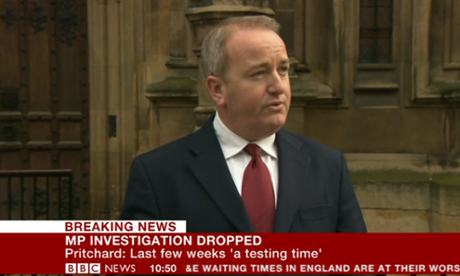
Tory MP Mark Pritchard is to face no further action over a rape allegation, the Metropolitan police have confirmed.
Pritchard just gave a televised press conference, and called for a review of the fact that alleged rape victims are given anonymity.
“It’s a question of fairness,” he said.
To be falsely accused of anything is an awful thing. Of course [my accuser] remains anonymous. The law on anonymity does need to be reviewed and fairness does need to play a far greater role in these cases.
He added:
I’m pleased to announce that I will face no further action relating to the false allegation made against me. The last few weeks have been a testing time. I’m glad it’s all over.
He thanked his solicitor, the police and the Crown Prosecution Service, and “my friends in and out of parliament, and my constituents who have kindly emailed me, written to me and telephoned me offering their support”. PO
Updated
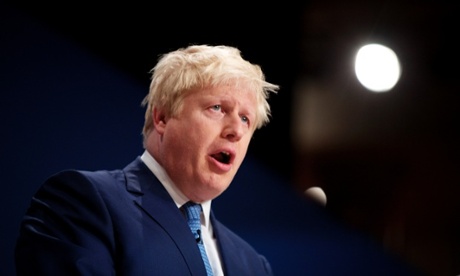
Boris Johnson has backed a call from Ukip leader Nigel Farage for NHS workers to speak English.
The mayor of London said it was “completely wrong” if people could not make themselves understood in English to NHS staff.
I’m amazed by reports that people cannot make themselves understood in English in this country to people working in the NHS. That is completely wrong. I’m sure NHS managers will be taking steps to sort it out.
I think that we should have a culture in this country that if you come here, you do as the Romans do, you learn English and you speak English.
Speaking on LBC Radio, Johnson said:
I think everybody in London, everybody who comes to work in our economy, should be able to speak English … You go to Tower Hamlets, places like that, you can find people who have been there for several generations who still don’t speak English. One of the reasons is that the media is so massive now, so disparate, so diffuse, so diverse that people can be tuned in to their own communities and not feel the need to learn the common language of this city and this country.
I think that is a great, great shame, it is a huge wasted opportunity for them and I think everybody in this country - particularly people working in our public services - should speak English.
The mayor has recently been perceived as tilting to the right as he prepares to return to the Commons, and – perhaps – challenge other possible contenders such as Theresa May and George Osborne for the Tory leadership if David Cameron loses the next election.
Johnson also accused Labour of stoking tensions between Scotland and England with its “fiscally vindictive” plan to pay for an extra 1,000 nurses north of the border through a mansion tax that will be levied mainly on properties in the south-east of England.
Londoners perfectly accept that we have a duty to the rest of the country. We already export huge quantities in taxation – about £19bn a year. But I don’t think it is right that the Labour party should be saying one thing to the Scots and standing on a completely different ticket in London … It is very regrettable that Labour should use divisive tactics and should be setting up one part of the country against another. It won’t pay off for them.
PO
Updated
NHS England says its A&E waiting record better than any other major western country
Here is Dr Sarah Pinto-Duschinsky, director of operations and delivery for NHS England, on the A&E waiting times. Echoing what Jeremy Hunt was saying earlier (see 8.48am), she says NHS England still achieves “the best measured performance of any major Western country” for A&E waiting.
Today’s figures show that, in the three months to the end of December, more than nine out of 10 A&E patients in England continued to be seen and treated in under four hours - the best measured performance of any major Western country.
In the immediate run-up to Christmas, the NHS treated 446,500 A&E attendees, up 38,000 on the same week last year. And there were 112,600 emergency admissions - the highest number in a single week since we started publishing performance figures in 2010.
We faced similar demand over Christmas itself. In the week ending December 28 A&E attendances were up more than 31,000 on the same period last year, meaning we successfully treated more patients in under four hours than ever before.
Updated
Why is the NHS struggling to meet A&E targets and is it symptomatic of a wider crisis? The Guardian’s health correspondent Denis Campbell offered this analysis before today’s figures were published, highlighting some of the major strains on the health service:
The NHS is visibly struggling to respond to a growing burden of illness, especially given that its ringfenced budget has disguised the fall in health’s overall share of GDP under the coalition, just when rising need made that ill-advised. The ageing population is the main reason … And the problem is compounded in the depths of winter, with colds and vomiting outbreaks common …
Obesity, drinking and smoking are producing an ever-larger toll of lifestyle-related diseases such as cancer, diabetes and drink-related liver damage …
A heavy price is being paid for the lack of health services outside hospitals to keep people healthier for longer at home … Meanwhile heavy cuts to social care services have followed austerity’s deep cuts to local council budgets. Older and frail people not properly supported at home are more likely to end up in hospital and probably need to stay there …
People suffering mental health problems are also adding to the pressures on GPs and A&E units because support is not available in the community …
Meanwhile there is a recruitment crisis in the NHS. Older GPs are retiring early to avoid burnout and too few newly qualified doctors are opting to join general practice. The result is long waits for appointments – meaning patients increasingly use A&E as their first, rather than last, port of call … London ambulance service also says a shortage of paramedics is one reason why it is so stretched.
There are also concerns that the 111 phone service, which replaced NHS Direct, has boosted the number of ambulance call-outs and visits to A&E. Dr Clifford Mann, president of the College of Emergency Medicine, said earlier today that patients should not be blamed for going to emergency departments “unnecessarily” when they have been advised to do so by 111:
The coverage of NHS 111 has gone from about six million to almost the full population. And if you look at their figures, you’ll see that there’s been an increase in the number of patients they recommend should attend A&E or they send an ambulance to. So we shouldn’t blame the patients when actually they’re simply following the signs or the directions they’ve been given.
This echoes the experience of at least one reader of this liveblog:
Find out how to share your A&E experiences with us here. CP
Mark Pritchard: no further action
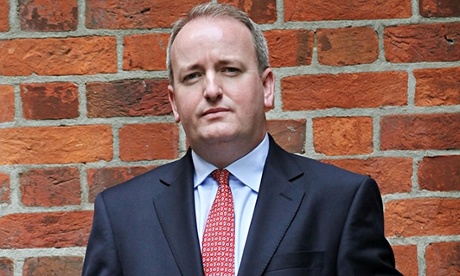
Tory MP Mark Pritchard will face no further action over a rape allegation, the Metropolitan police have confirmed. The Press Association reports:
The Wrekin MP was initially arrested after voluntarily attending a London police station on December 2.
He was released on bail to return today, where he was informed he would face no further action.
A police spokesman said: “A 48-year-old man voluntarily attended a north London police station on Tuesday, December 2 where he was arrested, following an allegation of rape in central London.
“He returned on bail on January 6 where he was informed he will face no further action as there was insufficient evidence.”
Mr Pritchard is expected to make a statement later today.
Mr Pritchard, who entered the Commons in 2005 after a career in marketing, has been a prominent figure on the Eurosceptic wing of the Conservative Party.
He served as secretary of the powerful Tory 1922 committee for two years until 2012, and is a member of Parliament’s joint national security strategy committee.
Updated
My colleague Simon Jenkins calls for the introduction of payment for frontline treatments (“recoverable in certain cases”):
There is no other way any government can restore 24-hour care and a “personal” GP service. Rationing by payment may offend tradition, but rationing by chaos is cruel. Britain is just one step away from a network of private A&E centres. That would be a catastrophe for NHS staffing. Yet no politician has the courage to propose what is needed to stop it.
Burnham blames government for worst A&E waiting times 'since records began'
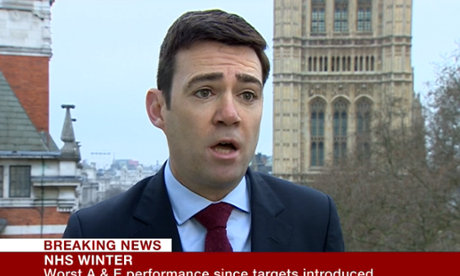
Andy Burnham, the shadow health secretary, says the A&E waiting figures are the worst since records began and that the government should take emergency steps to help the NHS cope.
These figures are extremely serious. These are the worst figures since records began and it shows that our national health service today is under extreme pressure all round the country. The secretary of state hasn’t put plans in place to ensure the NHS can get safely through the winter. He must urgently do so.
Speaking to BBC News, Burnham also said it was fair to describe this as a crisis.
In parts of the country there is a crisis in emergency services and in accident and emergency departments. A number of hospitals have taken the rather drastic step of saying that they cannot admit any new patients and declaring a major incident. If that’s not a crisis, then I don’t know what is.
Burnham acknowledged that the problem was partly caused by social factors, such as an ageing population. But the said the government was partly to blame too.
[These problems] are also explained by specific actions of this government, particularly the decision to cut social care. Because that is leaving record numbers of old people trapped in hospital beds. They cannot get home because the care is not there. And that means hospitals are becoming dysfunctional. A&E can’t admit to the ward, and pressure is backing up through A&E, ambulances queuing outside. This is what is happening right across the national health service and this government urgently needs to get a grip on the situation.
Labour would address this by bringing health and social care together, he said.
Updated
Denis Campbell explains why some other media organisations, such as the BBC, are reporting a different figure (92.6%) for the A&E waiting times than the Guardian is.
The Guardian is focusing on the figure of 83.1% – which is for “type 1 A&Es”: emergency departments based at hospitals in England, those commonly understood by the public as A&Es.
Denis writes:
If all types of NHS facilities offering urgent and emergency care are included, such as walk-in centres and urgent care centres, the performance against the 95% target was 88.8% in the week before Christmas and 90.5% in Christmas week itself.
That is the overall performance figure that NHS England and the Department of Health maintain is the best indicator of overall A&E performance.
Across the three months from October to December 2014, 92.6% of all types of A&E patients were treated within the required four hours - the worst figure since the NHS began monitoring its performance against the standard.
Under the Labour government 98% of all types of patients had to be treated within four hours, but the coalition relaxed that in 2010 to the current 95%.
Updated
The deputy chair of the British Medical Association, Kailash Chand, has warned that “the position of the NHS as the gold standard of health services is under threat”. Writing in the Guardian before today’s A&E figures were published:
Overstretched services are no longer able to keep up with rising demand: patients face longer waits to see their GPs, who are now conducting 40 million more consultations a year than in 2008; A&E waiting times are some of the worst they’ve been in a decade; waiting lists are at a recent high with millions of people waiting for treatment in hospital. In 2014 the NHS experienced not just a winter crisis, but a spring, summer, autumn crisis as well, with hospitals reaching capacity during the summer months, well before the seasonal spike in demand kicked in.
Health correspondent Denis Campbell writes:
Hospital A&E units recorded their worst ever performance in the week before Christmas as NHS emergency care services struggled to deal with an unprecedented number of patients arriving, new figures released today show.
What the NHS calls type 1 A&Es, emergency departments based at hospitals in England, treated and either admitted or discharged just 83.1% of arrivals within the politically important four-hour target in the week ending Sunday 21 December.
The NHS Constitution says that 95% of patients should be dealt with within that four-hour timeframe, a deadline ministers have promised to meet.
The 83.1% is the lowest performance against the target since records began in 2004. It came in the week that emergency departments faced a new record high number of A&E patients - 289,530.
Type 1 performance recovered slightly in Christmas week, reaching 85.7% in the week to 28 December.
If all types of NHS facilities offering urgent and emergency care are included, such as walk-in centres and urgent care centres, the performance against the 95% target was 88.8% in the week before Christmas and 90.5% in Christmas week itself.
That is the overall performance figure that NHS England and the Department of Health maintain is the best indicator of overall A&E performance.
Across the three months from October to December 2014, 92.6% of all types of A&E patients were treated within the required four hours - the worst figure since the NHS began monitoring its performance against the standard.
Under the Labour government 98% of all types of patients had to be treated within four hours, but the coalition relaxed that in 2010 to the current 95%.
Updated
This is Claire Phipps, joining the liveblog alongside Andrew Sparrow and Paul Owen; like them, I will sign off my posts as CP so you can keep track of us.
Alongside the official A&E figures released this morning – you can read them in full via this link – we are interested in hearing recent NHS experiences from readers as patients or staff. There are a number of ways to contribute:
- Leave us a comment below this liveblog.
- Send your story to GuardianWitness here, or via the blue button at the top of this liveblog.
- Contribute anonymously via this Google form.
- Tweet me @Claire_Phipps.
Readers have already sent several examples of recent NHS treatment in A&E – it’s worth pointing out that lots of these have been positive, and even where patients report issues with waiting times, most are at pains to stress that NHS staff were kind and worked hard for them. Here is a selection of those I’ve received so far:
@Claire_Phipps @guardian excellent service recently for elderly relative. Seen promptly by all the right people taking all the right tests
— Kevin Bazaz (@kevbizarre) January 6, 2015
@Claire_Phipps Children's A&E at QMC, Nott'm brilliant (August). Caring, human, good communication. In & out in c. 2 hours (broken wrist)
— LizBridgen (@LizBridgen) January 6, 2015
@Claire_Phipps 7.30 on a Fri. Face cut by exploding tonic bottle, seen, X-Rayed, stuck together, sorted 2.5 hours. Excellent at Royal Surrey
— Sue Llewellyn (@suellewellyn) January 6, 2015
@JonathanHaynes @Claire_Phipps exemplary treatment & staff but overstretched organisation #lovetheNHS
— TeresaMary (@TeresasMisc) January 6, 2015
@Claire_Phipps @guardian my dad was rushed to Northampton A&E in March. He was critical and received excellent care, but corridors were ..
— Natalie Bloomer (@natalie_bloomer) January 6, 2015
@Claire_Phipps @guardian .. Full with people waiting on trolleys with ambulance crews waiting to hand over + ambulances backed up outside.
— Natalie Bloomer (@natalie_bloomer) January 6, 2015
Updated
In other news, police have dropped their investigation into rape claims against Conservative MP Mark Pritchard, Scotland Yard has confirmed. More details soon ...
Here are the latest A&E performance targets for England, Northern Ireland, Scotland and Wales.
According to the A&E waiting times figures, the figures for the number of patients being seen within the four-hour target were 83.1% and 85.7% in the last two weeks of December, my colleague Denis Campbell tells me. The target is 95%. Denis says these are the worst figures ever. AS
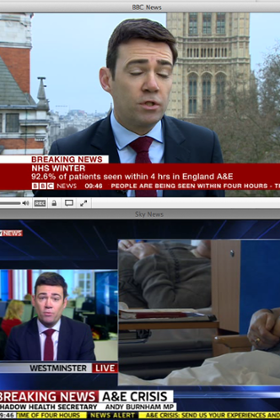
As Andrew Sparrow reported earlier, today’s focus on the NHS is bound to benefit Labour, which will be pleased by this image of seemingly simultaneous interviews with shadow health secretary Andy Burnham on BBC News and Sky News a few minutes ago. PO
Updated
As Paul Owen reported earlier, two London papers, the Times and the Daily Telegraph, took the unusual step of splashing on a Scottish Labour policy announcement - because it involves wealthy English home-owners funding Scottish nurses. My colleague Severin Carrell, the Guardian’s Scotland correspondent, has sent us some more on this.
Jim Murphy, Scottish Labour’s new leader, has grabbed attention at Westminster by linking his first general election campaign pledge for 1,000 extra nurses in Scotland to Labour’s mansion tax proposals – a £2.5bn tax which would fall most heavily on home owners in south east England.
Murphy explicitly links the two in the hope that will play well for his main target audience, some 190,000 former Labour voters in working class areas around Glasgow who backed independence in the referendum, and who now seem ready to vote SNP in May, threatening a swathe of Labour seats.
So he seems to use a hefty tax on wealthy home owners in England’s south east – code for fat City executives and bankers, to fund frontline NHS staff in Scotland. After all, the pro-independence campaign’s scare stories on future NHS funding under the Tories helped boost the yes vote by several per cent on 18 September.
Murphy is exploiting a non-controversial side effect of Treasury funding for Scotland: if UK government spending rises by £2.5bn because of the mansion tax, then Scotland would get expect to get roughly 10% of that automatically under the Barnett formula. But its a risky tactic for Ed Balls, Labour’s shadow Chancellor. English middle class Labour voters could bridle at the idea that a tax on on their homes funds more Scottish spending.
Updated
According to the BBC, 92.6% of patients were seen within four hours at A&E from October to December. The target is 95%.
(Having posted a link to the figures, at 9.35am, I’m afraid I must admit that, for a non-specialist, they are very hard to process.) AS
Updated
What the papers said
The Times and the Daily Telegraph both made their front page “splash” stories the plan announced by Scottish Labour leader Jim Murphy yesterday for Labour to fund 1,000 new nurses in Scotland from a mansion tax raised overwhelmingly in the south of England – as Murphy himself put it when he said: “I think it is right and fair that we tax properties worth over £2m across the UK – a small number are in Scotland but the vast majority are in London and the south east.”
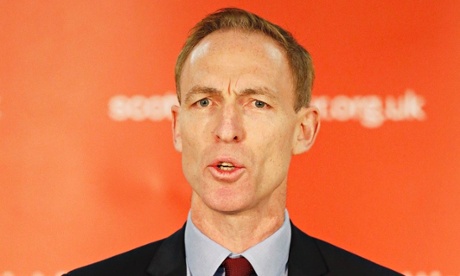
“Labour tax on ‘wealthy English’ to fund Scots nurses” was the Telegraph’s headline, while the Daily Mail went for the punchier “London mansion tax ‘funds Scots’”.
The papers largely lined up along a predictable left-right divide on the question of whether or not the Tories’ dossier on Labour’s £21bn of supposed uncosted spending plans was dodgy or not.
In the Guardian, economics editor Larry Elliott spelled out three major problems with the way it had been put together, first and foremost that “some of the spending pledges Osborne identified are not actually official opposition policy”. But he added:
In the end, though, politics is as much about perception as it is about fact. Opinion polls suggest that voters are receptive to the argument that Labour left the economy and public finances in an awful mess in 2010. If Osborne can keep debate focused on spending, tax and borrowing he is likely to benefit, no matter whether all his claims stack up or not.
Andrew Grice of the Independent broadly agreed, adding:
The Chancellor, surprisingly, did not do his homework. It would have been better to ask Treasury officials to cost the Labour plans approved by the party’s National Policy Forum rather than clock up the cost of frontbenchers’ aspirations. In fact, Ed Balls, the shadow Chancellor, has kept the shadow Cabinet on a pretty tight leash – to the frustration of several members barred by him from making just the kind of pledges the Tories claimed as a fact.
The Daily Mirror said the “dodgy dossier” was indicative of the Tories’ “political bankruptcy”.
In the interests of truth, the Tories should let the Office for Budget Responsibility evaluate every party manifesto. That Osborne doesn’t tells us he is playing another of his silly games.
On the other side of the fence, an editorial in the Daily Mail
took the Tories’ claims entirely at face value, saying:
Certainly, they are right that the two Eds’ figures don’t add up, with unfunded commitments for the first year of a Labour government estimated by the Treasury at a frightening £20.7bn.
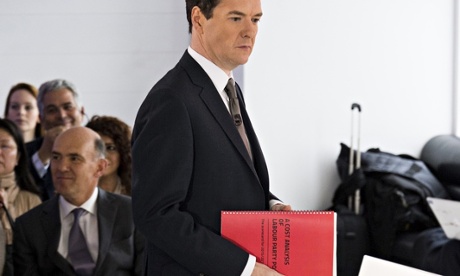
Sketchwriter Quentin Letts reckoned the Tory dossier was “spot on”; “If Labour frontbenchers moan about cuts it seems entirely justifiable to deduce that they want to go on spending that money.”
In its leader column, the Daily Express called the Osborne dossier a “scathing attack on Labour’s spending plans” and said “when it comes to managing the economy the Tories are far more deserving of our trust than Labour”.
And the Daily Telegraph announced that Labour’s campaign was “on the back foot already”.
Yesterday, the Conservatives claimed that Labour has promised £21bn in uncosted spending. This was indignantly denied: Labour would not, it said, reverse the £83m cuts to the Arts Council, among other things. But this highlights the problem. Labour’s rhetoric, and its promise to its activists, is of a socialist utopia – of an NHS saved and an economy transformed. But it seemingly plans to accept almost all of the “Tory cuts” that it rails against, and even to make a few more of its own.
Only the Sun took an unexpected political line. Political editor Tom Newton-Dunn said of Labour and the Tories’ claims about one another: “neither is true”. He called the Osborne dossier a “tall claim”.
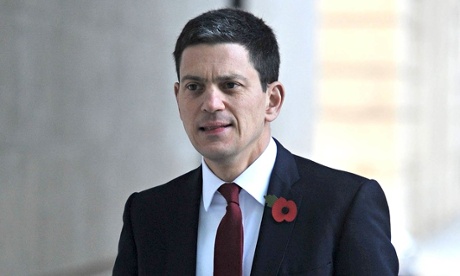
Elsewhere, some of the papers reported on an interview David Miliband, the former foreign secretary and brother of Labour leader Ed, has given to Vogue magazine, in which he said he missed Britain and refused to rule out a return to UK politics.
And the Telegraph reported that William Hague was holding a briefing document at yesterday’s press conference that suggested the schools budget might be cut under the Tories. It read:
Of course there will be difficult decisions in the next Education budget in the next Parliament … We can only have strong schools by staying on the road to a stronger economy.
You can read all today’s Guardian politics stories here. And all the politics stories filed yesterday, including some in today’s paper, are here.
As for the rest of the papers, here’s the PoliticsHome list of top 10 political must-reads, and here is the ConservativeHome round-up of all today’s political stories. PO
Updated
I will post the key points shortly when I’ve had time to read them. AS
Updated
Earlier the Today programme interviewed Dr Clifford Mann, president of the College of Emergency Medicine, about the growing crisis in A&E departments. Here are the key points he was making. I’ve taken the quotes from PoliticsHome.
-
Mann said A&E departments were at “tipping point” because they were dealing with 20,000 more patients a week than they were a year ago.
The figures which are coming out this morning will probably be similar to the ones that came out before Christmas which showed that in December we were seeing 20,000 patients a week more in our emergency departments than we were at the same time last year and I think this is what’s created the real problems at the moment. We’ve reached a tipping point – 20,000 extra patients a week all have to be accommodated within the same bed stock and the same capacity as the system in 2013.
-
He said the expansion of the NHS 111 non-emergency phone line contributing to more people going to A&E.
There are a number of factors [explaining the increase], one of the most important of which is that the coverage of NHS 111 has gone from about six million to almost the full population. And if you look at their figures, you’ll see that there’s been an increase in the number of patients they recommend should attend A&E or they send an ambulance to. So we shouldn’t blame the patients when actually they’re simply following the signs or the directions they’ve been given.
- He said some A&E staff were under “intolerable pressure”. Some left the profession because they were burnt out, he said.
- He said there was a shortage of A&E recruits. In the last three years of training, there was a 50% vacancy rate, he said.
-
He said the current funding system penalised hospitals with A&E units.
The current tariffs mean that you can run a successful and indeed profitable hospital if you do specialist commissioning work and elective care but all acute care loses money – and in times of austerity, it’s difficult to invest properly in an emergency department which they see as a loss-making part of the business.
-
He said A&E staff needed more time off, not more pay.
We also need to recognise that if people are going to be working a lot out-of-hours – and emergency medicine means we do work evenings, nights and weekends frequently – that the right compensation for that is not to pay people more, but to give them more annual leave so the amount of time they can spend with their families and friends is the same as their peers working in other specialties, whatever they may be.
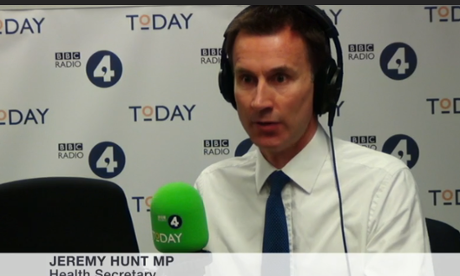
Hunt says A&E waiting time performance still better than in other countries in world
Here are the main points from Jeremy Hunt’s interview on Today.
-
Hunt said that, despite figures due out which are expected to show A&E waiting target performance at its worst level for a decade, overall the standard was still better than any other country that measures this. He was talking about NHS England.
The NHS is continuing to see in A&E departments nine out of 10 people within the four hour target. That is actually better than any other country in the world that measures these things.
-
He said that it was better for hospitals to miss waiting time targets than to compromise on patient safety.
What we don’t want do to ... is for trusts to make compromises, as has happened in the past, on patient safety, on compassionate care, just in order to hit the targets. Targets matter, but not at any cost.
-
He defended those hospitals that have declared “major incidents” to help their A&E departments get extra help. Asked if they were over-reacting or panicking, he said they weren’t.
I think they are genuinely finding it very difficult and they are genuinely making clinical decisions on the basis of what is rights for patients.
Updated
Q: Labour says the NHS needs more money, and that they will put it in.
Hunt says, in the autumn statement, the government chose to prioritise the NHS. But you can only do that if you have a strong economy, he says.
Q: Have the hospitals that have declared major incidents over-reacted?
No, says Hunt. They are making appropriate clinical decisions.
And that’s it. I’ll post a summary soon.
Hunt says the incentives aren’t right. All the incentives are for older people to be treated in hospital. But that is not the best approach.
Q: We’ve known that for years. You’ve had five years to do something.
We have, says Hunt. There are thousands more doctors and nurses, and more beds.
He repeats the point about nine out of 10 people being seen within four hours.
Named GPs have been introduced for patients over the age of 75, he says. That was scrapped in 2004.
The merger of health and social care services has started, he says.
Humphrys is now talking to Hunt.
Q: This sounds like a crisis.
Hunt says there is a huge amount of pressure in the system.
He pays tribute to the work being done by staff. They have never worked harder, he says.
The NHS is continuing to see nine out of 10 people at A&E within the four hour target, he says. That is better than most other systems in the world.
He says hospitals should not make compromises on safety just to hit these targets.
On staff, he says that there are 1,800 more doctors and nearly 5,000 more nurses in the NHS in the last year alone.
But demand is expanding, he says.
He says within the last six months “something very important” has changed. The NHS has developed its own plan for the future (the Simon Stevens plan). The government has agreed to fund it.
Updated
Proctor says the main problem is the there just aren’t enough health staff out their to recruit. That is why his trust is recruiting from Spain.
He says his hospital has a 30% vacancy rate for consultants in A&E.
Q: What would you do if you were Jeremy Hunt?
Proctor says there is nothing that can be done immediately.
In the long term, more people need to be trained.
And nurse training should be widened. More mature students should be allowed in.
Jeremy Hunt's interview on Today
John Humphrys is about to interview Jeremy Hunt, the health secretary.
First, though, he is talking to Mike Proctor, deputy chief executive of York Teaching Hospital NHS Foundation. Proctor is describing how his hospital has been overwhelmed with A&E patients.
Yesterday morning patients could not be send to other hospitals because they were full too, he says. That is why the hospital became one of those declaring a major incident.
Q: So it is not a literal shortage of beds? It is a shortage of staff.
That’s right, says Proctor.
Updated
One crude way of assessing who’s “winning” the political debate is to look at which stories are dominating the news. If it’s health, that’s good for Labour, because voters trust the party more to look after the NHS. If it’s the economy or the deficit, then the Conservatives are likely to feel more comfortable, because those are good issues for them.
On that basis, today is a good day for Labour. When I turned on the Radio 4 news at 6am this morning, the first three items were about the NHS.
The first, and the most important, was about the growing crisis in A&E. New figures are out today which are expected to confirm that the NHS is missing A&E targets. Hospitals in five areas have also declared “major incidents” because their A&E units are struggling to cope. The other two stories were about the Lib Dem commitment to finding an extra £8bn for the NHS, and new figures about the number of people with cancer reaching a record high.
Jeremy Hunt, the health secretary, will be on the Today programme talking about this shortly. I will be covering the interview live.
Today we’ll also be looking at the fall-out from yesterday battle of the dossiers over Labour’s spending plans. And MPs will be debating the government’s latest anti-terror legislation.
Here’s the agenda for the day.
8.10am: Jeremy Hunt is interviewed on today.
Morning: NHS waiting time figures are released.
11.30am: Nick Clegg takes deputy prime minister’s questions in the Commons.
Around 12.40pm: MPs begin debating the counter-terrorism and security bill.
I’m Andrew Sparrow (AS) and I will be writing the blog today with Paul Owen (PO). Where it matters, we will use initials to show how has written each post. If you want to follow us on Twitter, I’m on @AndrewSparrow and Paul is on @PaulTOwen.











Did the service take on a lot of new staff when it was introduced?
Unfortunately I've had to call 111 three times in the last few months and to my surprise the operator was on each occasion very keen to send an ambulance out. I only accepted once - one call was for a concerning but not life threatening allergic reaction, for which an ambulance had been dispatched before I'd had a chance to explain all my symptoms.
Just struck me as staff needing more training.