New York Gov. Kathy Hochul announced Thursday that $10 million in state funding will be made available through a new grant program aimed at expanding the capacity of food banks, emergency food providers and municipalities that distribute food assistance across the state.
The initiative, known as New York Providing Local Access to Essential Sustenance (NY PLATES), was included in the state's fiscal year 2026-27 budget and is designed to help organizations build, renovate and modernize facilities used to combat food insecurity.
According to Hochul's office, eligible applicants within New York's 10 regional food bank territories will be able to seek funding for projects including facility construction and renovation, infrastructure upgrades and the purchase of equipment such as refrigeration units, freezers and food transport vehicles.
"Food banks and pantries across New York are working around the clock to make sure no family goes hungry, and they deserve the facilities and equipment to do that work effectively," Hochul said in a statement. She added that the program represents a direct investment in hunger-relief infrastructure "at a time when the federal government is turning its back on critical nutrition programs."
State officials said the grants are intended to address infrastructure needs that go beyond food donations, enabling organizations to safely store, transport and distribute food to more residents. The program will be administered by the Dormitory Authority of the State of New York (DASNY) in partnership with the state Department of Health.
Applications will open on July 8 and close on Aug. 20, with awards expected to be announced no earlier than Oct. 20. Projects will be evaluated based on need, impact and feasibility.
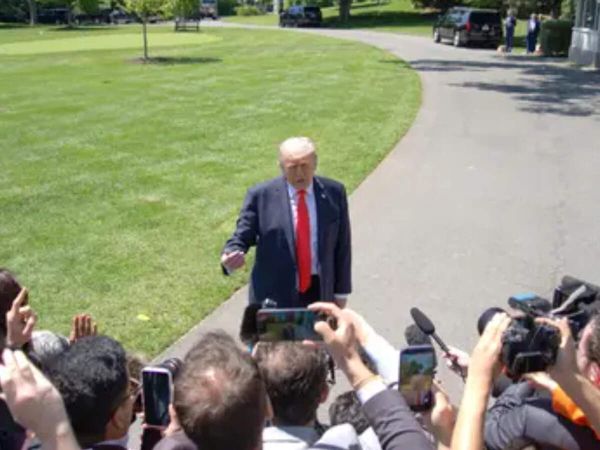
The announcement came during a week in which Hochul was also addressing immigration-related tensions with the Trump administration.
Speaking at a roundtable in Queens on Wednesday, the governor said state and local officials had conducted "countless exercises" to prepare for a possible increase in federal immigration enforcement activity in New York City, though she acknowledged that state officials still had not received details about any potential operation.
Hochul said New York would continue to enforce recently enacted state immigration laws limiting cooperation with federal civil immigration enforcement while maintaining cooperation in criminal cases supported by judicial warrants.
She also criticized suggestions that New York City could face a large-scale immigration enforcement deployment, saying federal officials had not clearly explained the rationale behind such plans.