New York has enacted new certification requirements for building cooling towers, days after a Legionnaires' disease outbreak on Manhattan's Upper East Side that killed seven people and hospitalized 79. Governor Kathy Hochul signed the legislation requiring owners and operators of New York City cooling towers to certify that the equipment has been inspected, tested, cleaned, and disinfected in compliance with the city administrative code.
The measure sets timelines that did not previously exist. Building owners must address maintenance deficiencies as soon as possible and no later than 48 hours, and must notify the city Department of Buildings and address levels of microbes that present a serious health threat as soon as possible and no later than 24 hours. Certifications are required twice a year, in January and July. Civil penalties rise to $2,500 for a first violation, $7,000 for a second or subsequent violation, and up to $12,500 for a violation that results in a fatality or serious injury.
For residents of any dense city, the underlying issue is that a rooftop appliance most people never think about can become the source of a serious pneumonia.
The Outbreak That Preceded the Law
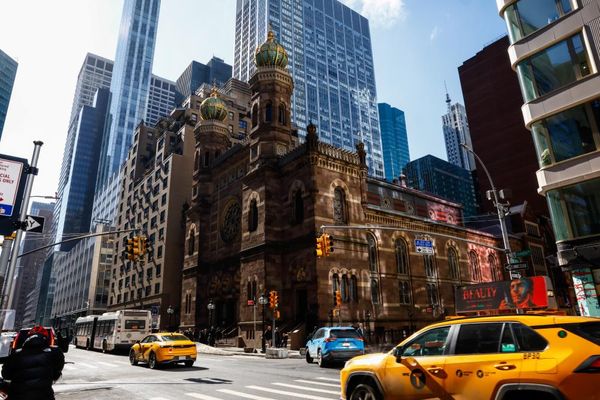
The cluster emerged in the Carnegie Hill and Yorkville neighborhoods after two confirmed cases were identified on July 2. The Health Department declared the exposure ended at the end of July, reporting 92 cases, 79 hospitalizations, and seven deaths.
City investigators tested 183 cooling towers at 160 buildings in the affected ZIP codes. Of those, 59 tested culture-positive, confirming live Legionella bacteria. Every tower that screened positive was ordered to be fully drained, cleaned, and disinfected.
More than 90 percent of patients developed symptoms before July 7, five days after the investigation began, which is how officials concluded the source of exposure had been eliminated early. The exact source remains under investigation.
This was not the city's first such event. A cluster in Central Harlem the previous summer produced 118 cases, 92 hospitalizations, and seven deaths before the Health Department closed its investigation at the end of August 2025. A peer-reviewed analysis of that outbreak found the clinical isolates were highly related to bacteria from two cooling towers on the same city block.
That outbreak prompted a city rule effective in May, requiring Legionella testing every 31 days while a tower is operating rather than every 90 days, and increasing fines for owners who fail to comply. The new state law adds a certification requirement to the testing schedule.
The Rooftop Appliance That Spreads Pneumonia
Cooling towers remove heat from large buildings by spraying warm water over fill material while fans pull air through. A small amount evaporates, cooling the rest, which recirculates. That process generates fine water mist above street level in dense neighborhoods.
Legionella grows in warm, stagnant water. When contaminated mist drifts, people can inhale it and develop Legionnaires' disease, a form of pneumonia. The bacteria do not spread from person to person.
That distinction is why officials repeatedly told residents the tap water was safe. Cooling towers are separate from a building's plumbing, so drinking, bathing, showering, cooking, and running a home or window air conditioner carried no risk of outbreak.
Roughly one in ten people who develop Legionnaires' disease die from it, according to the CDC. Symptoms usually appear two to 14 days after exposure, which is part of why clusters take time to recognize.
Residents Most Likely to Become Seriously Ill
Most people exposed to Legionella never get sick. Risk concentrates among adults aged 50 and above, people who smoke, and people with chronic lung disease or weakened immune systems. In the Central Harlem cluster, at least 90 percent of patients had a known risk factor for severe disease.
The symptoms overlap with ordinary respiratory illness, which is the practical danger. Fever, chills, muscle aches, headache, fatigue, cough, and confusion can all appear. In an older adult, confusion alone can be the presenting sign.
Legionnaires' disease is treatable with antibiotics when caught early, and outcomes improve substantially when treatment starts promptly. Delay is what turns a treatable pneumonia into a fatal one.
Anyone in an affected area with those symptoms should seek care promptly and mention the neighborhood exposure so a clinician can order urine antigen or culture testing to identify the infection. The city maintains a public Legionnaires' disease page with current case information and tower results.
Enforcement Questions the Law Does Not Settle
The system still depends on owners to test and self-certify, with city inspectors auditing rather than monitoring continuously. There are approximately 4,000 buildings with registered cooling towers across the five boroughs.
The city has pointed to results from its enforcement push. The Health Department said transparency and aggressive enforcement lifted compliance with the new monthly testing law to 97 percent. It was allocated an additional $13 million in the fiscal year 2027 budget for routine inspections and outbreak response, including hiring 23 new water ecologists to bring its cooling tower inspection staff to 56.
Mayor Zohran Mamdani framed the goal as "preventing outbreaks before they happen by holding building owners accountable" for maintaining their cooling towers.
Whether certification changes behavior will be visible in the next cooling season rather than this one. Building owners now face a January deadline for the first required certification cycle. Residents who want to check their own building can ask management whether its cooling tower is registered and when it was last tested, since registration and testing records are maintained by the city.
Key Questions Answered
What changed in the law? New York now requires cooling tower owners in New York City to certify twice yearly that towers were inspected, tested, cleaned, and disinfected, with 48-hour and 24-hour deadlines for fixing problems and higher penalties.
How large was the outbreak? Ninety-two cases, 79 hospitalizations, and seven deaths in the Upper East Side cluster, which the Health Department declared over at the end of July.
How many towers were contaminated? Of 183 towers tested at 160 buildings, 59 tested culture-positive for live Legionella. Every tower that screened positive was cleaned and disinfected.
Is tap water a risk? No. Cooling towers are separate from building plumbing. Officials said residents could continue drinking, bathing, cooking, and using air conditioning normally.
How does the disease spread? By inhaling mist or water vapor containing Legionella bacteria. It does not spread from person to person and is not caught by drinking water.
Who is most at risk? Adults aged 50 and above, people who smoke, and people with chronic lung disease or weakened immune systems.
What symptoms should prompt care? Fever, chills, cough, muscle aches, headache, fatigue, or confusion within two weeks of being in an affected area. Early antibiotic treatment substantially improves outcomes.