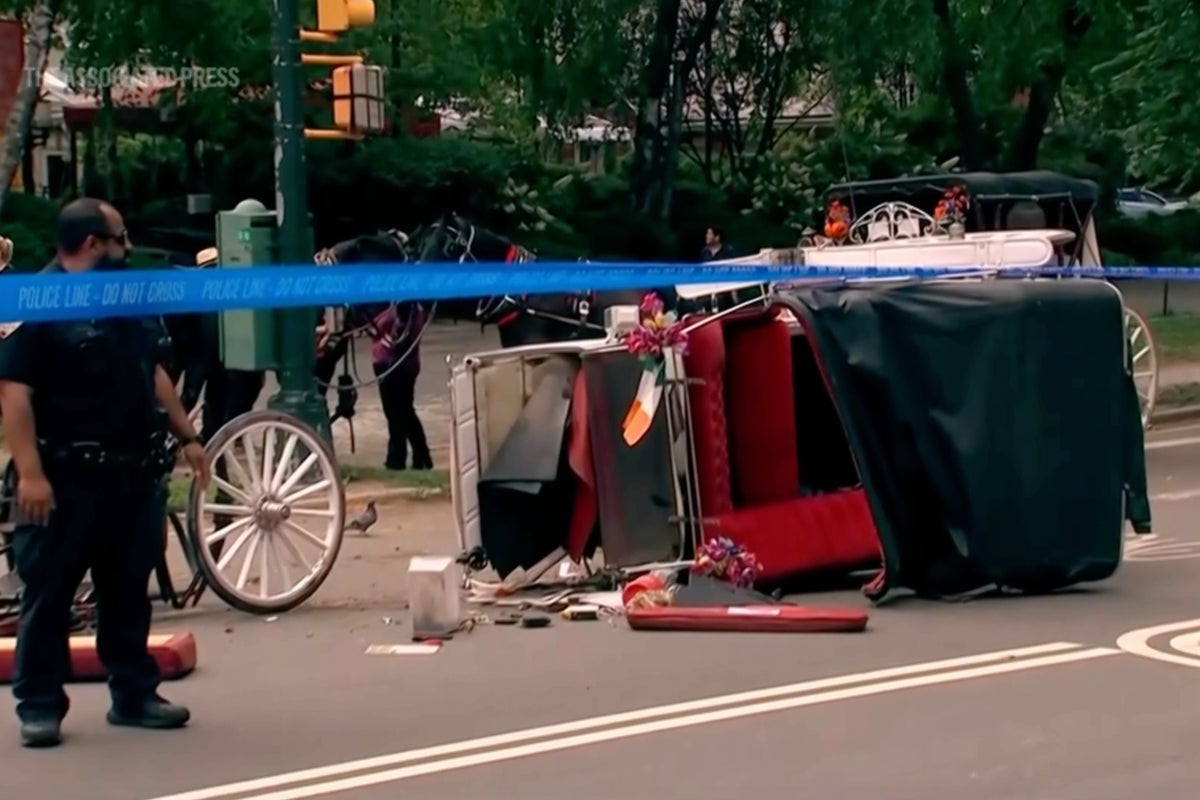
The death of a teenager from India who was killed when a Central Park carriage horse bolted from its driver has led to renew calls to ban the industry.
Romanch Mahajan, 18, was on a family trip to celebrate his high school graduation when he was fatally wounded while trying to save his mother, his family said. He jumped out of the carriage after his mother fell out and hit his head on the ground, his father, Deepak Mahajan, told The New York Times.
“He was screaming, ‘Mom!'” the heartbroken father told the newspaper. Mahajan said he, his wife and younger son escaped with minor injuries, though their carriage clipped another horse-drawn vehicle and toppled over.
The family arrived in New York from India Monday, the same day Romanch learned he had been accepted to a university in Jaipur. They had spent the day visiting many of the city’s popular tourist attractions and were unwinding on a carriage ride when the driver got off to photograph them. Moments later, the accident occurred.
Video showed the horse sprinting through the park as two people appeared to jump from the four-wheeled carriage. A second video shows the cab toppling over after clipping the wheels of another carriage on the park’s busy loop.
“This incident should be taken very seriously,” Mahajan said. “It took my son's dream away.”
Calls to ban the quaint attraction revived
Horse carriages, which cost about $72 for the first 20 minutes, were not running Thursday in the park, which sees millions of visitors every year. It was not immediately clear when they would resume.
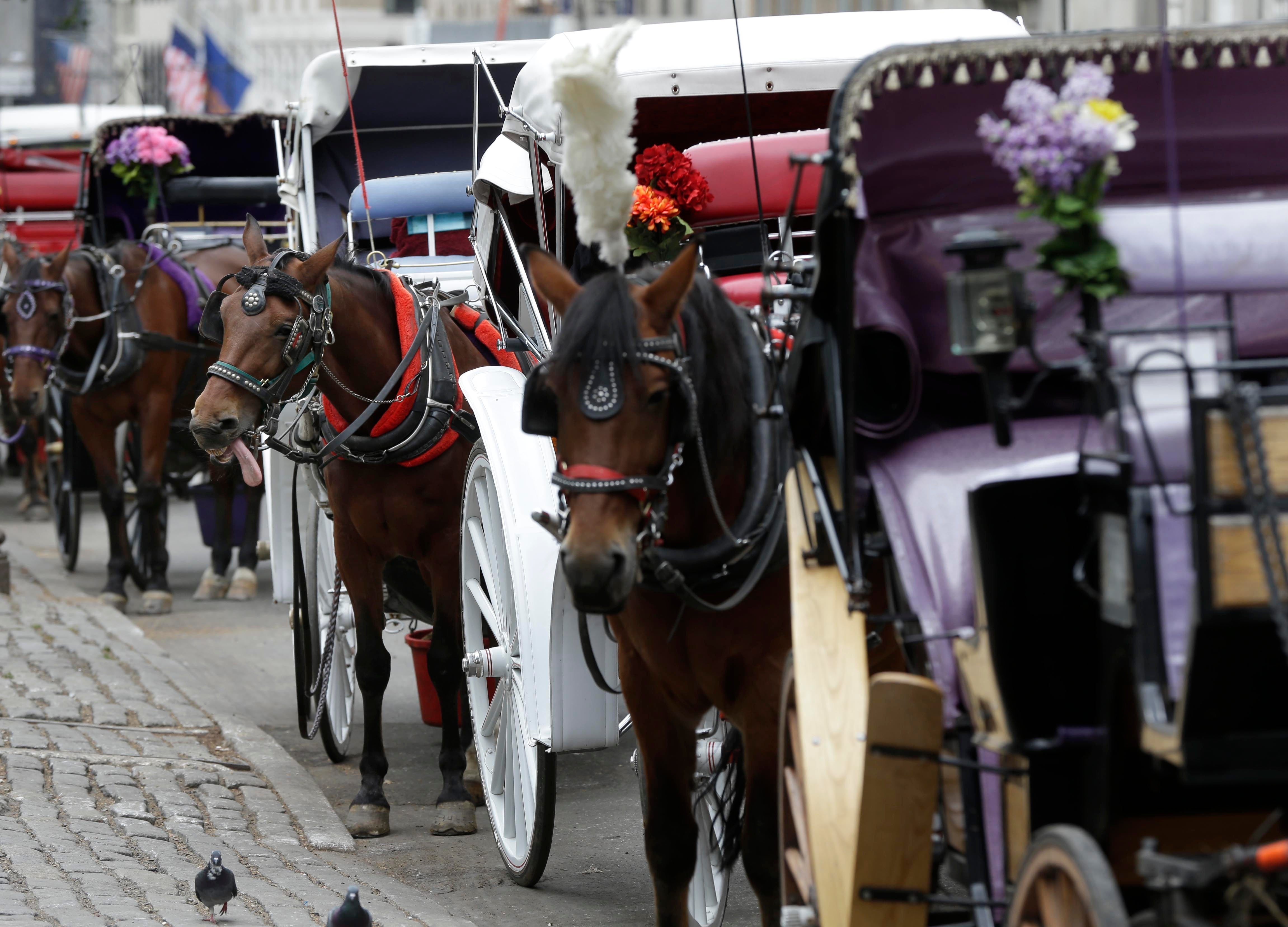
The company that owns the carriage involved in the fatal crash also suspended the driver indefinitely, and the horse will be retired from the business, according to the union representing the industry. The union has said the driver dismounted to take a photograph of his passengers, which they are not supposed to do.
“We’re absolutely gutted and stunned by this tragedy,” said Alexander Kemp, a vice president with the Transport Workers Union Local 100, the labor union representing carriage drivers and owners. “We have shuttered the stables and ceased operations today while we have extensive internal discussions of safety protocols and how they can be improved.”
Mahajan's death is believed to be the first human fatality involving a horse carriage since they were introduced in Central Park more than 150 years ago, according to the union and the Central Park Conservancy, which manages the 850-acre park.
The conservancy was among those on Thursday that called for the industry to be suspended until more protections could be put in place. There have now been eight horse-related incidents in Central Park over the past 13 months, the group said.
“If any other activity in the Park posed a comparable risk to visitors, it would be suspended immediately while steps were taken to address those dangers,” the conservancy said.
The influential nonprofit revived the debate over the carriages when, for the first time, it threw its support behind a long-simmering bill that would ban horse carriages and help drivers transition into new jobs.
The organization argued that the carriages are a public safety hazard in the increasingly crowded park, noting that other U.S. cities, including Chicago and San Antonio, have also recently done away with the nostalgic rides.
Carriage owners and drivers fear end to livelihood
Animal welfare groups have also long complained that the horses are overworked, can get easily spooked on city streets and live in inadequate stables while their drivers regularly flaunt city rules.
“The record is undeniable: crashes, runaways, horse deaths, injuries, and now a devastating loss of human life,” Edita Birnkrant, head of New Yorkers for Clean, Livable, and Safe Streets said on Thursday.
Onur Altintas, who owns four horses and a carriage operating in Central Park, said Wednesday’s death was tragic but shouldn’t lead to the industry ending.
He said the industry provides hundreds of jobs to drivers, stable hands, farriers, and others in horse-related trades.
“We are sad about what happened. Nobody wants that. But it’s not like this is happening every day,” said Altintas. “Car crashes and plane crashes are happening every single day. One horse makes an accident, and the world is destroyed? Come on.”
New York City leaders, meanwhile, vowed to work to put an end to the quaint attraction, which harkens back to a romanticized, bygone New York.
City Council Speaker Julie Menin said the legislative body would hold a hearing next month on Ryder's Law, the bill backed by the conservancy.
“The time to act is now,” she wrote on the social platform X.
Mayor Zohran Mamdani also reiterated his support for ending the industry, saying he’d work with the council, the industry and animal welfare advocates to “deliver a just transition that protects workers while ending horse-drawn carriages in Central Park once and for all.”
If the industry were phased out, Altintas said he would have to find another way to support his family and four children.
Instead, the longtime owner and driver said the industry needs better regulations to make it safer. He said “90%” of horse-related accidents could be avoided simply by installing hitching posts throughout the park so drivers could safely tether and secure their horses, including at popular tourist photo stops.
The Transport Workers Union on Thursday said legislation introduced into the council last week would do just that.
“Drivers can’t leave their carriage. They have to be on it all the time,” Altintas said. “But it’s impossible. We have to go to the restroom. We have to eat. We have to do things.”