A trail spotlighting some of western Europe’s oldest rocks has been proposed at a village in the Scottish Highlands.
Geology enthusiasts and keen hikers would be able to access a new walking route in Wester Ross, in the North West Highlands, if the council approves the plan.
The coastal town of Gairloch is well known for its rugged oceanfront and diverse natural landscape.
It features on Scotland’s most famous road trip route, the North Coast 500, with drivers often stopping for walks on its sandy beaches or for a spot of stargazing.
Hoping to showcase its important rock formations, Gairloch Museum is planning to build a new walking route towards Carn Dearg Youth Hostel just outside the town’s centre.
Roy Macintyre, one of the leaders on the project, told BBC News that the trail would focus on “deep time”, the geological history of Earth over billions of years.
“Gairloch is a favourite haunt for geologists,” Mr Macintyre explained.
“In Gairloch, Lewisian gneiss and its various associated rocks are mostly exposed on the surface, so it's easy to interpret them.”
Formed three billion years ago, Lewisian gneiss forms the basement rock of the coast of Gairloch and is the oldest rock found in Western Europe.
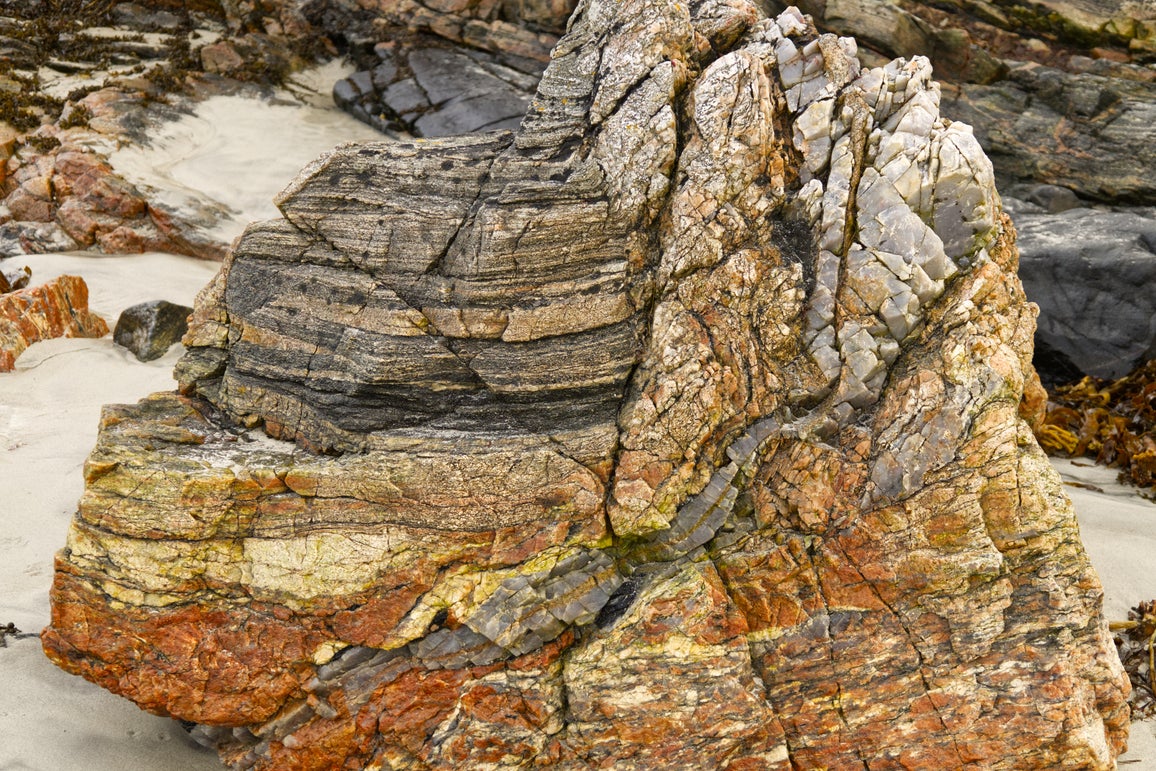
It is also found on the Outer Hebrides, including the Isle of Lewis, from which the rocks takes its name.
Being at the centre of many geological changes, the colourful layers on the rock help document volcanic activity from when Europe split from North America, the Museum of the Highlands says.
The leaders of the project have proposed that the trail be a length of 4.5km (2.8 miles) and will have 18 markers representing different geological periods, such as the Triassic and Jurassic.
The proposal for the trail has been put to the Highland Council, meaning the route could potentially open next year if approved.
Aside from Lewisian gneiss, the northwest Highlands are also characterised by the reddish-brown Torridonian sandstone. While not as old as Lewisian gneiss, this sandstone helped form the dramatic Assynt mountain peaks in the Highlands, including Suilven, Quinag and Liathach.
The Independent has contacted Gairloch Museum for comment.
Read more: A booming wild sauna culture is transforming how people explore the Scottish outdoors
The rail, road, flight and ferry travel chaos to expect as New Year’s Day approaches
Two young British women went on a dream backpacking holiday. Only one came back alive
Air fare price warning for regional airports across the UK
Some train passengers face soaring fares with new contactless payment rules
End of an era as New York subway finally switches payment system
Business class passenger jailed for 20 months for stealing another person’s bag