New York has implemented a new law requiring all advertisements featuring artificial intelligence-generated people to be clearly labelled as using a "synthetic performer."
The legislation, signed by Governor Kathy Hochul in December, went into effect on Tuesday, aiming to enhance transparency amidst the proliferation of AI-generated content across various media platforms, including social media and digital advertising.
The state law defines synthetic performers as "digitally-created media that appear as a real person," with the mandate applying to advertisements across all mediums.
Governor Hochul, a Democrat, stated: "In New York, we are setting the rules of the road instead of letting AI run the show." She added that the "simple, honest disclosure" mandated by the law "protects consumers, respects our creative workforce and keeps New York at the forefront of responsible innovation."
Non-compliance with the new regulation, specifically the failure to "conspicuously disclose" the use of a synthetic performer, will incur a penalty of $1,000 for a first offence, escalating to $5,000 for subsequent violations.
However, the law includes specific exemptions. It does not apply to advertisements for films, television programs, streaming content, video games, or other works where synthetic performers are integral to the entire production. Audio-only advertisements and those where AI is solely used for language translation are also exempt.
The legislation faced significant opposition during its passage through the state legislature last year. The American Association of Advertising Agencies (4As) argued that it would harm advertisers by "injecting compliance uncertainty into the advertising process, burdening brands (and their agencies) who advertise in New York and undermining creative and technological innovation."
The New York State Broadcasters Association, while acknowledging some relief from amendments that created carve-outs, expressed ongoing concerns regarding the broad definition of a synthetic performer.
Conversely, the Screen Actors Guild – American Federation of Television and Radio Artists (SAG-AFTRA), the prominent actors' union, was a key proponent of the law. The union recently ratified a new contract with studios and streamers, which they assert provides further protections against synthetic performers.
New York’s initiative is part of a broader trend across several US states, where similar laws are being proposed or enacted. These efforts generally aim to safeguard human employment or mitigate potential privacy and safety risks associated with AI. Existing state legislation includes prohibitions on deepfakes in certain contexts, restrictions on collecting specific personal data, and demands for greater corporate transparency.
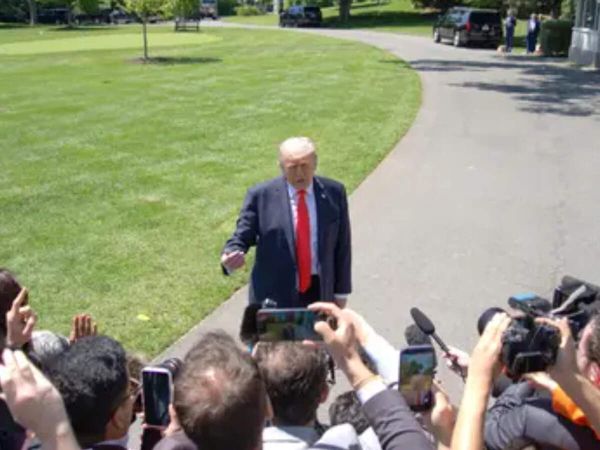
Following Governor Hochul’s signing of the synthetic performers law in December, President Donald Trump issued an executive order urging states to refrain from regulating AI.
This move was reportedly driven by fears that a fragmented regulatory landscape across states could hinder the growth of AI companies and allow China to gain an advantage over the US in the AI race. Critics of this executive order contend that it risks enabling tech companies to operate with minimal oversight.