Nearly eight months after the United States' military intervention in Venezuela and the capture of Nicolás Maduro, the country remains by a considerable margin the most dangerous place in the world for investors, according to J.P. Morgan's Emerging Markets Bond Index, or EMBI.
Venezuela's country-risk spread stood at 7,098 basis points in July, a level that placed it far above other distressed sovereigns, including Ukraine and Argentina. The figure means investors demand a premium of roughly 70.98 percentage points above comparable U.S. Treasury bonds to hold Venezuelan debt, a market signal of extraordinary concern over repayment, political stability and the rule of law.
The gap is stark. Venezuela's risk level was about 7.5 times higher than Ukraine's, a country still navigating the consequences of war, and approximately 17.5 times higher than Argentina's, long one of Latin America's most closely watched debt markets.
The reading underscores the limits of the post-intervention optimism that briefly lifted Venezuelan assets in January. Investors initially priced in the possibility that Maduro's removal, broader U.S. engagement and potential sanctions relief could open the door to an oil-sector recovery, a debt restructuring and a more predictable business environment.
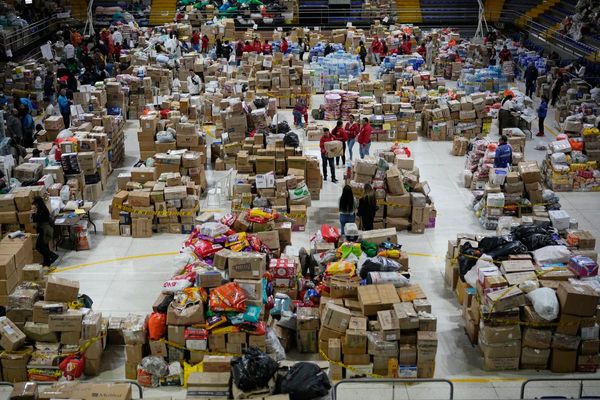
The June 24 devastating twin earthaquakes complicated the situation even more. Measuring 7.2 and 7.5 struck, the earthquakes, killed at least 6,400 people and injuring 73,356, according to the latest official report. More than 50,000 homes were declared uninhabitable, while the number of people still missing remains unclear. To donate, click here.
Instead, Venezuela continues to carry the burden of a sovereign and PDVSA debt default, years of opaque public finances, damaged oil infrastructure, weak institutions and uncertainty over the country's political transition. A lower EMBI spread than the levels seen before January does not mean Venezuela has regained market confidence. It means investors see less risk than at the height of the crisis, while still viewing the country as an extreme outlier.
The EMBI measures the yield spread between a country's dollar-denominated debt and U.S. Treasury securities. The larger the spread, the more compensation investors demand for taking on the risk. It is not a direct prediction of default, but it is one of the most closely followed barometers of how global markets judge a government's ability and willingness to honor its obligations.
Venezuela's potential is undeniable, as it holds the world's largest proven oil reserves, and any sustained recovery in production could generate significant revenue. But investors are unlikely to commit major capital without clarity on who controls economic policy, what legal protections foreign companies would receive and how Caracas plans to resolve billions of dollars in defaulted bonds and arbitration claims.
Those questions have grown more urgent following the U.S. intervention. Washington's involvement created expectations of a rapid economic opening, but it also added a new layer of geopolitical uncertainty. Investors must now weigh not only Venezuela's domestic transition, but also the durability of U.S. policy, sanctions decisions and the country's relationship with international creditors.
The 7,098-point EMBI reading is therefore more than a market statistic. Nearly eight months after the intervention, it is a warning that Venezuela's political reset has yet to become an investment-grade recovery story. The country may have moved beyond one chapter of its crisis, but global markets are signaling that the next one remains far from settled.