The NCAA’s draft withdrawal deadline continued the slow weakening of the 2026 NBA draft, with a handful of additional intriguing prospects projected to get picked in the 20s and 30s electing to withdraw and spend another year in college basketball. The significant withdrawals, driven in large part by the ballooning NIL/revenue share market in college, have impacted the strength of the draft starting in the teens and throughout the 20s, trickling down into the second round.
In spite of that, the excitement is still immense at the top, with a number of elite-level prospects looking like potential franchise cornerstones available in the top 10 picks. What’s the latest Sports Illustrated is hearing on the race to go No. 1 and other key intel with the draft under a month away? Here’s a look at SI’s latest mock draft.
1. Washington Wizards: AJ Dybantsa, BYU
Dybantsa is the favorite (albeit not an overwhelming one) to go No. 1 at this stage, though Washington is expected to evaluate all options at the top of the draft after winning the lottery for the first time since 2010. It’s perhaps an oversimplification to consider Dybantsa the “safe” choice at No. 1, but there’s some truth to it. His size, explosiveness as an athlete and elite intensity makes him a comfortable bet to be an above-average player early in his career. Plus, his growth in one season at BYU as a decision-maker and problem-solver with the ball in his hands was noticeable, key areas that will dictate whether he reaches his All-NBA ceiling.
2. Utah Jazz: Darryn Peterson, Kansas
The Jazz have often been connected to Dybantsa because he has spent the last two years playing in Utah, but it seems unlikely they’ll move up from No. 2 to No. 1 to go get him. If Washington zeroes in on Dybantsa, the consolation prize for the Jazz is a great one in Peterson, an electric shotmaker with the potential to lead the NBA in scoring one day. He’s the type of top-tier asset the Jazz have long been waiting for through years of tanking and fits well into Utah’s young core.
3. Memphis Grizzlies: Cameron Boozer, Duke
The Grizzlies have been perceived as a natural fit for Boozer ever since they came up third in the lottery. He’d immediately raise the floor for a Memphis team that has no plans of a long rebuild. Boozer has been the most statistically dominant player in the class for years and winning has followed him every step of the way. Even if he doesn’t have the traditional athletic profile of a superstar, his elite production and feel for the game gives him face-of-the-franchise potential.
4. Chicago Bulls: Caleb Wilson, North Carolina
Wilson seems like a natural fit for what Chicago is looking for in its new front office regime headed up by Bryson Graham. His athleticism and elite motor is exactly what the Bulls’ frontcourt needs, and it’s easy to envision him quickly emerging as a fan favorite in Chicago similar to how North Carolina fans embraced him in Chapel Hill this past season. This is exactly the type of building block Chicago was hoping to find in this draft.
5. Los Angeles Clippers: Keaton Wagler, Illinois
The Clippers get their pick of a talented guard crop at No. 5 assuming the board plays out as expected. It will be interesting to see how much L.A. picking up Darius Garland at the trade deadline this past season impacts their decision-making here, potentially making a smaller, more ball-dominant guard less palatable. If that’s the case, Wagler becomes an even stronger factor at this spot as the tallest and most seamless off-ball player of the four top point guards on the board.
6. Brooklyn Nets: Darius Acuff Jr., Arkansas
The Nets drafted multiple guards with last year’s five first-round picks, but that shouldn’t dissuade them from taking the best player available here after falling in the lottery. Acuff fits that mold and could be the offensive engine for Brooklyn’s rebuild. The year he had at Arkansas was one of the most impressive by a freshman point guard in the last decade, and he could have a real chance at Rookie of the Year honors with significant usage in his first NBA season.
7. Sacramento Kings: Kingston Flemings, Houston
The Kings are in need of a point guard and should have good options in this slot regardless of who comes off the board before them. If the dominos fall as projected, Flemings is a logical choice, bringing the type of elite speed to the position in a way similar to how De’Aaron Fox did for years in Sacramento. Even without top-tier measurables, it’s easy to believe in Flemings as a long-term starter at the point because of his speed and playmaking ability.
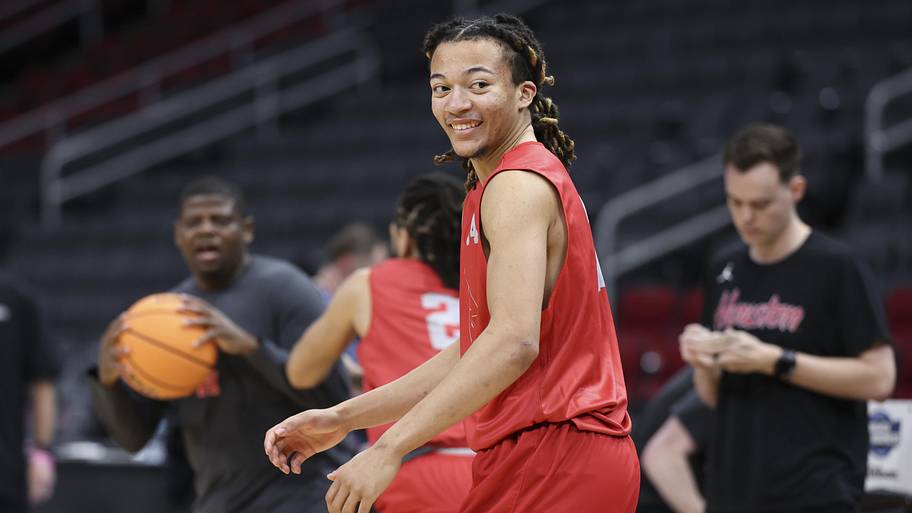
8. Atlanta Hawks: Mikel Brown Jr., Louisville
Point guard and center look like the biggest needs for Atlanta with two first-rounders in this year’s class. Should the Hawks go with a point guard here, Brown is a high-ceiling prospect who a year ago looked like the favorite to be the first point guard off the board. His potential as a shooter (despite a middling 34% this season) could be attractive for Atlanta, allowing him to potentially slide off the ball at times alongside bigger ballhandlers like Jalen Johnson and Dyson Daniels.
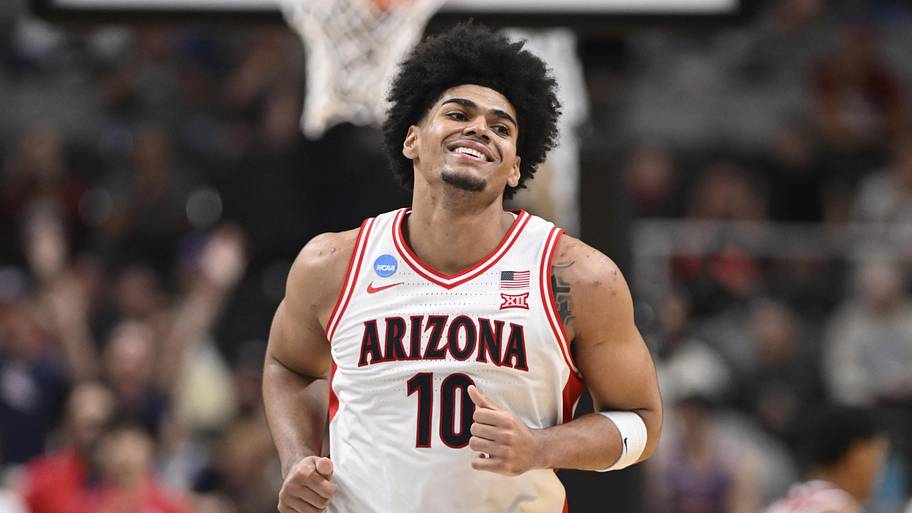
9. Dallas Mavericks: Brayden Burries, Arizona
Shooting and two-way versatility are priorities for Dallas as the Mavs look to build around Cooper Flagg and Kyrie Irving. Burries is a natural fit on paper, a stockier guard with high-level scoring pedigree who can slide on and off the ball. He was a central part of Arizona’s Final Four run, shooting 49% from the field and 39% from three while making noticeable strides as the season went on as a defender.
10. Milwaukee Bucks: Nate Ament, Tennessee
Ament to Milwaukee has been a popular projection and for good reason: He fits both timelines for a Bucks organization in limbo. If Milwaukee trades Giannis Antetokounmpo, Ament is an intriguing developmental prospect with size and shooting ability you can’t often find, an upside swing at No. 10 unlike any other option on the board. But if Ament’s three-point shooting bounces back after a bumpy year at Tennessee, he could be a useful floor-spacer around Antetokounmpo should Milwaukee keep its star.
11. Golden State Warriors: Aday Mara, Michigan
Mara’s elite measurements at the combine (7'3" barefoot with a ridiculous 9'9" standing reach) underscore his potential to be one of the NBA’s best rim protectors. His two-way dominance of the rim was perhaps the biggest reason Michigan dominated college basketball this season. The Warriors are in need of a long-term answer at center, and Mara could be that while also fortifying their interior defense early in his career as Golden State looks to make one more run with Stephen Curry.
12. Oklahoma City Thunder: Yaxel Lendeborg, Michigan
Lendeborg is among the more logical fits for a contender like Oklahoma City. He’s a game-ready 24-year-old who can guard up and down the lineup, using his length (wingspan north of 7'3") and athleticism to disrupt everyone from point guards to centers. Putting Lendeborg in a winning environment with established leadership is likely the best path for him to achieve his potential despite concerns about his maturity. He could be an elite role player early in his career if he lands in the right situation.
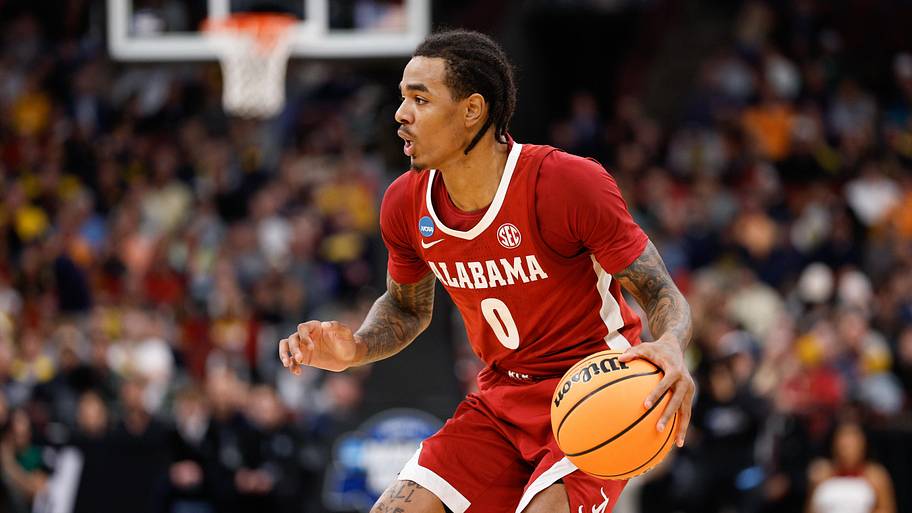
13. Miami Heat: Labaron Philon Jr., Alabama
Miami is expected to be in the market for established veterans in the trade market, but assuming the Heat keep this pick, taking a swing on a point guard like Philon makes a lot of sense with the rest of the roster. Philon isn’t quite in the same tier as the top four PGs in the class, but there’s plenty to like here with his creativity off the dribble and skill in ball screens. At worst, he should provide scoring punch off the bench.
14. Charlotte Hornets: Morez Johnson Jr., Michigan
Johnson was a clear winner at the combine, measuring extremely well and looking improved as a shooter in the on-floor activities. He’s a versatile frontcourt piece that makes sense in Charlotte, with the ability to play either the four or the five, rebound at a high level and make pick-and-pop threes. It’d be a surprise at this point if he fell out of the top 20.
15. Chicago Bulls: Cameron Carr, Baylor
In a draft somewhat light on true wings, Carr has a chance to rise into even the late lottery after a strong performance at the combine. He has a +8 wingspan, shoots the three at a high level and posted one of the highest vertical jumps at the event at 42.5 inches. His three-and-D potential is as clear as anyone’s in this draft class and would be a nice pull for the Bulls at No. 15.
16. Memphis Grizzlies: Christian Anderson, Texas Tech
With Boozer already in tow, Memphis could look to bolster its backcourt with its second pick. Anderson’s elite shooting ability makes him a logical fit regardless of what the Grizzlies end up doing with Ja Morant, but Memphis moving on from Morant would open a massive opportunity for the former Texas Tech guard to get significant on-ball opportunities early in his pro career.
17. Oklahoma City Thunder: Hannes Steinbach, Washington
A double-double machine at Washington, Steinbach should have a stable floor as a productive offense-first big for teams in the teens. He should benefit from playing with better guards in the NBA than he did at Washington, which contributed to the Huskies’ disappointing season.
18. Charlotte Hornets: Karim López, NZ Breakers
López could be in play for either of Charlotte’s first-round picks and has wide appeal throughout the middle of the first round because of his size, feel and experience as a strong contributor in a high-level pro league with the Breakers. The swing skill for the Mexican-born López is his three-point shooting, which has shown incremental improvement in recent years but still isn’t super consistent.
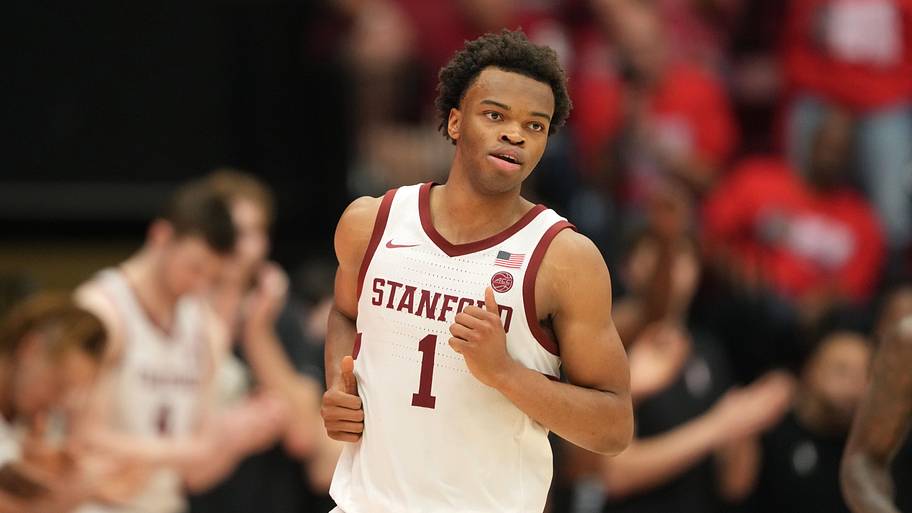
19. Toronto Raptors: Ebuka Okorie, Stanford
Okorie measuring out with a wingspan close to 6'8" helps assuage some fears about his undersized 6'1" stature. His scoring instincts are undeniable, fresh off averaging 23 points per game as a freshman at Stanford despite playing the entire season at 18 years old. The Raptors’ lack of creativity off the dribble was evident in this year’s playoffs, and Okorie would certainly help provide that.
20. San Antonio Spurs: Chris Cenac Jr., Houston
Cenac is one of the more intriguing prospects in this class, with elite tools and solid production as a freshman at Houston but still lacking significant polish to be a reliable contributor early in his career. San Antonio could be a good situation for him to land in, with the potential to one day form an incredible defensive frontcourt with his length next to Victor Wembanyama.
21. Detroit Pistons: Bennett Stirtz, Iowa
The Pistons’ lack of secondary playmaking and backcourt depth next to Cade Cunningham was evident in the playoffs. Stirtz would immediately help solve those problems as a PG with good size and the ability to shoot off both the catch and the dribble. His rise from Division II to a Big Ten star on an Elite Eight team at Iowa is one of the more remarkable stories of this draft.
22. Philadelphia 76ers: Allen Graves, Santa Clara
Scouts are somewhat torn on what to make of Graves, who had a statistical season for the ages coming off the bench for Santa Clara to generate legitimate first-round buzz. While he has his limitations athletically, Graves’s toughness, feel and versatility on both ends is intriguing. He could be a nice dice roll for a Philadelphia team that needs frontcourt reinforcements.
23. Atlanta Hawks: Jayden Quaintance, Kentucky
Quaintance has one of the wider ranges of any player in this draft as teams grapple with injury history and raw elements of his game that in some cases could overshadow his elite upside. Still, this is the type of swing the Hawks can’t pass up in the 20s. His incredible length, shot blocking instincts and mobility are incredibly rare, and he’s just 18 years old. If things break right, he has All-Star upside.
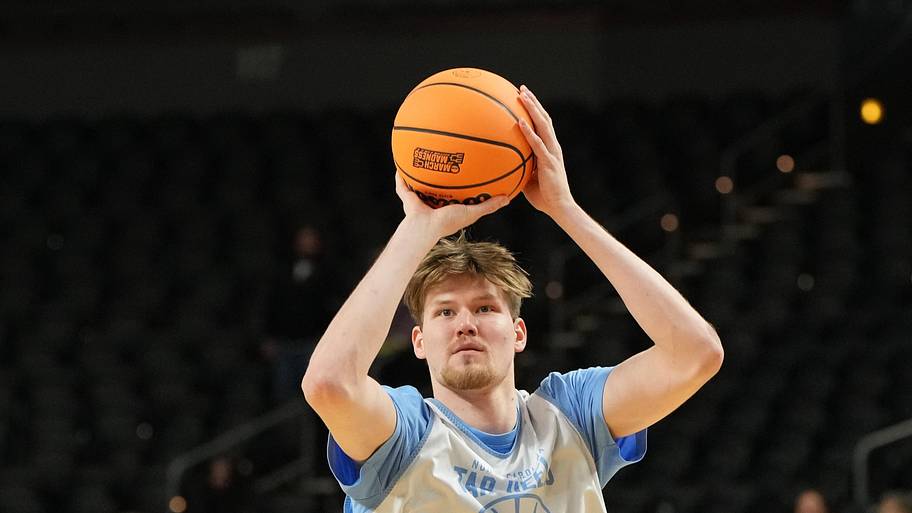
24. New York Knicks: Henri Veesaar, North Carolina
After blossoming into one of the most productive bigs in college basketball this past season, Veesaar should have wide appeal in the late first round because of his size (6'11" without shoes), toughness on the glass and ability to stretch the floor. He could be a capable rotation piece for a Knicks team whose frontcourt could be in flux with Mitchell Robinson hitting free agency.
25. Los Angeles Lakers: Tarris Reed Jr., UConn
Reed has benefited both from a strong showing at the combine and a number of other big men electing to stay in college. He has elite size at nearly 6'10" without shoes and a 7'4" wingspan and has proven to be a two-way force around the rim. An affordable rotation option at center should be among the Lakers’ offseason priorities.
26. Denver Nuggets: Dailyn Swain, Texas
Swain blossomed into one of the most efficient scorers in college basketball this past season at Texas. Denver has had success before with slashing wings like Christian Braun and Peyton Watson, and adding another into the pipeline who doesn’t turn 21 until July would be a logical pick for Denver.
27. Boston Celtics: Isaiah Evans, Duke
Evans didn’t help himself much with a poor showing athletically at the combine, but the Duke product still figures to have interest in the later part of the first round thanks to his size and shooting ability. Boston has done well in developing role players with its picks in this range of late, and Evans’s shotmaking gives him a clear path to getting on the floor early.
28. Minnesota Timberwolves: Meleek Thomas, Arkansas
Thomas’s draft decisions took until the 11th hour, but staying in the draft was somewhat expected. The former five-star recruit had a strong freshman season at Arkansas, shooting the three at a high level and showing the type of two-way intensity that teams looking to win now like Minnesota will value.
29. Cleveland Cavaliers: Koa Peat, Arizona
Peat staying in the draft isn’t a surprise, but there was some thought he might more strongly consider a return to school after what can only be described as a strange predraft process to date. His reworked jump shot mechanics are unorthodox and led to a poor showing at the combine in the shooting drills, making hopes that he might blossom into a consistent shooter sooner rather than later somewhat unrealistic. Still, at No. 29 it’s a worthwhile bet on a player who has been one of the most consistent producers and winners in his class dating back to early in high school.
30. Dallas Mavericks: Alex Karaban, UConn
Karaban is an elite shooter, but more importantly he’s the consummate winner. He enjoyed one of the most decorated careers in modern college basketball history at UConn, winning two national championships and going to a third title game as a rare four-year starter with the Huskies. He’s a ready-made role player who fits well into what Dallas is building.
More NBA From Sports Illustrated
Listen to SI’s NBA podcast, Open Floor, below or on Apple and Spotify. Watch the show on SI’s YouTube channel.